Ivan Generalić: A Visionary of Croatian Naive Art
Ivan Generalić (1914 – 1992) stands as a pivotal figure in Croatian naïve art, embodying the spirit of rural simplicity and profound social observation. Born in Hlebine, near Koprivnica, Croatia, his artistic journey began with an early fascination for drawing—a passion nurtured by school lessons and fueled by earning money through sketching on paper bags. This formative experience foreshadowed a lifelong dedication to capturing the essence of everyday life and conveying powerful messages about human dignity and social justice.
A chance encounter with Krsto Hegedušić, then a student at Zagreb Art Academy, proved transformative. Hegedušić recognized Generalić’s exceptional talent and organized his debut exhibition in 1931 at the Zagreb Art Pavilion, garnering critical acclaim and establishing connections that propelled him into an era of international recognition. This initial success solidified Generalić's commitment to portraying rural landscapes and traditions with uncompromising honesty and artistic integrity.
Following World War II, he joined Uluh (Society of Croatian Artists), furthering his artistic pursuits and engaging in collaborative projects. In 1953, he showcased his work in Paris, immersing himself in the vibrant cultural milieu of Europe and honing his distinctive technique—painting on the reverse side of glass panes rather than conventional canvases—a method that imparts a remarkable luminosity and reflective quality to his paintings. This innovative approach distinguishes Generalić’s oeuvre from many contemporaries and contributes significantly to its enduring appeal.
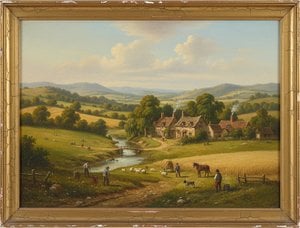
Generalić's artistic output spanned decades, producing numerous evocative depictions of weddings, farm labor, seasonal celebrations, and funeral processions. These scenes are imbued with meticulous detail—particularly in the depiction of flora and fauna—reflecting his deep connection to the Croatian countryside and his unwavering belief in the importance of preserving rural heritage. Notably, “The Deer Wedding” (1959), considered his magnum opus by many followers of Croatian naïve art enthusiasts, exemplifies this stylistic hallmark. It’s a testament to Generalić's ability to transform ordinary subjects into symbols of profound human emotion and spiritual contemplation.
His influence extends beyond his immediate peers; he fostered the emergence of a second generation of artists—Franjo Filipović, Dragan Gaži, Josip Generalić, Ivan Večenaj—who continue to honor his legacy and explore similar themes within their own artistic endeavors. Ivan Generalić’s enduring contribution to Croatian art lies not only in his stylistic innovation but also in his unwavering commitment to portraying the human condition with compassion and sensitivity—a testament to the power of art as a vehicle for social commentary and cultural preservation.