A Life Immersed in the English Countryside: The Story of George Cole Senior
George Cole Senior, born in Portsmouth, France in 1810, wasn’t destined for a conventional artistic upbringing. His early life took an unusual turn when he apprenticed as a ship's painter in the Royal Navy dockyard. This practical foundation, however, proved surprisingly formative, instilling a meticulous attention to detail that would later characterize his idyllic landscapes. A subsequent period working with Wombwell’s Wild Beast Menagerie – painting scenery and capturing the animals themselves – further honed his observational skills and provided an early outlet for his burgeoning talent. It was a nomadic existence, far removed from the refined world of art academies, yet it laid the groundwork for a career that would celebrate the beauty of rural England. Cole's initial success came through producing works in the style of earlier Dutch masters, appealing to the tastes of the landed gentry with earthy tones and robust depictions of animals. This early period established him as a skilled craftsman, capable of capturing the essence of the countryside, but it was his later evolution that truly cemented his legacy.From Dutch Influence to Victorian Naturalism
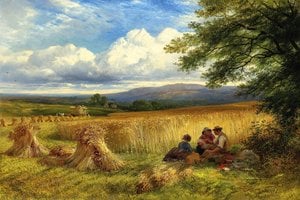
The mid-19th century witnessed a shift in Cole’s artistic approach, mirroring the changing sensibilities of the Victorian era. Influenced by the writings of John Ruskin and the burgeoning Pre-Raphaelite movement, he began to embrace a more naturalistic style. This wasn't merely a change in technique; it was a philosophical one. Where his earlier works focused on recreating scenes, Cole now sought to capture *truth* – the vibrant colours, exquisite details, and emotional resonance of the landscape itself. This transition is particularly evident in his landscapes from the 1850s, which are characterized by saturated hues and a heightened sense of realism. He became known for paintings that evoked a feeling of tranquility and harmony with nature, reflecting the Victorian fascination with the idyllic countryside as a counterpoint to the rapid industrialization of the time. His work began to embody a romantic vision of rural life, balanced composition and textured brushwork evoking timeless beauty.A Family Legacy: Collaboration with George Vicat Cole
Cole’s artistic journey wasn't solely his own; it was deeply intertwined with that of his son, George Vicat Cole RA (1833-1893). The two artists frequently collaborated, traveling together and sketching the same picturesque scenes along rivers like the Wye and Teign. While George Senior explored a broader range of subjects, including portraits and harvest views, George Vicat Cole became renowned for his exquisite river landscapes. Their partnership was one of mutual influence and respect, with both artists contributing to the flourishing British naturalism movement. The shared aesthetic – a commitment to detail, vibrant colour, and emotional depth – is readily apparent in their respective bodies of work. This collaboration not only enriched their individual styles but also solidified the Cole family’s reputation as leading landscape painters of the Victorian era.Major Achievements and Artistic Themes
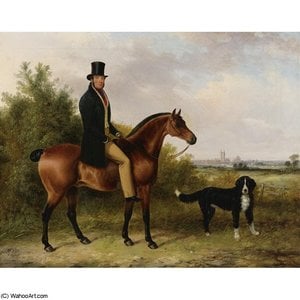
Throughout his career, George Cole Senior exhibited at prestigious venues such as the Society of Artists (elected a member in 1849) and the Royal Academy. He received recognition for his ability to capture “a truthful and brilliant effect of sunshine after rain,” demonstrating his mastery of light and atmosphere. His paintings frequently depicted scenes of rural life – cattle drovers, harvesters at work, majestic castles overlooking serene lakes, and idyllic farmyards teeming with activity. Cattle were a recurring motif, rendered with remarkable detail and sensitivity. Beyond the technical skill, Cole’s works resonated with viewers because they captured a sense of nostalgia for a simpler way of life – a romanticized vision of England's countryside that appealed to a growing middle class seeking respite from the pressures of urban existence. The Departure, Harvesters, and A Toy Spaniel are among his most celebrated works, showcasing his ability to evoke emotion through landscape and animal portraiture.Historical Significance: A Reflection of Victorian England
George Cole Senior’s legacy extends beyond the beauty of his paintings; he serves as a valuable cultural document of Victorian England. His work embodies the era's fascination with nature, its romantic ideals, and its growing sense of national identity. He captured a world that was rapidly changing – a rural landscape threatened by industrialization – and preserved it on canvas for posterity. Cole’s adaptability allowed him to remain relevant throughout his career, transitioning from earlier Dutch-inspired styles to the more naturalistic approach favored in the later Victorian period. His paintings continue to be admired today for their technical skill, emotional depth, and evocative portrayal of a bygone era. He was described as “a self-taught genius,” whose perseverance conquered adversity, leaving behind a rich artistic legacy that continues to inspire and captivate audiences.Perguntas e Respostas
Onde as obras de George Cole Senior estão organizadas por cor?
As obras de George Cole Senior podem ser exploradas por cor na página Índice de Cores do artista.
Onde posso ver o perfil de cores da obra de George Cole Senior?
O perfil de cores da obra de George Cole Senior pode ser visualizado na página DNA da Paleta do artista.
De onde é George Cole Senior?
George Cole Senior nasceu em France.