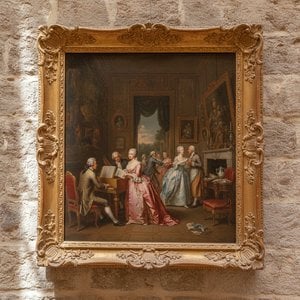
Francesco Beda (1840 - 1900): A Viennese Painter's Embrace of Costume Genre
Francesco Beda (Trieste, 29 November 1840 – 30 July 1900) was a painter from Austria-Hungary whose distinctive style captivated audiences with its blend of aristocratic elegance and anachronistic charm. Primarily celebrated for his costume genre paintings—scenes depicting individuals adorned in clothing reminiscent of bygone eras—Beda achieved considerable renown during the Austro-Hungarian Empire, establishing himself as a prominent figure in Viennese art circles. His artistic journey began under the tutelage of Karl von Blaas at the Academy of Fine Arts Vienna, where he honed his skills and cultivated an enduring fascination with portraying idealized figures within meticulously crafted historical contexts.
Early Life & Training: Born in Trieste, Beda’s formative years were marked by exposure to artistic traditions rooted in Venetian painting, influencing his stylistic sensibilities. Blaas's instruction instilled a disciplined approach to technique and composition, shaping Beda’s foundational understanding of artistic principles.
Vienna Years & Patronage: Following his studies in Vienna, Beda embarked on a prolific career as a portrait painter, securing commissions from influential patrons including Empress Elisabeth of Austria and Bishop Strossmayer of Zagreb—individuals who recognized the artist's ability to convey both psychological depth and visual splendor.
Orientalist Visions: Beyond aristocratic portraits, Beda demonstrated an adventurous spirit by delving into Orientalist subjects. His painting *Il Caffè Orientale di Trieste*, completed around 1888, exemplifies this fascination with exotic locales and opulent settings—a testament to his artistic versatility and willingness to explore diverse cultural influences.
Notable Works & Recognition: Among Beda’s most celebrated achievements is “Chess Game,” a masterpiece that tragically vanished from London's art scene after being stolen from a private collection. Despite the loss of this iconic artwork, Beda’s legacy persists through his enduring contributions to Viennese painting and his continued presence in museum collections worldwide.
Style & Technique: The Illusion of Time
Beda's artistic style is characterized by meticulous attention to detail—a hallmark of Viennese academic painting—combined with a masterful manipulation of color and light to create an illusionistic depth that transports viewers into meticulously rendered historical environments. He skillfully employed glazing techniques, layering translucent washes of pigment over underlying tonal layers to achieve luminous effects and imbue his canvases with atmospheric grandeur. Furthermore, Beda’s compositions often featured asymmetrical arrangements and dynamic poses—elements that conveyed a sense of movement and vitality within the static framework of painted space.
Glazing Techniques: Beda's masterful use of glazing created an ethereal quality in his paintings, enhancing depth and luminosity.
Composition & Pose: Dynamic poses and asymmetrical arrangements contributed to a sense of movement and theatricality within his canvases.
Color Palette: His palette favored rich hues—gold, crimson, azure—reflecting the grandeur of aristocratic settings and conveying an emotional resonance that captivated audiences.
Legacy & Influence
Francesco Beda’s artistic legacy extends beyond his individual masterpieces; he served as a pivotal figure in shaping Viennese art history and fostering a tradition of costume genre painting—a genre that would continue to inspire artists for decades after his death. His unwavering commitment to academic principles—coupled with his imaginative vision—established him as an exemplar of Austro-Hungarian artistic excellence, securing his place among the most revered painters of the 19th century. Today, Beda’s works reside in prominent museums across Europe and America, ensuring that his distinctive aesthetic remains accessible to future generations of art enthusiasts.
Further Exploration
For more information on Francesco Beda's life and work, consult scholarly publications and museum resources dedicated to Viennese painting and Orientalist art. Examining biographical accounts alongside critical analyses offers invaluable insights into the artist’s artistic development and enduring significance within the broader context of European cultural history.
Pela Equipe Editorial de WahooArt.com
Teste de Conhecimentos Artísticos
Cada pergunta possui apenas uma resposta correta.
Questão 1:
What was Francesco Beda primarily known for painting?
Questão 2:
Where did Francesco Beda study art?
Questão 3:
Who commissioned portraits of Francesco Beda?
Questão 4:
Francesco Beda’s son, Giulio Beda, pursued his artistic studies in:
Questão 5:
What notable artwork by Francesco Beda was stolen from London?
Explore the profound beauty of genre painting. From Dutch Golden Age masters to global traditions, discover how artists capture the essence of everyday life through masterful realism and timeless storytelling.