A Pioneer of Art Nouveau: The Life and Legacy of Eugène Samuel Grasset
Eugène Samuel Grasset, born in Lausanne, Switzerland on May 25th, 1845 (though some sources cite 1841), emerged as a pivotal figure bridging the gap between traditional craftsmanship and the burgeoning aesthetic of Art Nouveau. His journey began within an artistic household; his father, a skilled cabinet designer and sculptor, instilled in young Eugène both a practical understanding of materials and a deep appreciation for creative expression. This early exposure fostered a sensitivity to form and detail that would become hallmarks of Grasset’s distinctive style. Initial studies under François-Louis David Bocion honed his drawing skills, but it was a subsequent foray into architectural studies in Zurich that broadened his artistic horizons, though ultimately proved insufficient to contain his burgeoning creativity. A transformative experience followed – a voyage to Egypt after completing his formal education. This journey ignited a lifelong fascination with exoticism and ancient design principles, profoundly influencing the decorative motifs that would later define his work. Equally significant was his growing admiration for Japanese art, particularly its emphasis on flowing lines, flattened perspectives, and harmonious compositions—elements he masterfully integrated into his own unique visual language.
Early Training and Influences
Grasset’s artistic education commenced with instruction in drawing under François-Louis David Bocion, a respected sculptor whose meticulous attention to detail served as an early model for Grasset's approach to craftsmanship. Bocion instilled in him not only technical proficiency but also a profound respect for classical ideals of beauty and proportion—influences that would permeate his subsequent artistic endeavors. Recognizing the importance of architectural knowledge, Grasset pursued studies at Zurich Polytechnic, gaining insight into structural principles and spatial considerations. However, it was his encounter with Eugène Viollet-le Duc’s ambitious restoration project of Notre Dame Cathedral that truly captivated him, fostering an appreciation for Gothic architecture's grandeur and complexity. This fascination extended beyond mere stylistic admiration; Viollet-le Duc’s innovative techniques—particularly the use of hydraulic lime—inspired Grasset to experiment with new materials and methods in his own sculptural works.
The Egyptian Awakening
A pivotal moment arrived when Grasset embarked on a journey to Egypt following his architectural studies, an experience that irrevocably shaped his artistic sensibilities. The monumental scale of ancient monuments—the pyramids, temples, and tombs—struck him with awe, prompting him to contemplate the enduring power of form and symbolism. He meticulously documented Egyptian motifs—hieroglyphs, lotus blossoms, papyrus stalks—incorporating them into decorative designs and illustrations, demonstrating a willingness to draw inspiration from distant cultures. This engagement with Egyptian art wasn’t merely decorative; it represented a deeper exploration of universal themes—mortality, eternity, and the relationship between humanity and nature—themes that would recur throughout Grasset's oeuvre.
A Diverse Artistic Career
By 1869-1870, Grasset established himself as both a painter and sculptor in Lausanne, demonstrating versatility and ambition from an early age. Simultaneously, he pursued architectural studies in Zurich, broadening his intellectual horizons and equipping him with invaluable knowledge of spatial design. He quickly gained recognition for his sculptural prowess—particularly his depictions of mythological figures—reflecting his fascination with classical narratives and artistic traditions. Recognizing the potential of applied arts to elevate decorative objects beyond mere ornamentation, Grasset ventured into furniture design, fabric creation, tapestry weaving, ceramic artistry, and jewelry making—disciplines where he skillfully combined technical skill with aesthetic vision. His creations were characterized by luxurious materials like ivory and gold, meticulously crafted according to exacting standards—a testament to his unwavering commitment to excellence.
The Art Nouveau Style and Graphic Design
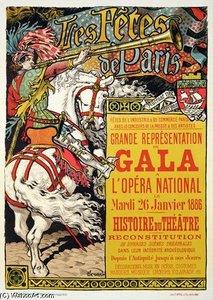
Grasset’s artistic breakthrough occurred in the 1870s when he embraced the burgeoning Art Nouveau movement, adopting its distinctive stylistic features—flowing lines, organic forms, floral motifs, and flattened perspectives—and rejecting academic conventions. He became a prolific illustrator for publications such as *Histoire des Quatre Fils Aymon*, capturing the epic grandeur of Carolingian literature with breathtaking detail and expressive dynamism. His contribution to this monumental project solidified his reputation as one of Art Nouveau’s foremost visual artists. Furthermore, Grasset excelled in graphic design, producing posters that were celebrated for their elegance, clarity, and artistic merit—most notably *Jeanne d'Arc Sarah Bernhardt*, which earned inclusion in the prestigious *Maîtres de l'Affiche* series. He designed logos for companies like Éditions Larousse and created striking illustrations for magazines such as *Harper’s Magazine* and *Century Magazine*, demonstrating his mastery of visual communication across diverse mediums. His enduring legacy resides not only in his sculptural achievements but also in his pioneering role in shaping the aesthetic landscape of the Belle Époque—a period marked by artistic innovation, cultural dynamism, and a fervent embrace of beauty and craftsmanship.
Legacy and Influence
Eugène Samuel Grasset passed away on October 23rd, 1917, in Sceaux, France, leaving behind an impressive body of work that continues to inspire artists and designers today. His meticulous attention to detail, his masterful synthesis of diverse influences—classical ideals, Gothic architecture, Egyptian motifs, and Japanese aesthetics—and his unwavering commitment to artistic excellence cemented his position as a towering figure in the history of Art Nouveau. Grasset’s ability to transform raw materials into objects of exquisite beauty—furniture, fabrics, ceramics, jewelry—served as an exemplar for generations of artisans striving to elevate craftmanship to new heights. His enduring influence can be seen in the stylistic choices of countless artists and designers who followed him—a testament to his visionary aesthetic and his indelible mark on the visual culture of the 20th century.