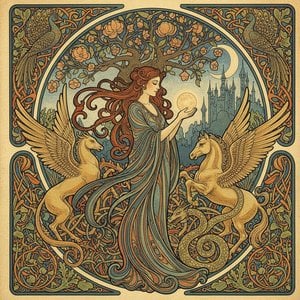
Edward Mason Eggleston (1882–1941): The Painter of Elegant Women
Edward Mason Eggleston (1882–1941) was an American painter who achieved considerable renown during the Golden Age of Illustration—a period characterized by a flourishing artistic landscape and a fascination with escapist fantasy. Born in Ashtabula, Ohio, on November 22nd, 1882, Eggleston’s early life instilled within him a profound appreciation for visual storytelling and meticulous observation. He pursued formal training at Columbus College of Art and Design, where he honed his skills under the tutelage of luminaries like Harvey Dunn—a former student of Howard Pyle—establishing a foundation for his future artistic endeavors.
- Early Influences: Dunn’s teachings emphasized realism combined with expressive brushwork, shaping Eggleston's stylistic approach and fostering an unwavering commitment to capturing the essence of human emotion through visual representation.
- Move to New York City: Around 1915, Eggleston relocated to New York City, immersing himself in the vibrant artistic milieu of the era and collaborating with prominent publishers and advertising agencies.
Style and Technique: Embracing Art Deco Elegance
Eggleston’s distinctive style—rooted firmly in Art Deco principles—manifested itself through meticulously crafted oil paintings on canvas, alongside pastel sketches and watercolor renderings. He skillfully blended geometric forms with flowing lines, reflecting the optimism and dynamism of the 1920s and capturing the glamour of fashionable women adorned in opulent dresses and hats. His palette favored muted tones accented by splashes of vibrant color, creating a harmonious balance between sophistication and visual impact. Notably, Eggleston’s work frequently incorporated symbolic elements—such as crucifixes and candles—underscoring themes of faith and contemplation.
- Notable Mediums: Eggleston primarily utilized oil paints on canvas for his larger commissions, achieving textural richness and luminosity through layering techniques.
- Pastel Drawings: He complemented his paintings with pastel drawings, offering a softer aesthetic while retaining exceptional detail and tonal accuracy.
Illustrative Achievements: Capturing the Spirit of His Time
Eggleston’s prolific output as an illustrator spanned diverse genres—ranging from magazine covers and travel posters to advertisements and calendars—solidifying his reputation as one of America's most celebrated visual artists during the Great Depression years. He gained particular acclaim for his calendar portraits featuring women in exquisite attire, portraying them as figures of grace and beauty amidst scenes inspired by mythology and folklore. Collaborations with companies like Fisk Tire Company and The Pennsylvania Railroad showcased Eggleston’s ability to translate complex narratives into compelling images—a hallmark of his artistic vision.
- Iconic Calendars: His calendar series, featuring women dressed in fantastical costumes—Egyptian goddesses, pirate girls, Peter Pan—became enduring symbols of the era's fascination with imaginative storytelling and escapism.
- Commercial Collaborations: Eggleston’s partnerships with advertising agencies resulted in memorable campaigns that elevated brand recognition while simultaneously capturing the aesthetic sensibilities of the time.
Legacy and Historical Significance
Edward Mason Eggleston's contribution to American art history extends beyond his stylistic innovations—he represents a pivotal figure in the Golden Age of Illustration, embodying the artistic spirit of optimism and creativity during a period marked by profound social and cultural transformation. His enduring influence can be discerned in subsequent generations of illustrators who embraced similar techniques and thematic concerns—demonstrating the lasting impact of Eggleston’s pioneering vision on the trajectory of visual art. He remains remembered as an artist who skillfully blended realism with fantasy, capturing the essence of his time while establishing himself as a true icon of American artistic heritage.