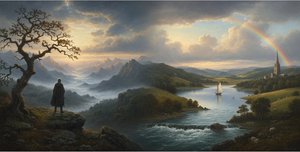
Uma Visão Solitária
Nascido na cidade portuária báltica de Greifswald em 1774, os primeiros anos de Caspar David Friedrich foram moldados por um profundo sentimento de perda. As mortes de sua mãe e de seus irmãos lançaram uma longa sombra sobre sua juventude, fomentando uma sensibilidade à mortalidade que se tornaria um tema central em sua obra. Ele iniciou seu treinamento sob a tutela de seu irmão Christian antes de buscar a arte e a teologia na Universidade de Leipzig. Embora não tenha concluído nenhum dos dois cursos, esse interesse dual pelo visual e pelo espiritual definiria seu caminho criativo. Suas habilidades técnicas foram ainda mais refinadas em Copenhague, onde foi exposto a tradições de paisagem que acabaria por transformar em um meio para expressar estados emocionais internos.
Sua abordagem da paisagem afastou-se do detalhe meticuloso favorecido por seus predecessores. Em vez disso, ele buscou imbuir o cenário com significado simbólico, utilizando elementos naturais para representar a alma humana. Ele frequentemente empregava Rückenfiguren — figuras vistas de costas — para convidar o espectador a compartilhar uma experiência contemplativa. Sua paleta, frequentemente composta por azuis suaves, cinzas e marrons, realçava o clima de introspecção e solenidade que permeia sua obra. Ele não pintava apenas o que via; ele pintava o clima interno do espírito humano.
A Linguagem do Sublime
A obra de Friedrich enfatiza o sublime, buscando uma conexão espiritual através da escala do mundo natural. Suas composições frequentemente colocam figuras solitárias contra uma paisagem vasta e, muitas vezes, avassaladora. Em "Wanderer above the Sea of Fog" (c. 1818), a figura silhuetada confronta um mar de névoa turbulhenta, personificando a tensão entre a presença humana e o infinito. "The Sea of Ice" (1824) apresenta um desolador ermo Ártico, uma representação do poder imenso da natureza e de sua indiferença ao destino humano. Essas obras refletem uma preocupação com a fragilidade da existência e a busca por significado dentro da paisagem.
Suas pinturas frequentemente utilizam elementos específicos para transmitir esses estados internos:
- "The Abbey in the Oakwood" (1809-1810), onde um cemitério de igreja em ruínas e árvores nuas sugerem a mortalidade e a decadência espiritual.
- "Chalk Cliffs on Rügen" (1818), que utiliza a luz atmosférica para definir a costa.
- "The Watzmann," uma representação da majestade das montanhas.
- "Evening Landscape with Two Men" (1830), uma cena tranquila de contemplação ao crepúsculo.
Legado e Redescoberta
A trajetória da carreira de Friedrich não foi uma ascensão constante. Embora tenha alcançado reconhecimento durante sua vida, sua popularidade diminuiu à medida que os gostos artísticos se voltavam para outros movimentos. Ele morreu em Dresden em 1840 e, por um tempo, seu nome desapareceu do primeiro plano do mundo da arte. Sua reputação passou por uma redescoberta significativa no final do século XX, quando foi reconhecido como uma figura central no Romantismo alemão. Sua ênfase na experiência subjetiva e na expressão emocional abriu caminho para movimentos posteriores, incluindo o Simbolismo e o Surrealismo.
Sua influência estendeu-se a artistas que buscavam explorar o mundo interior através de meios visuais. Ao rejeitar o racionalismo do Iluminismo em favor da emoção e da imaginação, ele capturou o espírito de uma era. Suas paisagens serviram como símbolos de identidade nacional durante um período de fragmentação política na Alemanha. Hoje, sua obra continua a ressoar, lembrando ao público a profunda conexão entre a humanidade e o mundo natural.
Perguntas e Respostas
Quantas obras de Caspar David Friedrich estão disponíveis para explorar?
Você pode explorar 297 obras de arte obras de Caspar David Friedrich na página Todas as obras.
Onde as obras de Caspar David Friedrich estão agrupadas por técnica?
Para encontrar todas as obras de Caspar David Friedrich por técnica, acesse a página de Por Técnica do artista.
Como posso encontrar obras de Caspar David Friedrich em uma paleta específica?
As obras de Caspar David Friedrich podem ser exploradas por paleta de cores na página de Por paleta de cores do artista.