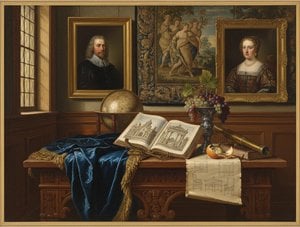
Bernardo Polo: A Master of Baroque Still Life
Bernardo Polo (1686-1700) remains a figure shrouded in mystery, leaving scholars to reconstruct his artistic legacy from scant surviving evidence. Born in Rome during the height of the Baroque period—a time defined by grandeur, dramatic emotion, and meticulous detail—Polo’s brief but impactful career cemented him as one of the foremost practitioners of still life painting in Italy. Despite the paucity of biographical information, art historians recognize Polo's distinctive style and unwavering commitment to capturing the beauty of perishable objects with unparalleled realism.
Early Life & Training: Precise details regarding Polo’s upbringing are elusive. Records indicate he was apprenticed to Giovanni Battista Gaulli, a celebrated Baroque sculptor and painter known for his monumental works in St. Peter's Basilica. This formative association undoubtedly instilled in Polo the principles of sculptural modeling and artistic ambition—skills crucial for mastering the complexities of portraying textures and volumes effectively. He absorbed the lessons of classical sculpture alongside the dramatic flair of Baroque painting, shaping his artistic sensibilities from a young age.
Style & Technique: Polo’s paintings are instantly recognizable by their opulent compositions and masterful execution. He adhered rigorously to Baroque conventions, prioritizing dramatic lighting – chiaroscuro – to sculpt forms from darkness and illuminate surfaces with radiant color. His canvases overflow with meticulously rendered fruit—melons, peaches, plums—flowers—roses, lilies—and luxurious objects like pewter dishes and gilt urns. Polo’s technique involved painstaking layering of glazes and impasto, creating surfaces that shimmered with tactile richness. This meticulous approach demanded immense patience and precision, reflecting a dedication to achieving an astonishing level of realism – capturing not merely what was seen but conveying the very essence of its materiality.
Notable Works: Polo produced a remarkable number of paintings during his tragically short life, primarily focused on still lifes. Among his most celebrated pieces are “Still Life with a Watermelon on a Pewter Dish,” “Still Life with Plums and Figs in a Gilt Mounted Bowl,” and “Still Life with Flowers in a Glass Vase.” These works exemplify Polo’s dedication to capturing the fleeting beauty of nature and elevating commonplace items into objects of sublime artistic contemplation. Each canvas served as an invitation to observe closely, appreciating the subtle nuances of color, texture, and form—a hallmark of Baroque artistry that sought to engage both intellect and emotion.
Influences: Polo's artistic sensibilities were undoubtedly shaped by the prevailing Baroque aesthetic championed by artists like Caravaggio and Rembrandt. However, Polo possessed an individual vision that distinguished him from his contemporaries. He skillfully blended classical ideals with Baroque dynamism, reflecting a sophisticated understanding of artistic tradition while forging his own distinctive path. This synthesis demonstrates Polo’s intellectual curiosity and his ability to synthesize disparate influences into a cohesive artistic expression.
Historical Significance: Bernardo Polo’s contribution to Baroque art is significant not merely for its technical brilliance but also for its embodiment of the era's fascination with sensory experience and intellectual contemplation. His paintings serve as poignant reminders of the ephemeral nature of beauty and invite viewers to appreciate the artistry inherent in capturing fleeting moments of visual splendor. Polo’s legacy continues to inspire artists today, demonstrating that profound artistic expression can emerge from even the most compressed timeframe—a testament to his enduring impact on European art history.