Early Life and Artistic Foundations
Berenice Abbott, born Berenice Alice Abbott on July 17, 1898, in Springfield, Ohio, possessed a spirit that seemed destined for artistic exploration from the outset. Her early years were marked by a quiet intensity, shaped by her parents’ divorce and a childhood spent navigating the complexities of family life. Despite this backdrop, Berenice developed a keen eye for detail and an appreciation for beauty—qualities that would later become central to her photographic vision. She initially pursued studies at The Ohio State University in 1918, but found herself drawn away from academic pursuits, seeking instead the vibrant pulse of New York City. This shift reflected a desire for independence and a yearning to immerse herself in the burgeoning artistic scene of the metropolis. Her time at the university provided her with foundational training in theater and sculpture, disciplines that would subtly inform her later work—particularly her ability to capture human expression and spatial relationships within a frame. It was during this period that she adopted the French spelling of her first name, “Berenice,” a deliberate choice that signaled her embrace of Parisian culture and artistic circles. The move to New York wasn’t merely a geographical change; it represented a conscious decision to forge her own path, free from the constraints of traditional expectations.
Parisian Awakening and Photographic Development
A pivotal moment in Berenice Abbott's life arrived in 1921 when she embarked on a journey to Paris—a city that would become synonymous with artistic innovation and creative liberation. This move proved transformative, propelling her into the heart of Europe’s avant-garde movement. She sought out opportunities for further study, particularly in sculpture at prestigious institutions like the Académie de la Grande Chaumière, honing her technical skills and expanding her artistic vocabulary. However, it was her encounter with Man Ray that truly ignited her passion for photography. Working as his studio assistant, she quickly absorbed the intricacies of darkroom techniques—a realm previously unknown to her—and developed a deep appreciation for the power of the camera to capture fleeting moments and reveal hidden truths. Man Ray recognized Abbott’s innate talent and encouraged her experimentation, providing her with access to his equipment and fostering an environment of creative exploration. This apprenticeship wasn't simply about learning technical skills; it was about discovering a new language—a visual vocabulary that resonated deeply within her artistic sensibilities. During this time, she also began to develop her own photographic style, characterized by a keen eye for detail, a subtle use of light and shadow, and an ability to capture the essence of her subjects. Her early portraits of Parisian artists—including Marcel Duchamp and Jean Cocteau—demonstrated her growing skill and established her reputation within the city’s vibrant artistic community.
The Preservation of Eugène Atget's Legacy
A defining chapter in Berenice Abbott’s career unfolded in 1927 when she encountered the work of Eugène Atget, a largely unrecognized French photographer who had documented the streets of Paris with remarkable sensitivity and insight. Atget’s photographs—a poignant record of disappearing trades, street life, and urban decay—captivated Abbott's imagination and sparked a profound sense of responsibility to preserve his legacy. Recognizing that Atget’s work was in danger of being lost forever, she embarked on a determined effort to acquire his negatives and prints, ultimately securing the majority of his archive through a partnership with Julien Levy, an American art dealer. This acquisition wasn't merely a philanthropic gesture; it was a strategic investment in a unique artistic vision—one that Abbott believed deserved recognition and preservation. Her dedication to Atget’s work extended far beyond simply collecting photographs; she meticulously cataloged and organized his collection, preparing it for publication and exhibition. The resulting book, *Atget, Photographe de Paris*, published in 1930, brought Atget's extraordinary images to a wider audience—cementing Abbott’s role as a champion of forgotten artists and a pioneer in the field of documentary photography.
Documenting New York City: A Modern Metropolis
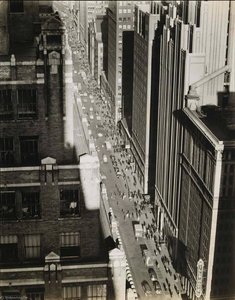
Upon her return to New York City in 1929, Berenice Abbott was struck by the rapid transformation of the city—a dynamic process fueled by industrialization, immigration, and the relentless march of progress. Inspired by Atget’s documentation of Paris, she decided to undertake a similar project: to capture the essence of New York City in all its complexity and contradiction. Working independently through the early years of the Great Depression, Abbott developed a distinctive photographic style—a blend of documentary realism and artistic expression. She employed innovative techniques, including her “Super Sight” process—a method that allowed her to photograph subjects at extremely close range, revealing minute details previously unseen. Her resulting photographs—a series of striking images depicting New York’s architecture, street life, and social landscape—became known as *Changing New York*. This ambitious project was supported by the Works Progress Administration (WPA), providing Abbott with resources and a platform to showcase her work to a wider audience. *Changing New York* stands as a landmark achievement in American documentary photography—a testament to Abbott’s keen eye, technical skill, and unwavering commitment to capturing the spirit of a rapidly changing city.
Legacy and Enduring Influence
Berenice Abbott's legacy extends far beyond her stunning photographs. She is celebrated for pioneering documentary photography, demonstrating an unparalleled ability to convey the essence of urban life through her lens. Her portraits offer intimate glimpses into the lives of influential cultural figures, while her New York City photographs serve as a valuable historical record of the city’s evolution. Crucially, Abbott played a vital role in preserving and promoting the work of Eugène Atget, bringing his artistry to wider recognition and ensuring his place in photographic history. Beyond her artistic practice, she contributed significantly to the field through her writings and illustrations on photographic techniques, furthering its development as an art form. Her photographs are now held in prestigious collections worldwide, including the Smithsonian American Art Museum and the Philadelphia Museum of Art, a testament to their enduring power and significance. Abbott’s influence continues to inspire photographers today, reminding us of the profound ability of the camera to document, interpret, and celebrate the world around us.
Key Influences and Artistic Style
Several key influences shaped Berenice Abbott's artistic vision. Her apprenticeship with Man Ray was foundational, exposing her to avant-garde techniques and introducing her to a network of influential artists. The rediscovery and promotion of Eugène Atget’s work profoundly impacted her approach to documentary photography, inspiring her meticulous documentation of urban environments. Abbott's photographs often reflect the aesthetic sensibilities of the Art Deco Movement, characterized by geometric forms and a sense of modernity. Her style aligned with the principles of “straight photography,” emphasizing sharp focus and unmanipulated images to present a realistic depiction of her subjects, devoid of artificiality or romanticism. This commitment to clarity and authenticity became a hallmark of her work, allowing viewers to connect directly with the scenes she captured and appreciate the beauty inherent in everyday life.