Consultoria de arte gratuita

x

Resumo Biográfico

  • Works on APS: 5
  • Top 3 works:
    • Portrait of an Unknown Elderly Lady
    • Mrs Comfort
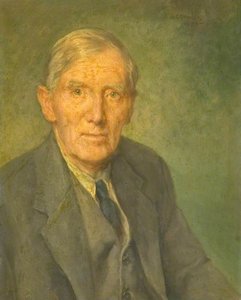
    • Mr F. G. Comfort, Headmaster of Lewisham School, Weston super Mare
  • Top-ranked work: Portrait of an Unknown Elderly Lady
  • Copyright status: Under copyright
  • Museums on APS:
    • North Somerset Council
    • North Somerset Council
    • North Somerset Council
    • North Somerset Council
    • North Somerset Council

Early Life and Artistic Beginnings

Arthur Bentley Connor, born in Battersea, London, in 1880, emerged from a background steeped in professional life rather than artistic tradition—his father was a surgeon. This upbringing, while not directly fostering an early passion for painting, likely instilled within him a keen observational eye and a meticulous attention to detail that would become hallmarks of his later work. Connor’s initial foray into the art world wasn't immediate; he received formal training but distinguished himself through dedicated self-study and a natural aptitude for portraiture. The late Victorian era was a period of significant social change, and while many artists were pushing boundaries with radical new styles, Connor found his niche in capturing the essence of individuals and scenes with a classic sensibility. His early works demonstrate a clear understanding of light and shadow, hinting at an appreciation for the Old Masters—a foundation upon which he would build his distinctive style.

A Prolific Portraitist: Style and Technique

Connor quickly established himself as a prolific portraitist, catering to a clientele that appreciated his ability to render likenesses with both accuracy and grace. His paintings are characterized by a refined technique, often employing subtle glazing techniques to achieve luminous skin tones and rich textures. He wasn’t interested in abstracting form or exploring psychological depths in the manner of some contemporaries; instead, he focused on presenting his subjects—often members of the upper middle class—with dignity and poise. His compositions are typically straightforward, emphasizing the sitter's face and expression. However, within this apparent simplicity lies a remarkable skill in capturing personality and social standing. He masterfully used clothing, accessories, and background details to convey information about his patrons’ lives and status.

Historical Scenes and Narrative Paintings

While best known for his portraits, Connor also ventured into historical painting, creating evocative scenes that reflected his interest in British history and culture. These works demonstrate a broader narrative scope than his portraiture, often depicting moments of everyday life or significant events with meticulous attention to period detail. His approach to these subjects was similarly grounded in realism, eschewing dramatic flourishes for a more understated and authentic representation. The paintings reveal a fascination with costume and social customs, offering glimpses into the past that are both informative and visually appealing. These historical scenes weren’t grand allegories or heroic epics; they were intimate portrayals of life as it was lived, imbued with a sense of quiet dignity.

Influences and Artistic Development

Identifying specific artistic influences on Connor is challenging, as his style represents a synthesis of various traditions rather than direct imitation. However, the influence of 19th-century British portraitists such as John Everett Millais and William Powell Frith is evident in his meticulous realism and attention to detail. He also appears to have been drawn to the work of earlier masters like Rembrandt and Van Dyck, whose use of light and shadow informed his own technique. Throughout his career, Connor maintained a consistent artistic vision, refining his skills and expanding his repertoire without abandoning the core principles that defined his style. His development wasn’t marked by radical shifts or experimentation; instead, it was a gradual process of honing his craft and deepening his understanding of human character and historical context.

Legacy and Historical Significance

Arthur Bentley Connor's work offers a valuable window into the social and cultural landscape of early 20th-century Britain. While he may not be as widely recognized as some of his more avant-garde contemporaries, his paintings provide a compelling glimpse into the lives and values of the upper middle class during a period of rapid change. His portraits are not merely representations of individuals; they are artifacts of a bygone era, reflecting the tastes, aspirations, and social conventions of their time. Today, Connor’s work is appreciated for its technical skill, historical accuracy, and understated elegance. He stands as a testament to the enduring appeal of traditional portraiture and narrative painting—a skilled craftsman who captured the essence of his subjects with both sensitivity and grace.