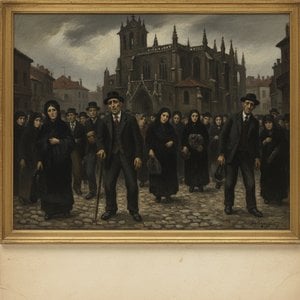
Antonio Passporte: Capturing Madrid’s Soul Through Photographic Vision
Antonio Passporte (loty collections), born in Madrid, Spain in 1901, stands as a testament to the enduring power of documentary photography and its ability to encapsulate the spirit of an era. His prolific output during the early 20th century focused primarily on documenting Madrid’s architectural landmarks and scenic landscapes—a project inextricably linked with the establishment of Loty Collections, a pioneering postcard company that cemented his legacy as one of Spain's foremost visual chroniclers.
- Early Life & Education: Passaporte’s formative years were marked by a fascination with photography, nurtured during a period when the medium was rapidly gaining prominence in artistic circles. Details about his formal education remain scarce, suggesting he honed his skills largely through self-directed study and experimentation. He possessed an innate curiosity for capturing the world around him, developing a meticulous eye for composition and detail—qualities that would define his artistic approach throughout his career.
- The Loty Collections Era (1926-1939): The founding of Loty Collections alongside Concepción López and Charles Alberty proved to be a pivotal moment in Passaporte’s career. Recognizing the burgeoning demand for visual souvenirs, they embarked on an ambitious endeavor to produce high-quality postcards featuring photographs of Madrid's iconic sites—the Plaza de América and Palacio de Arte Antiguo being among his most celebrated subjects. This collaboration not only secured financial stability but also established Passporte as a respected figure within the photographic community. His images became instantly recognizable symbols of Madrid’s grandeur, capturing the essence of its urban landscape with remarkable precision.
- Royal Patronage & Artistic Style: Passaporte’s reputation extended beyond commercial ventures; he gained recognition for photographing members of the Spanish Royal Family, capturing portraits that offer invaluable glimpses into the Habsburg dynasty's visual culture. His photographic style was characterized by meticulous attention to detail and a commitment to capturing light and atmosphere—traits evident in his landscapes and architectural compositions. He skillfully employed techniques like chiaroscuro, creating dramatic contrasts between light and shadow to convey emotion and depth within his subjects’ expressions.
- The Civil War & Legacy: The outbreak of the Spanish Civil War disrupted Passaporte’s artistic pursuits, forcing him to adapt to challenging circumstances. Despite the turmoil of the period, he continued documenting Madrid's cityscape, preserving a visual record of daily life amidst political upheaval. His photographs documented scenes of resilience and perseverance—a poignant reminder of humanity’s capacity for beauty even in times of conflict. Following the war, Passaporte’s archive was entrusted to Fototeca del Patrimonio Histórico, ensuring his work would endure for future generations.
- Later Years & Recognition: Passaporte remained active in photography until his death in 1983. His enduring influence can be seen in Museo Antonio Parreiras and Fundación Antonio de Nebrija where you can admire his photographic legacy. He is remembered as a pivotal figure in Spanish art history, whose images continue to resonate with viewers today—a testament to the timeless beauty of observation and artistic dedication. Passaporte’s contribution to visual culture remains significant, solidifying his place among Spain's most celebrated photographers.
Note: Further research into Passporte’s personal life and artistic influences would enrich this biographical sketch.