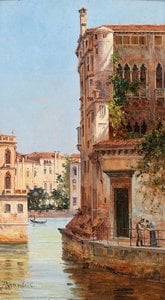
Antonietta Brandeis: A Venetian Light
Antonietta Brandeis (1848–1926), a name perhaps less familiar than those of her celebrated contemporaries, nevertheless represents a compelling story of artistic ambition and achievement in 19th-century Italy. Born Antonie Brandeisová in the Bohemian village of Miskovice in 1848, her journey was one marked by both privilege – access to education uncommon for women of her time – and pragmatic adaptation within a male-dominated art world.
Early Life and Education
- Born: January 13, 1848, Miskovice (near Kutná Hora), Bohemia (now Czech Republic)
- Education: Venetian Academy of Fine Arts
- Influences: Karel Javůrek’s teachings instilled in her the principles of academic painting and exposure to European Romanticism and Realism circulating at the time.
The Venetian Academy proved pivotal. Brandeis excelled, earning accolades in disciplines ranging from perspective and life drawing to landscape and art history – skills honed under the tutelage of esteemed professors like Michelangelo Grigoletti, Domenico Bresolin, Napoleone Nani, and Federico Moja.
Venetian Visions: Style and Subject Matter
- Style: Detailed, luminous, influenced by the *vedutisti* tradition.
- Subject Matter: Venetian scenes (*vedute*) – iconic canals, grand palazzos, bustling piazzas, and intimate glimpses of daily life; genre painting; portraiture; and religious subjects.
Recognition and Legacy
- Exhibitions: Widely exhibited across Europe – Venice, Florence, Budapest, Melbourne, Turin, Milan, and Rome – showcasing her talent and commercial success.
- Notable Work: “Palazzo, Marin Falier” sold to M. Hall of London in 1875; Altarpieces for the island of Korcula in Croatia.
- Historical Significance: A pioneer as a woman artist navigating a challenging professional landscape; her acceptance into the Venetian Academy and consistent exhibition record solidify her reputation as a skilled and accomplished artist.
Her paintings offer valuable insights into 19th-century Venetian life and culture, capturing not just the physical beauty of the city but also its unique atmosphere and enduring allure.
Perguntas e Respostas
Posso navegar pelas obras de Antonietta Brandeis por paleta de cores?
A página Por paleta de cores agrupa as obras de Antonietta Brandeis por suas paletas de cores.
Quais cores Antonietta Brandeis utilizou com mais frequência?
O perfil de cores da obra de Antonietta Brandeis pode ser visualizado na página DNA da Paleta do artista.
Onde as obras de Antonietta Brandeis estão organizadas por cor?
A página Índice de Cores organiza as obras de Antonietta Brandeis por cor.