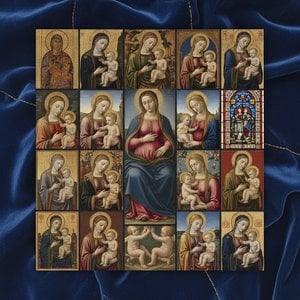
Francesco Conti: A Florentine Baroque Master Reflecting Inner Vision
Francesco Conti (1681 – 1760) stands as a pivotal figure within the vibrant artistic landscape of Florence during the Baroque era, embodying the spirit of dramatic realism and masterful chiaroscuro techniques—characteristics that would define his oeuvre for decades to come. His formative years were steeped in the tutelage of Giovanni Maria Morandi and Carlo Maratta – masters whose stylistic approaches profoundly shaped his own artistic vision, instilling a dedication to theatrical grandeur and emotional intensity.
Early Influences: Conti’s initial training under Morandi exposed him to the refined elegance of Roman Baroque painting, emphasizing idealized forms and balanced compositions. Simultaneously, Maratta's teachings championed theatrical grandeur and emotional intensity – elements that would become integral to Conti’s artistic sensibilities. This dual mentorship ensured he absorbed the best of both traditions, forging a distinctive style rooted in meticulous observation and expressive brushwork.
The Florentine Patronage: Shaping Conti’s Artistic Journey
Returning to Florence after his formative years in Rome, Conti secured invaluable support from the Riccardi family, who regularly commissioned him for monumental altarpieces and provided a stable income. This patronage allowed him to pursue his artistic endeavors with unwavering commitment and fostered collaborations that enriched Florentine art history. The Riccardi’s discerning taste encouraged Conti to explore ambitious themes—religious narratives imbued with profound symbolism—resulting in masterpieces that continue to captivate audiences today.
Technique & Style: Mastering Chiaroscuro for Emotional Depth
Conti's signature technique involved layering paint with painstaking care, creating textures that mirrored the grandeur and solemnity of his subjects. He skillfully manipulated light sources—a hallmark of Maratta’s influence—to sculpt forms and imbue canvases with an ethereal glow, conveying a sense of spiritual contemplation. This masterful use of chiaroscuro wasn't merely stylistic; it served as a conduit for emotional expression, mirroring the psychological complexities inherent in portraying human figures.
Iconic Works: Reflections of Faith & Virtue
Among Conti’s most celebrated creations are ‘Madonna & Child with Saint Sylvester I, St. Paul and Saint Catherine of Alexandria,’ commissioned for Sant'Andrea church by the Riccardi family—a testament to his ability to capture divine grace and human compassion. Similarly, ‘Death of King Josiah’ exemplifies his dramatic flair and masterful composition, conveying a powerful narrative about mortality and spiritual redemption. These paintings stand as enduring symbols of Florentine Baroque artistry, continuing to inspire admiration for their beauty and intellectual depth.
Legacy & Influence: Conti's Enduring Impact on Art History
Francesco Conti’s legacy extends beyond his individual masterpieces; he profoundly influenced subsequent generations of artists—particularly Johann Sebastian Bach, who transcribed several of Conti’s cantatas—demonstrating the enduring resonance of his musical compositions. His work remains a cornerstone of Florentine Baroque art history, securing his place as one of Italy's most influential painters and cementing his reputation for artistic innovation and emotional sincerity.



 Visualizar em escala
 Alternar para Impressão
 Enviar
 Compartilhar
 Ver detalhes
 Guia
Guia

 Baixar imagem
 Semelhantes
 Raio X
 Apresentação de slides
 Estatísticas


 Ver mais






































 A opção de vidro está disponível apenas para tamanhos inferiores a 110 cm