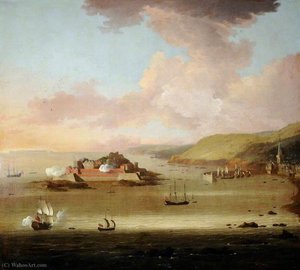
Peter Monamy, 1681 – 1749

Peter Monamy: As 71 Pinturas Mais Famosas

The Opening of the First Eddystone Lighthouse in 1698 (1703) é a pintura mais famosa de Peter Monamy, guardada pelo Yale Center for British Art em New Haven. Shipping in a Calm (1712) e Royal Yacht Becalmed at Anchor (1720) são as próximas duas obras que o mundo melhor conhece. Dos 72 trabalhos de Peter Monamy em nosso catálogo, aqui estão os 71 que colecionadores e visitantes de museus mais observam, com o ano, o museu e a história de cada um.

Classificado de acordo com o nosso índice de popularidade, que combina buscas, visitas e pedidos de cada obra. Atualizado em Outubro 2026. Cada obra-prima nesta página pode ser encomendada como uma reprodução em óleo pintada à mão, com qualidade de museu, ou como uma impressão de fine art, no tamanho de sua escolha.

Retrato de Peter Monamy
Peter Monamy · 1681 – 1749
Nascimento · falecimento
1681 – 1749, Londres
Movimento
Neoclassicism
Obras em nosso catálogo
72
As mais famosas
The Opening of the First Eddystone Lighthouse in 1698 (1703)
Mais obras em
National Maritime Museum

Top 10: as pinturas mais conhecidas de Peter Monamy

O restante do ranking de Peter Monamy, de 11 a 71

Pinturas de Peter Monamy por período

Os temas que Peter Monamy mais pintou

Os quatro temas que mais se repetem entre estas obras-primas, com o melhor exemplo de cada um.

Onde ver as pinturas de Peter Monamy

Os 8 museus que detêm a maioria das pinturas desta página.

Museus Cidade Obras de Peter Monamy Pinturas desta lista
National Maritime Museum, LondresNational Maritime Museum Londres 19 Three English Flagships Becalmed, The Capture of Louisburg, 28 June 1745, The Burning of HMS Royal James at the Battle of Solebay, 28 May 1672
Yale Center for British Art, New HavenYale Center for British Art New Haven 6 The Opening of the First Eddystone Lighthouse in 1698, Shipping in a Calm, Royal Yacht Becalmed at Anchor
Felbrigg Hall, NorwichFelbrigg Hall Norwich 1 Four British Warships and a Fishing-smack in a Strong Wind
Ardress HouseArdress House 1 Stormy Seascape
Royal Collection, LondresRoyal Collection Londres 1 A Calm with a Royal Yacht Firing a Salute
Antony HouseAntony House 1 A Naval Engagement between an English Ship and Barbary Ships
Museu Nacional de Varsóvia, VarsóviaMuseu Nacional de Varsóvia Varsóvia 1 Ships on the sea
Metropolitan Museum of Art, Nova YorkMetropolitan Museum of Art Nova York 1 Harbor Scene: An English Ship with Sails Loosened Firing a Gun

Peter Monamy através das décadas: uma obra-prima para cada uma

  1. 1700s
  2. 1710s
  3. 1720s
  4. 1730s

Pinturas de Peter Monamy: perguntas frequentes

Qual é a pintura mais famosa de Peter Monamy?Mostrar a resposta

The Opening of the First Eddystone Lighthouse in 1698 (1703), Yale Center for British Art, New Haven. Seguem-se Shipping in a Calm (1712) e Royal Yacht Becalmed at Anchor (1720).

Com que idade Peter Monamy pintou The Opening of the First Eddystone Lighthouse in 1698?Mostrar a resposta

22 anos: The Opening of the First Eddystone Lighthouse in 1698 data de 1703 e Peter Monamy nasceu em 1681.

Quais são as 10 pinturas mais famosas de Peter Monamy?Mostrar a resposta

The Opening of the First Eddystone Lighthouse in 1698, Shipping in a Calm, Royal Yacht Becalmed at Anchor, An Evening Calm, Four British Warships and a Fishing-smack in a Strong Wind, Stormy Seascape, Three English Flagships Becalmed, A Calm with a Royal Yacht Firing a Salute, An English Royal Yacht Standing Offshore in a Calm e British Men-of-War and a Sloop. O ranking acima apresenta o ano e o museu de cada uma.

Quantas pinturas de Peter Monamy existem?Mostrar a resposta

Nosso catálogo lista 72 obras de Peter Monamy, datadas de 1703 a 1730.

Onde posso ver as pinturas mais famosas de Peter Monamy?Mostrar a resposta

A maioria deles está em National Maritime Museum (Londres), Yale Center for British Art (New Haven) e Felbrigg Hall (Norwich). A tabela acima lista os museus um a um.

Em que período Peter Monamy pintou as suas obras mais conhecidas?Mostrar a resposta

Em 1720s: 7 das 71 obras nesta página datam dessa época, entre elas Royal Yacht Becalmed at Anchor.

Qual é a pintura mais antiga e a mais recente de Peter Monamy?Mostrar a resposta

A obra mais antiga nesta página é de The Opening of the First Eddystone Lighthouse in 1698 (1703), e a mais recente é de An English Royal Yacht Standing Offshore in a Calm (1730).

Quais temas Peter Monamy pintou?Mostrar a resposta

Wars (15), Men (13) e 18th century (9), entre as 71 obras nesta página.

A qual movimento pertence a arte de Peter Monamy?Mostrar a resposta

Neoclassicism, como mostram as pinturas nesta página.

Quais pinturas de Peter Monamy o National Maritime Museum possui?Mostrar a resposta

Three English Flagships Becalmed, The Capture of Louisburg, 28 June 1745 e The Burning of HMS Royal James at the Battle of Solebay, 28 May 1672 estão entre as 19 obras nesta página pertencentes ao National Maritime Museum, Londres.

Onde posso comprar uma reprodução de Peter Monamy?Mostrar a resposta

Sim. Todas as pinturas desta página podem ser encomendadas como uma reprodução em óleo pintada à mão com qualidade de museu ou como uma impressão de fine art, no tamanho de sua escolha, a partir da própria página da pintura.

Peter Monamy: biografia

A Life Immersed in the Maritime World

Peter Monamy, born in London in 1681, occupies a pivotal position in the development of English marine painting. He wasn’t merely a recorder of ships and seascapes; he was a chronicler of an era—an age defined by Britain's burgeoning naval power and its expanding global reach. His life, deeply intertwined with the maritime world through familial connections to Guernsey in the Channel Islands, instilled within him a lifelong fascination with all things nautical. This wasn’t simply aesthetic appreciation; it was an intimate understanding born from heritage and observation. Monamy didn’t just paint ships, he understood them—their construction, their function, and the lives of those who sailed upon them.

From Decorative Arts to Masterful Seascapes

Monamy's artistic journey began with a solid grounding in the decorative arts. At fifteen years old, he was apprenticed to William Clark, a master painter-stainer specializing in interior decoration and ornamental painting. This apprenticeship wasn’t confined to narrow specialization; it encompassed overdoor paintings, overmantels, and even large-scale house murals—a broad education that honed his technical skills and exposed him to diverse artistic challenges. Significantly, he shared this workshop with James Thornhill, who would later achieve renown as a historical painter, indicating the high caliber of Clark’s tutelage. This early experience in decorative painting likely informed Monamy's meticulous attention to detail and his ability to create visually compelling compositions. It provided him with a foundation upon which he could build his unique style, moving beyond mere ornamentation towards capturing the dynamism and drama of life at sea. The influence of earlier Dutch masters, particularly the Van de Veldes—renowned for their realistic maritime depictions—is evident in Monamy’s work, but he wasn't simply an imitator; he synthesized these influences with his own keen observation and artistic sensibilities.

Capturing the Essence of Naval Life

Monamy’s style is characterized by a remarkable realism and an unwavering focus on detail, particularly in his renderings of ships. He possessed an exceptional ability to depict rigging, sails, and hull construction with accuracy, demonstrating a profound understanding of shipbuilding techniques. However, his paintings weren't merely technical exercises; they were imbued with a sense of movement and atmosphere. He frequently depicted scenes of action—naval battles, turbulent storms, and the everyday bustle of port life—conveying a palpable sense of drama and excitement. Sovereign of the Seas, for example, stands as a testament to his skill in portraying large warships with meticulous precision, while **The Capture of Porto Bello by Admiral Edward Vernon** showcases his ability to document significant historical events with both artistic flair and factual accuracy. These weren’t just paintings; they were visual records of Britain's naval triumphs and its growing maritime dominance. His works resonated deeply with a public eager for depictions of national pride and military prowess, securing commissions from both private collectors and government officials.

Notable Achievements & Influences

Monamy’s dedication to realism extended beyond mere representation; he sought to convey the emotional impact of his subjects—the courage of sailors facing danger, the grandeur of naval ceremonies, and the sublime beauty of a stormy seascape. He achieved considerable acclaim during his lifetime, becoming Liveryman of The Worshipful Company of Painter-Stainers in 1726, reflecting the esteem with which he was held by fellow artists and craftsmen. His artistic vision drew inspiration from the legacy of Dutch marine painters like Rembrandt and Jacob van Ruysdael, whose masterful use of light and shadow established a precedent for Monamy’s own approach to composition. Furthermore, his meticulous attention to detail—a hallmark of Baroque art—was undoubtedly shaped by the influence of artists such as Michelangelo Buonarroti and Caravaggio, who championed dramatic realism and emotional intensity. ## Legacy & Enduring Significance Peter Monamy's contribution to English art transcends his individual paintings. He played a crucial role in establishing a distinct British tradition within marine painting, bridging the gap between earlier Dutch influences and a uniquely English style. His detailed and realistic depictions of ships and naval life helped define the genre for generations to come. He wasn’t simply copying what had been done before; he was adapting it, refining it, and imbuing it with a distinctly British sensibility. He died in 1749, leaving behind a body of work that continues to be appreciated by art historians and enthusiasts alike. His legacy isn’t just about technical skill—it's about his ability to capture the spirit of an era, to convey the power and majesty of the sea, and to immortalize the ships and sailors who navigated its treacherous waters. His paintings remain invaluable historical documents as well as enduring artistic achievements, offering a glimpse into a pivotal period in British history and the lives of those who shaped it.