Koloman Moser, 1868 – 1918

Koloman Moser: As 100 Pinturas Mais Famosas

Dança das Madonas Vestidas de Guirlanda (1898) é a pintura mais famosa de Koloman Moser, guardada pelo Secession em Viena. Poster of the Beethoven sonatas evening (1908) e Drafts for the exlibris for Fritz Waerndorfer (1903) são as próximas duas obras que o mundo melhor conhece. Dos 189 trabalhos de Koloman Moser em nosso catálogo, aqui estão os 100 que colecionadores e visitantes de museus mais observam, com o ano, o museu e a história de cada um.

Classificado de acordo com o nosso índice de popularidade, que combina buscas, visitas e pedidos de cada obra. Atualizado em Outubro 2026. Cada obra-prima nesta página pode ser encomendada como uma reprodução em óleo pintada à mão, com qualidade de museu, ou como uma impressão de fine art, no tamanho de sua escolha.

Retrato de Koloman Moser
Koloman Moser · 1868 – 1918
Nascimento · falecimento
1868 – 1918, Viena
Movimento
Art nouveau
Obras em nosso catálogo
189
As mais famosas
Dança das Madonas Vestidas de Guirlanda (1898)
Mais obras em
Leopold Museum

Top 10: as pinturas mais conhecidas de Koloman Moser

Dança das Madonas Vestidas de Guirlanda (1898) de Koloman Moser
1

Dança das Madonas Vestidas de Guirlanda

1898 · Acrílico sobre tela · Secession, Viena

Dance of the Wreath-Bearing Maidens - Uma Sinfonia de Forma e Cor na Secession Viennese A pintura "Dança das Ninfeas Vestidas de Guirlandas" de Koloman Moser, obra emblemática da Secession Viennese, transcende o mero retrato arquitetônico para se tornar um manifesto visual da estética austríaca do início do século XX. Criada em 1898, esta peça artística captura a essência da influência greco-romana na arte moderna, buscando uma beleza idealizada que…

Hand-painted oil reproduction from $181 48 × 21 cm
Poster of the Beethoven sonatas evening (1908) de Koloman Moser
2

Poster of the Beethoven sonatas evening

1908 · Print

The Poster of the Beethoven sonatas evening, created in 1908 by the renowned Austrian artist Koloman Moser, is a masterpiece that embodies the essence of Art Nouveau. This captivating poster, measuring 95 x 31 cm, was designed to promote an evening dedicated to the works of Ludwig van Beethoven. Artistic Style and Influence Koloman Moser, a prominent figure in the Vienna Secession movement, was deeply influenced by the Arts &…

Hand-painted oil reproduction from $181 18 × 57 cm Same size as the original $241 31 × 95 cm Order at original size →
Drafts for the exlibris for Fritz Waerndorfer (1903) de Koloman Moser
3

Drafts for the exlibris for Fritz Waerndorfer

1903 · Ink On Paper

The ink flows across the paper in a rhythmic dance, capturing a moment of transition between thought and final form. In this 1903 draft for an exlibris, the lines possess a liquid quality, winding around figures with an organic grace that feels alive. Three women emerge from the composition, their bodies elongated and poised in a way that suggests a dreamlike elegance. One figure wears a crown, her presence lending…

Hand-painted oil reproduction from $231 31 × 32 cm
Semmering Landscape de Koloman Moser
4

Semmering Landscape

Oil On Canvas

The landscape of the Semmering region finds a quiet, symbolic expression in this work. Mountains rise against a sky saturated with purple hues, while a rising sun casts a warm glow over the peaks. Scattered trees provide texture and depth to the composition, grounding the ethereal light in the physical reality of the terrain. Two figures are positioned within the scene—one near the center and another toward the right—offering a…

Hand-painted oil reproduction from $181 37 × 27 cm Same size as the original $203 48 × 36 cm Order at original size →
Loneliness (1902) de Koloman Moser
5

Loneliness

1902 · Watercolor

In Loneliness, Koloman Moser explores a quiet, introspective moment through the medium of watercolor. Created about 1902, this work reflects the sensibilities of the Art Nouveau style, focusing on a singular, solitary figure. A man stands beneath a tree, his head partially obscured by the foliage, creating a sense of withdrawal from the world around him. This choice of posture suggests a deep internal focus, a retreat into the self…

Hand-painted oil reproduction from $181 31 × 32 cm
Figure study of Tristan (1915) de Koloman Moser
6

Figure study of Tristan

1915 · Drawing

The scene unfolds through a black and white drawing titled Figure study of Tristan. Created by Koloman Moser, this work captures a singular, quiet moment of preparation. The artist’s hand moves across the paper to document the human form, focusing on the physical presence of the subject. It is a study of light and shadow, stripped of color to emphasize the raw essence of the figure.

Hand-painted oil reproduction from $181 25 × 41 cm Same size as the original $182 25 × 41 cm Order at original size →
Poster for 'Prince Richard Metternich' (1899) de Koloman Moser
7

Poster for 'Prince Richard Metternich'

1899

The painting titled Poster for Prince Richard Metternich, created by the renowned artist Koloman Moser in 1899, is a quintessential representation of the Art Nouveau style. This captivating piece measures 51 x 175 cm and showcases Moser's mastery over the genre. The Artistic Vision At first glance, the painting presents a woman in a flowing blue dress with her arms outstretched, seemingly floating or dancing against a serene blue sky…

Hand-painted oil reproduction from $181 59 × 17 cm Same size as the original $422 175 × 51 cm Order at original size →
Self Portrait in Colonial Dress (1910) de Koloman Moser
8

Self Portrait in Colonial Dress

1910 · Acrylic On Paper · Kunsthistorisches Museum, Viena

A Portrait Steeped in Symbolism: Koloman Moser’s Self Portrait Vienna Secession, established in 1897, represented a radical departure from the conservative artistic conventions of its time. At its core was a desire to forge new paths for Austrian art—paths that prioritized geometric abstraction and expressive color alongside traditional craftsmanship. Among its most influential members was Koloman Moser, a painter, sculptor, ceramicist, textile designer, and educator whose vision profoundly shaped the…

Hand-painted oil reproduction from $181 31 × 32 cm Same size as the original $227 50 × 50 cm Order at original size →

O restante do ranking de Koloman Moser, de 11 a 100

Inlaid Eisler-Terramare Armoire (1903) de Koloman Moser
#13

Inlaid Eisler-Terramare Armoire

1903 · Leopold Museum

The Inlaid Eisler-Terramare Armoire represents a rigorous application of the Gesamtkunstwerk philosophy, where furniture functions as an architectural component of a total interior. Created in 1903, this piece…

Marigolds (1909) de Koloman Moser
#42

Marigolds

1909 · Leopold Museum

The canvas presents a dense, all-over arrangement of marigold blossoms. These flowers occupy the majority of the frame, creating a surface pattern that lacks a single focal point.…

Leve para casa from $181 →
Steinhoch church in Vienna de Koloman Moser

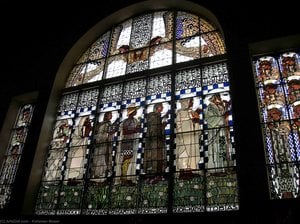
Steinhoch church in Vienna is a design for the glass windows of the Kirche am Steinhof, also known as the Church of St. Leopold. Located in Vienna, Austria,…

Pinturas de Koloman Moser por período

Os temas que Koloman Moser mais pintou

Os quatro temas que mais se repetem entre estas obras-primas, com o melhor exemplo de cada um.

Onde ver as pinturas de Koloman Moser

Os 7 museus que detêm a maioria das pinturas desta página.

Museus Cidade Obras de Koloman Moser Pinturas desta lista
Leopold Museum, VienaLeopold Museum Viena 6 The Rax, Inlaid Eisler-Terramare Armoire, Venus in the Grotto
Secession, VienaSecession Viena 2 Dança das Madonas Vestidas de Guirlanda
MAK – Museu de Artes Aplicadas, VienaMAK – Museu de Artes Aplicadas Viena 2 Decorative Fabric [“Bird Bülow”]
Kunsthistorisches Museum, VienaKunsthistorisches Museum Viena 1 Self Portrait in Colonial Dress
Harvard Art Museums, CambridgeHarvard Art Museums Cambridge 1 ‘Surface Decoration,’ Cover
Albertina, VienaAlbertina Viena 1 Loïe Fuller in the Dance
Museu de Arte do Condado de Los Angeles, Los AngelesMuseu de Arte do Condado de Los Angeles Los Angeles 1 'The Rich Catch of Fish' Armchair

Koloman Moser através das décadas: uma obra-prima para cada uma

  1. 1880s
  2. 1890s
    Dança das Madonas Vestidas de Guirlanda (1898) de Koloman Moser
    Posição 1 de 100

    Dança das Madonas Vestidas de Guirlanda

    Idade 22 – 31 · Secession

    Dance of the Wreath-Bearing Maidens - Uma Sinfonia de Forma e Cor na Secession Viennese A pintura "Dança das Ninfeas Vestidas de Guirlandas" de Koloman Moser, obra emblemática…

  3. 1900s
    Poster of the Beethoven sonatas evening (1908) de Koloman Moser
    Posição 2 de 100

    Poster of the Beethoven sonatas evening

    Idade 32 – 41

    The Poster of the Beethoven sonatas evening, created in 1908 by the renowned Austrian artist Koloman Moser, is a masterpiece that embodies the essence of Art Nouveau. This…

  4. 1910s
    Figure study of Tristan (1915) de Koloman Moser
    Posição 6 de 100

    Figure study of Tristan

    Idade 42 – 50

    The scene unfolds through a black and white drawing titled Figure study of Tristan. Created by Koloman Moser, this work captures a singular, quiet moment of preparation. The…

Pinturas de Koloman Moser: perguntas frequentes

Qual é a pintura mais famosa de Koloman Moser?Mostrar a resposta

Dança das Madonas Vestidas de Guirlanda (1898), Secession, Viena. Seguem-se Poster of the Beethoven sonatas evening (1908) e Drafts for the exlibris for Fritz Waerndorfer (1903).

Com que idade Koloman Moser pintou Dança das Madonas Vestidas de Guirlanda?Mostrar a resposta

30 anos: Dança das Madonas Vestidas de Guirlanda data de 1898 e Koloman Moser nasceu em 1868.

Quais são as 10 pinturas mais famosas de Koloman Moser?Mostrar a resposta

Dança das Madonas Vestidas de Guirlanda, Poster of the Beethoven sonatas evening, Drafts for the exlibris for Fritz Waerndorfer, Semmering Landscape, Loneliness, Figure study of Tristan, Poster for 'Prince Richard Metternich', Self Portrait in Colonial Dress, Sketch for a poster of the Vienna Workshop e Am Steinhof Church, Design for the rise window. O ranking acima apresenta o ano e o museu de cada uma.

Quantas pinturas de Koloman Moser existem?Mostrar a resposta

Nosso catálogo lista 189 obras de Koloman Moser, datadas de 1888 a 1917.

Onde posso ver as pinturas mais famosas de Koloman Moser?Mostrar a resposta

A maioria deles está em Leopold Museum (Viena), Secession (Viena) e MAK – Museu de Artes Aplicadas (Viena). A tabela acima lista os museus um a um.

Em que período Koloman Moser pintou as suas obras mais conhecidas?Mostrar a resposta

Em 1900s: 47 das 100 obras nesta página datam dessa época, entre elas Poster of the Beethoven sonatas evening.

Qual é a pintura mais antiga e a mais recente de Koloman Moser?Mostrar a resposta

A obra mais antiga nesta página é de Male Nude Study (1888), e a mais recente é de Stamp Design for Emperor Charles I (not accepted) (1917).

Quais temas Koloman Moser pintou?Mostrar a resposta

Designs and sketches (17), Vienna secession (8) e Women (7), entre as 100 obras nesta página.

Sobre o que Koloman Moser pintou e com o que?Mostrar a resposta

Oil On Canvas: 2 de um total de 100 obras nesta página.

A qual movimento pertence a arte de Koloman Moser?Mostrar a resposta

Art nouveau, como mostram as pinturas nesta página.

Quais pinturas de Koloman Moser o Leopold Museum possui?Mostrar a resposta

The Rax, Inlaid Eisler-Terramare Armoire e Venus in the Grotto estão entre as 5 obras nesta página pertencentes ao Leopold Museum, Viena.

Onde posso comprar uma reprodução de Koloman Moser?Mostrar a resposta

Sim. Todas as pinturas desta página podem ser encomendadas como uma reprodução em óleo pintada à mão com qualidade de museu ou como uma impressão de fine art, no tamanho de sua escolha, a partir da própria página da pintura.

Koloman Moser: biografia

Early Life and Artistic Foundations

Koloman Moser, a name synonymous with the vibrant spirit of Vienna’s artistic landscape at the turn of the 20th century, was born on March 30, 1868, in the heart of Vienna, Austria-Hungary – a city already brimming with creative energy. His origins were deeply intertwined with the cultural currents shaping his future as an artist and designer. His father, Josef Moser, held a position within the Viennese Academy, exposing young Koloman to the world of art from an early age. This familial connection fostered a profound appreciation for aesthetics and craftsmanship, laying the groundwork for his later explorations across diverse artistic disciplines. Formal education at both the Wiener Akademie and the Kunstgewerbeschule proved instrumental in shaping Moser’s technical skills and broadening his understanding of design principles. The Kunstgewerbeschule, in particular, provided him with a rigorous training in applied arts – a crucial element that would inform his later work in furniture design, ceramics, and textiles. It was during this period that he developed a keen eye for detail, an appreciation for geometric forms, and a fascination with the interplay between functionality and beauty—qualities that would become hallmarks of his distinctive style. The influence of his family’s background, combined with the structured environment of these esteemed institutions, provided him with a solid foundation upon which to build his artistic career.

A Pioneer of Vienna Secession and the Wiener Werkstätte

Moser's emergence as a significant figure in Viennese art coincided with the rise of the Vienna Secession in 1897 – a movement that challenged the established norms of the time and championed innovation, experimentation, and a rejection of academic traditions. He quickly embraced the Secession’s ethos, becoming one of its founding members alongside artists like Gustav Klimt and Josef Hoffmann. This association proved pivotal, exposing Moser to a network of fellow creatives who shared his desire to push artistic boundaries and redefine the role of art in society. In 1903, building upon the principles of the Secession, Moser co-founded the Wiener Werkstätte (Vienna Workshop) – a collaborative endeavor that aimed to integrate art into everyday life by producing a wide range of aesthetically pleasing household goods. Alongside Josef Hoffmann, this workshop became a crucible for artistic innovation, bringing together artists, craftsmen, and designers to create furniture, textiles, ceramics, and more—all united by a shared commitment to “Gesamtkunstwerk” – the concept of a total work of art where every element contributes to a cohesive and harmonious whole. Moser’s leadership within the Wiener Werkstätte was characterized by his tireless energy, his visionary ideas, and his ability to inspire others to embrace new approaches to design.

A Diverse Artistic Palette: Graphic Design, Architecture, and Applied Arts

Moser's artistic output spanned a remarkably diverse range of media, reflecting his versatility as an artist and designer. His contributions to graphic art were particularly noteworthy, characterized by their clarity, elegance, and innovative use of typography. He designed postage stamps, magazine vignettes, and other printed materials with distinctive geometric patterns and stylized imagery—works that demonstrated his mastery of visual communication. Beyond graphic design, Moser’s talent extended to fashion, stained glass windows, porcelains, ceramics, blown glass, tableware, silver, and jewelry. His architectural designs, most notably the apse mosaic and glass windows for the Kirche am Steinhof in Vienna (1904), showcased his ability to blend artistic vision with functional design—a testament to his holistic approach to art and architecture. The intricate details of these works, combined with their harmonious integration into the surrounding environment, exemplify Moser’s unique aesthetic sensibility.

Influences, Evolution, and Enduring Legacy

Moser's artistic development was profoundly influenced by several key movements, including Art Nouveau, Symbolism, and the Vienna Secession itself. He drew inspiration from Japanese woodblock prints, which informed his use of flat planes of color and simplified forms—a stylistic choice that contributed to the distinctive visual language of his work. Over time, his style evolved, becoming increasingly abstract and geometric while retaining a sense of elegance and refinement. His legacy is deeply embedded in the fabric of Viennese art and design. His designs were immortalized on the Austrian 100 Euro Steinhof Church commemorative coin (2005), recognizing his enduring influence on art and design. Koloman Moser’s contributions helped shape the course of modern art and design, emphasizing the importance of integrating beauty into everyday objects and spaces—a principle that continues to resonate with artists and designers today. He died in Vienna in 1918, leaving behind a rich body of work that serves as a testament to his creativity, innovation, and enduring artistic vision.