Xie Zhiguang: A Weaver of Rural Dreams and Blossoming Modernity
Xie Zhiguang, a contemporary Chinese artist, stands as a compelling figure in the realm of traditional calligraphy and ink wash painting. Born into a lineage deeply rooted in artistic heritage – specifically linked to Xie Zhiliu, a renowned calligrapher and painter – he has carved out a distinctive style that beautifully marries the established traditions with a nuanced observation of modern China. While his life remains relatively private, his art speaks volumes about his deep connection to both the past and the present, capturing the essence of rural landscapes, delicate floral arrangements, and the subtle shifts occurring within Chinese society.
Xie Zhiguang’s artistic journey is inextricably linked to the legacy of Zheng Xie (Zheng Banqiao), a master of the late Ming and early Qing dynasties. Like Zheng Xie, Xie Zhiguang demonstrates a remarkable command of *shan shui* – landscape painting – but his approach diverges in significant ways. Zheng Xie was known for his expressive landscapes and use of bamboo and orchids, imbued with symbolic meaning within Chinese culture. Xie Zhiguang similarly employs these elements, yet he infuses them with a quiet realism and an almost melancholic beauty. His work isn’t merely representational; it's a meditation on the relationship between humanity and nature, often tinged with a sense of nostalgia for a disappearing rural world.
The Language of Ink: Technique and Style
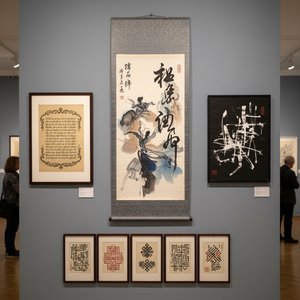
At the heart of Xie Zhiguang’s art lies his masterful control of *mo hua*, or ink wash painting. He utilizes a loose yet deliberate brushwork, allowing the ink to flow and blend naturally on the paper – a technique that evokes a sense of spontaneity while simultaneously revealing years of dedicated practice. His compositions are typically characterized by understated elegance, favoring subtle gradations of tone and delicate washes over bold, dramatic strokes. This restrained approach is particularly evident in his celebrated work, “Lady under the Plantain Leaves,” where he captures a moment of quiet contemplation amidst a field of plantain, using the leaves themselves to frame the subject with an almost poetic grace.
The choice of subjects – often rural scenes, flowering plants, and glimpses of modern life subtly integrated into the landscape – is deliberate. He frequently depicts plantain leaves, not just as botanical specimens but as symbols of resilience, beauty in simplicity, and a connection to the earth. His paintings aren’t simply depictions; they are invitations to slow down, observe, and appreciate the quiet wonders of everyday existence.
Echoes of Tradition, Reflections of Modernity
Xie Zhiguang's work is deeply rooted in the Chinese *literati* tradition – a style championed by scholar-officials who used art as a means of self-expression and philosophical contemplation. This lineage emphasizes introspection, subtle symbolism, and a rejection of ostentatious display. However, unlike many contemporary artists who solely embrace traditional forms, Xie Zhiguang skillfully incorporates elements of modern life into his compositions – a distant factory chimney rising above a rice paddy, a solitary figure walking along a dirt road, or the suggestion of urbanization on the horizon. These subtle intrusions serve as reminders of China’s rapid transformation and offer a poignant commentary on the interplay between tradition and progress.
Notable Works and Lasting Significance
Among his most recognized pieces is “FLOWERS,” a stunning example of his ability to capture the ephemeral beauty of nature. “Lady under the Plantain Leaves” further exemplifies his signature style, showcasing his delicate brushwork, evocative use of negative space, and profound understanding of symbolism. These works, along with others in his oeuvre, demonstrate Xie Zhiguang’s commitment to preserving a vital aspect of Chinese artistic heritage while simultaneously offering a fresh perspective on contemporary life. His art serves as a testament to the enduring power of *mo hua* and its ability to resonate across generations, inviting viewers to contemplate the beauty, fragility, and complexities of the world around them.
A Continuing Legacy
Xie Zhiguang’s work continues to be exhibited and appreciated for its quiet elegance, technical mastery, and insightful commentary on Chinese culture. He represents a vital link between the past and present, ensuring that the traditions of *mo hua* painting remain vibrant and relevant in the 21st century. His art is not merely beautiful; it’s a window into the soul of China – a land grappling with its history while embracing an uncertain future.
Pytania i odpowiedzi
Czy mogę przeglądać dzieła Xie Zhiguang według nastroju?
Strona Klimat wnętrza artysty Xie Zhiguang to miejsce, w którym dzieła są uporządkowane według nastroju.
Które dzieła Xie Zhiguang są najczęściej oglądane?
Statystyki dotyczące dzieł artysty Xie Zhiguang są dostępne na jego stronie Statystyki.
Jak mogę znaleźć dzieła artysty Xie Zhiguang w konkretnej palecie barw?
Strona Według palet kolorystycznych grupuje dzieła Xie Zhiguang według ich palet kolorystycznych.