William Harold Cubley: A Master of the English Landscape
William Harold Cubley (1816-1896) stands as a quietly significant figure in 19th-century British art, an artist whose evocative depictions of the English countryside and portraits earned him both respect within his circle and a lasting legacy through his influential teaching. Often overshadowed by more flamboyant contemporaries, Cubley’s work possesses a subtle power—a deep understanding of light, atmosphere, and the inherent beauty of the landscapes he so faithfully rendered. Born in Heanor, Derbyshire, into a family involved in the needlework trade, his early life offered little indication of the artistic path that lay ahead, yet a keen eye for observation and an appreciation for the natural world would ultimately define his career.
Cubley’s formal training began with Richard Rothwell, a former studio assistant to Sir Joshua Reynolds, a connection that immediately established him within a prestigious artistic lineage. This early exposure to Reynolds's classical approach—characterized by careful observation, tonal modeling, and a focus on capturing the essence of his subjects—proved foundational. He further honed his skills under William Beechey, another prominent artist associated with the Royal Academy, absorbing elements of both artists’ styles while developing his own distinct voice. Crucially, Cubley's artistic journey was inextricably linked to his role as an educator. Beginning in Grantham and later at Magnus Grammar School in Newark, he dedicated himself to teaching art, shaping the careers of several notable figures, most notably William Nicholson—a student whose own success would, in turn, contribute to Cubley’s enduring recognition.
The Development of a Landscape Style
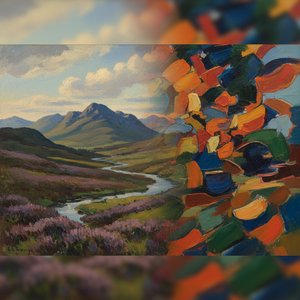
Cubley's artistic style evolved over time, reflecting both his influences and his growing mastery of technique. Initially, his work leaned towards the more formal traditions of Reynolds and Beechey, characterized by carefully constructed compositions and a meticulous attention to detail. However, as he matured, his paintings became increasingly infused with a sense of atmosphere and mood—a hallmark of Romanticism. He developed a particular sensitivity to light, capturing its shifting qualities across the landscape with remarkable skill. His subjects frequently included scenes from Derbyshire, particularly the Trent Valley, where he spent much of his life observing and painting. Landscapes such as “Twilight on the Trent” exemplify this period, showcasing a masterful use of color and texture to convey the tranquility and beauty of the riverbank.
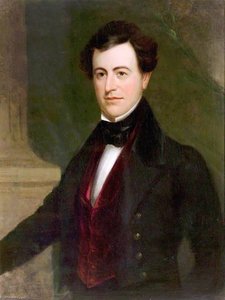
Beyond landscapes, Cubley also produced a significant body of portraiture. These works demonstrate a similar commitment to capturing the character and personality of his subjects—often friends, family, or students. His portraits are notable for their understated elegance and psychological depth, revealing a keen understanding of human expression. His ability to portray both outward appearance and inner life contributed significantly to his reputation as a versatile and accomplished artist.
Influences and Legacy
Cubley’s artistic development was profoundly shaped by several key influences. The classical traditions of Reynolds and Beechey provided him with a solid foundation in technique and composition, while the Romantic movement instilled in him a deep appreciation for nature and its power to evoke emotion. However, it is perhaps his relationship with William Nicholson that constitutes his most significant legacy. As Nicholson’s mentor, Cubley not only imparted technical skills but also fostered a spirit of observation and a commitment to capturing the essence of British landscapes. Nicholson, in turn, went on to become one of the most celebrated artists of the 20th century, ensuring that Cubley's influence would continue to resonate through generations.
While Cubley’s work may not have achieved the same level of widespread recognition as some of his contemporaries, it is increasingly appreciated for its quiet beauty and understated power. His paintings offer a valuable glimpse into the English countryside during a period of profound social and artistic change, and his legacy as an educator and mentor continues to be felt within the art world. His dedication to capturing the subtle nuances of light and atmosphere in landscapes like “Twilight on the Trent” remains a testament to his skill and artistry—a quiet reminder of a master who deserves greater recognition for his significant contribution to British art.
Major Works
- Twilight on the Trent (1863): A quintessential example of Cubley’s landscape style, capturing the ethereal beauty of the Trent River at dusk.
- Llyn Idwal in Wales (1872): A dramatic depiction of a Welsh lake, showcasing his ability to convey atmospheric depth and light.
- Kate Kearney (1863): A portrait capturing the essence of Irish beauty.
- A midsummer night – Abermaw Harbour, near Barmouth, North Wales (1873): A vibrant scene depicting a harbor in Wales.
Historical Significance
William Harold Cubley’s work reflects the artistic trends of his time—the transition from Neoclassicism to Romanticism and Realism. His focus on British landscapes aligns with the Victorian era's growing interest in national identity and the celebration of rural life. Furthermore, his role as an art teacher during a period of significant social change—marked by industrialization and urbanization—highlights his contribution to shaping the artistic landscape of Britain. His influence on William Nicholson underscores the enduring power of mentorship and the interconnectedness of artistic lineages.