Early Life and Education
Sir William George Gillies, a name synonymous with the evocative beauty of Scottish landscapes and still lifes, was born in Haddington, East Lothian, on September 21st, 1898. His early life unfolded amidst the rolling hills and historic charm of his native region – an environment that would profoundly shape his artistic vision. Initially enrolled at the Edinburgh College of Art, Gillies’ academic pursuits were tragically interrupted by the exigencies of World War I. He bravely enlisted with the Royal Engineers, serving with distinction during a period of immense national upheaval. Following the war's conclusion, he returned to complete his education at the same institution, ultimately graduating and dedicating over four decades to nurturing young artists as a teacher. This commitment to education wasn’t merely a profession; it was a deeply held belief in the transformative power of art and its ability to connect individuals with their surroundings.Artistic Development and Influences
Gillies' artistic journey began with an initial exploration of Cubism, a movement that had captivated European artists in the early 20th century. His studies under André Lhote in Paris (1923) provided him with invaluable insight into the principles of this revolutionary style – its fragmented forms and geometric arrangements. A subsequent trip to Italy in 1924 further broadened his artistic horizons, exposing him to the classical traditions that had informed so much of Western art. Early works like “Two Pots, Saucer and Fruit” (1933) demonstrate this early influence, showcasing a Cézanne-inspired composition characterized by carefully arranged objects and a muted color palette reminiscent of Braque and Picasso. However, a pivotal moment arrived in 1934 when Gillies encountered the work of Paul Klee. The whimsical use of colour, the childlike quality of his forms, and the imaginative narratives embedded within Klee’s paintings profoundly impacted Gillies' approach to art. He began to incorporate these elements into his own compositions, gradually moving away from strict Cubist dogma and developing a distinctive style rooted in Scottish landscape and still life traditions.The 1922 Group and Collaborative Spirit
In 1922, a year marked by significant artistic ferment in Scotland, Gillies played a crucial role in establishing the “1922 Group.” Alongside fellow artists such as William Crozier, William Geissler, and William MacTaggart, he envisioned an exhibition society dedicated to providing a platform for emerging Scottish talent. The New Gallery in Edinburgh became the focal point of this collective endeavor for a decade, fostering a vibrant community of artists who shared a passion for innovation and experimentation. The 1922 Group wasn’t simply a means of showcasing art; it was a crucible where ideas were exchanged, techniques were refined, and a sense of camaraderie flourished – a vital ingredient in the development of Scottish modernism. It represented a conscious effort to elevate the profile of young artists within their country.Themes and Subject Matter
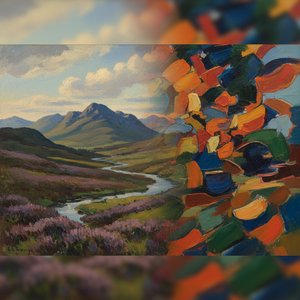
Gillies’ artistic focus primarily revolved around two distinct yet interconnected themes: landscapes and still lifes. He possessed an extraordinary ability to capture the essence of the Lothian, Fife, and Border regions of Scotland – translating the rugged beauty of these areas onto canvas with a remarkable sensitivity. His paintings weren't merely depictions of scenery; they were imbued with a profound understanding of light, atmosphere, and the subtle nuances of color. Equally significant was his exploration of still life compositions. These works often featured ceramics created by his younger sister, Emma Smith Gillies, whose untimely death in 1936 cast a long shadow over his artistic life. The poignant beauty of these objects served as a powerful reminder of loss and grief, imbuing the paintings with an undercurrent of melancholy and introspection. While he experimented with portraiture early in his career, landscapes and still lifes ultimately became the cornerstones of his artistic legacy.Major Achievements and Recognition
Throughout his illustrious career, Sir William George Gillies achieved numerous accolades that recognized his exceptional talent and unwavering dedication to art. He was elected an Associate of the Royal Scottish Academy (ARSA) in 1940, a significant step towards establishing his place within the established artistic community. In 1947, he received full membership into the Royal Scottish Academy (RSA), solidifying his position as one of Scotland’s leading artists. In 1957, he was awarded the Commander of the Order of the British Empire (CBE) for his contributions to art in Scotland, and later, in 1964, he became an Associate of the Royal Academy (RA). The highest honor bestowed upon him – knighthood – arrived in 1970. His legacy extended beyond his artistic achievements; he served as Principal of the Edinburgh College of Art from 1961 to 1966, guiding a new generation of artists and shaping the future direction of art education in Scotland. Gillies’ prolific output—estimated at over 2,000 works—testifies to his unwavering commitment to his craft. His paintings are now found in prestigious collections across Scotland and internationally, including those of Aberdeen, Dundee, Edinburgh, Glasgow, the Scottish Arts Council, the National Galleries of Scotland (Tate London, Ottawa, Peru), demonstrating a lasting impact on the art world.Pytania i odpowiedzi
Gdzie i w którym roku urodził(a) się William Dobell?
William Dobell urodził się w Haddington w 1899 roku.
W jakim mieście i kraju urodził(a) się William Dobell?
William Dobell urodził się w Haddington w Australia.
Jak mogę znaleźć dzieła artysty William Dobell w konkretnej palecie barw?
Strona Według palet kolorystycznych grupuje dzieła William Dobell według ich palet kolorystycznych.