William Brassey Hole: Life & Art
William Brassey Hole RSA (7 November 1846 – 22 October 1917) was a Scottish Victorian painter, illustrator, etcher, and engraver whose artistic vision captured the spirit of his time—particularly the burgeoning industrial landscape of Scotland alongside profound explorations of faith and history. He stands as a testament to the ability of an artist to synthesize meticulous observation with emotive storytelling.Early Life and Education
William Brassey Hole’s formative years were shadowed by sorrow. His father, Richard Hole, a respected physician, succumbed to cholera in 1849 when William was merely three years old—a tragedy that profoundly shaped his worldview and instilled within him an appreciation for the fragility of life. Following this devastating loss, the family relocated to Edinburgh, Scotland, where William received his education at Edinburgh Academy before embarking on a disciplined apprenticeship as a civil engineer. Though reluctantly accepting this vocation, he harbored a fervent passion for artistic pursuits—a desire that would ultimately guide his lifelong creative endeavors.Artistic Development & Influences
A pivotal moment arrived in 1869 when Hole undertook a six-month sketching expedition to Italy, beginning in Genoa. This journey ignited his artistic sensibilities and solidified his ambition to dedicate himself to painting professionally. In Rome, he encountered Keeley Halswelle, whose astute counsel and critical feedback served as invaluable encouragement—inspiring him to pursue his artistic aspirations with unwavering determination. Upon returning to Edinburgh, Hole enrolled in the School of Design and subsequently gained admission to the life school of the Royal Scottish Academy in 1873. His election as an associate RSA in 1878 marked a significant milestone, propelling him toward full membership and cementing his position within Scotland’s artistic elite. Furthermore, he joined the Royal Society of Painters-Etchers (RE) in 1885, having already established himself as a member of the Royal Scottish Watercolour Society (RSW) in 1884—expanding his creative horizons across diverse mediums.Artistic Style and Themes
Hole’s artistic style was characterized by a remarkable blend of realism and expressive artistry. He distinguished himself primarily through depictions of industrial scenes—capturing the dynamism and transformative power of Victorian Britain—yet he possessed an equally ardent devotion to portraying Scottish national subjects and purposes. His canvases resonated with themes of industry, history, faith, and the everyday lives of ordinary Scotsmen, notably fishermen inhabiting the rugged coastline of Scotland’s west coast. Critically acclaimed for his etching technique, Hole achieved a masterful translation of color and handling into this medium—producing prints that possessed both technical precision and palpable emotional depth.Major Works & Achievements
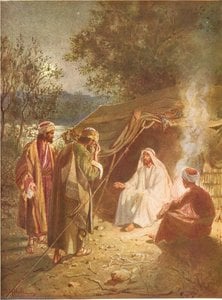
Hole's oeuvre encompassed numerous celebrated pieces, including “End of the '45” (1879)—a monumental depiction commemorating the decisive defeat of Bonnie Prince Charlie’s Jacobite rebellion—and “Prince Charlie’s Parliament” (1882), which skillfully captured the atmosphere and drama surrounding the exiled Stuart monarch's attempt to regain the throne. "If thou hadst known" (1885) explored themes of regret and remembrance, while “The Canterbury Pilgrims” (1889) presented a vivid portrayal of medieval pilgrimage—demonstrating Hole’s versatility as an artist across various genres. His paintings of fishermen – “The Night’s Catch” and “The Fill of the Two Boats”—were particularly lauded for their evocative realism and emotional resonance. Notably, he undertook a monumental commission to decorate Edinburgh City Chambers with a frieze depicting Scottish history—a project that showcased his artistic prowess and cemented his legacy as a prominent muralist. Moreover, Hole embarked on an ambitious pilgrimage to Palestine in 1900, meticulously studying backgrounds for biblical paintings—resulting in eighty watercolors that served as illustrations for his influential book “The Life of Jesus of Nazareth.” His contributions extended beyond painting; he illuminated works by luminaries such as Robert Louis Stevenson, J.M. Barrie, and Robert Burns—further enriching Scotland’s cultural heritage. Hole's enduring legacy resides not only in his stunning artworks but also in his unwavering commitment to artistic excellence and his profound engagement with the narratives that shaped Victorian Scotland.Pytania i odpowiedzi
Gdzie mogę zobaczyć dzieła William Brassey Hole w porządku chronologicznym?
Istnieje oś czasu prac William Brassey Hole: strona Oś czasu dzieł sortuje dzieła według daty ich powstania.
Czy mogę sortować dzieła William Brassey Hole według koloru?
Indeks barwny artysty William Brassey Hole to strona, która porządkuje dzieła artysty według ich kolorów.
Skąd pochodzi William Brassey Hole?
William Brassey Hole urodził się w Wielka Brytania.