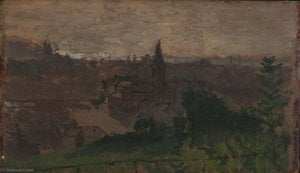
Walter Richard Sickert, 1860 – 1942

100 najsłynniejszych obrazów autorstwa Walter Richard Sickert

Obrazem, który przyniósł sławę Walter Richard Sickert, jest The Idyll (1931); znajduje się on w Ferens Art Gallery, Kingston upon Hull. The Cigarette (Jeanne Daurmont) (1906) oraz Chagford, Devon, across Fields (1915) podążają za nimi w sercach kolekcjonerów i odwiedzających muzea. Z 292 dzieł Walter Richard Sickert w naszym katalogu, tych 100 jest najbardziej podziwianych – każde z nich zostało przedstawione wraz z datą powstania, muzeum oraz cechami wyróżniającymi.

Ranking oparty na naszym wskaźniku popularności, który łączy liczbę wyszukiwań, wizyt oraz zamówień dla każdego dzieła. Aktualizacja: Październik 2026. Każde arcydzieło na tej stronie można zamówić jako ręcznie malowaną reprodukcję olejną o jakości muzealnej lub jako wysokiej jakości wydruk artystyczny, w wybranym przez Ciebie rozmiarze.

Portret Walter Richard Sickert
Walter Richard Sickert · 1860 – 1942
Urodzony · zmarł
1860 – 1942, Monachium
Nurt
Post-impressionism
Dzieła w naszym katalogu
292
Najsłynniejsze
The Idyll (1931)
Najwięcej dzieł w
Tate Gallery

Walter Richard Sickert: dziesięć arcydzieł

The Idyll (1931) autorstwa Walter Richard Sickert
1

The Idyll

1931 · Oil On Canvas · Ferens Art Gallery, Kingston upon Hull

In the quietude of 1931, Walter Richard Sickert captured a scene that transcends mere landscape, offering instead a profound meditation on connection and stillness. The Idyll is not simply a depiction of a lakeside retreat; it is a psychological threshold where the boundaries between the external world and internal emotion blur. The painting presents two figures poised before a tranquil expanse of water, their presence anchored by a shared, silent…

The Cigarette (Jeanne Daurmont) (1906) autorstwa Walter Richard Sickert
2

The Cigarette (Jeanne Daurmont)

1906 · Oil On Canvas · Metropolitan Museum of Art, Nowy Jork

A monochromatic portrait captures Jeanne Daurmont in profile, her form emerging from a dark, indistinct background through a careful application of chiaroscuro. The composition focuses on the head and shoulders, positioned slightly off-center to create a sense of quiet intimacy. A light source from the front-left illuminates the subject's face and neck, while deep shadows swallow much of her hair and the brim of her wide hat.

Chagford, Devon, across Fields (1915) autorstwa Walter Richard Sickert
3

Chagford, Devon, across Fields

1915 · Oil On Canvas

The landscape unfolds from an elevated vantage point, looking out over the rolling terrain of Devon. In the distance, a church steeple rises against the horizon, anchoring the composition amidst the sprawling greenery. The scene is populated by the quiet movements of rural life: birds drift through the air above the fields, while two horses occupy the middle ground, one positioned near the center and the other toward the right…

The Laundry Shop, Dieppe, France (1885) autorstwa Walter Richard Sickert
4

The Laundry Shop, Dieppe, France

1885

The scene unfolds within the walls of The Laundry Shop, Dieppe, France. This work, titled The Laundry Shop, Dieppe, France, captures a specific moment in time through the eyes of the artist Walter Sickert. The air seems to hold the quiet, industrious energy of a workspace caught in mid-motion. It is a glimpse into a localized existence, far removed from the grander spectacles of the era.

The Red Shop (The October Sun) (1888) autorstwa Walter Richard Sickert
5

The Red Shop (The October Sun)

1888 · Oil On Panel

The sun hangs low, casting a long, slanted glow across a quiet urban street. It is a scene caught in the amber of an October afternoon, where the warmth of the light struggles against the encroaching shadows of the buildings. At the heart of this stillness sits a small shop, its facade a striking vermillion that pulls the eye away from the muted, earthy tones of the surrounding architecture. A…

Cicely Hey (1923) autorstwa Walter Richard Sickert
8

Cicely Hey

1923 · Oil On Canvas · Brytyjska Kolekcja Councilu, Londyn

In the quiet intensity of Walter Richard Sickert’s 1923 masterpiece, “Cicely Hey,” we encounter more than just a portrait; we step into a profound psychological landscape. The painting captures a young woman in a moment of suspended animation, where her outward serenity is subtly undercut by an unmistakable sense of inner distress. As the viewer approaches this canvas, the subject's gaze pulls us into a state of deep contemplation, inviting…

Mrs Swinton (1905) autorstwa Walter Richard Sickert
9

Mrs Swinton

1905 · Oil On Canvas

A Glimpse into the Life of Mrs. Swinton The painting Mrs Swinton by Walter Richard Sickert, created in 1905, is a captivating portrait that invites viewers to ponder the life and character of its subject. Located at the Fitzwilliam Museum in Cambridge, United Kingdom, this oil on canvas piece is a testament to Sickert's skill in capturing the essence of his subjects. The Composition and Symbolism The painting depicts Mrs.…

Gatti’s Hungerford Palace of Varieties. Second Turn of Katie Lawrence (1888) autorstwa Walter Richard Sickert
10

Gatti’s Hungerford Palace of Varieties. Second Turn of Katie Lawrence

1888 · Oil On Canvas · Yale University Art Gallery, Nowe Havane

We are looking at Gatti’s Hungerford Palace of Varieties. Second Turn of Katie Lawrence, an oil on canvas created by Walter Sickert. This work, dating to 1888, captures a specific moment within the theatrical atmosphere of the music hall. The scene focuses on Katie Lawrence, a music hall singer, as she performs her turn on stage.

Więcej arcydzieł artysty Walter Richard Sickert, od 11 do 100

The Miner (1935) autorstwa Walter Richard Sickert
#15

The Miner

1935 · Birmingham Museum and Art Gallery

Walter Richard Sickert's "The Miner," painted in 1935-36, isn’t merely a depiction of a working man; it’s an intimate excavation of human experience. This oil painting, currently residing…

Zamów reprodukcję →
George Moore (1890) autorstwa Walter Richard Sickert
#16

George Moore

1890

A Glimpse into Introspection: Walter Sickert's Portrait of George Moore This compelling portrait offers a poignant glimpse into the life of Irish author and playwright George Moore, captured…

Zamów ręcznie malowaną kopię →
The Brighton Pierrots (1915) autorstwa Walter Richard Sickert
#17

The Brighton Pierrots

1915 · Ashmolean Museum of Art and Archaeology

The scene unfolds in the monochrome shadows of a seaside night. Under the artificial glow of the pier, figures move through a landscape of salt air and darkness.…

Zamów reprodukcję →
George Moore (1890) autorstwa Walter Richard Sickert
#35

George Moore

1890 · Tate Gallery

Walter Richard Sickert’s portrait, "George Moore," is not merely a likeness captured on canvas; it is an encounter with a profound, internalized moment. The subject confronts the viewer…

Zabierz ją do domu →
Ennui (1918) autorstwa Walter Richard Sickert
#37

Ennui

1918 · Ashmolean Museum of Art and Archaeology

In the dim, muted light of Walter Richard Sickert’s 1918 masterpiece, Ennui, we are invited into a private moment of profound emotional stagnation. The painting serves as a…

Zamów ręcznie malowaną kopię →
Mrs Swinton (1906) autorstwa Walter Richard Sickert
#42

Mrs Swinton

1906 · Fitzwilliam College

In the quiet, evocative depths of Walter Richard Sickert’s 1906 masterpiece, "Mrs Swinton," viewers are invited into a world where the boundaries between portraiture and atmosphere dissolve. This…

Zamów reprodukcję →
The Sisters Lloyd (1889) autorstwa Walter Richard Sickert
#47

The Sisters Lloyd

1889 · Government Art Collection

Walter Richard Sickert’s The Sisters Lloyd transports us into an intimate moment suspended in time, a scene steeped in the delicate artifice of domestic life. This portrait captures…

Zamów ręcznie malowaną kopię →
Jacques-Emile Blanche (1910) autorstwa Walter Richard Sickert
#48

Jacques-Emile Blanche

1910 · Tate Gallery

In the quiet, shadowed corners of late nineteenth and early twentieth-century European art, few works capture the profound weight of identity as poignantly as Walter Richard Sickert’s “Jacques-Émile…

Zabierz ją do domu →
Baccarat, Dieppe (1920) autorstwa Walter Richard Sickert
#50

Baccarat, Dieppe

1920 · Auckland Art Gallery Toi o Tāmaki

The scene unfolds in a moment of quiet concentration as a group of people gathers closely around a table. In Baccarat, Dieppe, the artist Walter Sickert captures a…

Zamów reprodukcję →
Mrs Barrett (1905) autorstwa Walter Richard Sickert
#51

Mrs Barrett

1905 · Tate Gallery

Walter Richard Sickert’s ‘Mrs Barrett’: A Study in Shadows and Subtlety Walter Richard Sickert's “Mrs Barrett,” painted around 1905, isn’t merely a portrait; it’s a carefully constructed tableau…

Zamów reprodukcję →
Portrait of an Afghan Gentleman (1895) autorstwa Walter Richard Sickert
#53

Portrait of an Afghan Gentleman

1895 · Jerwood Gallery

In the quiet intimacy of Walter Richard Sickert’s 1895 masterpiece, Portrait of an Afghan Gentleman, we are invited into a profound encounter with a stranger. The painting presents…

Zamów reprodukcję →
The Yellow Sleeve (1904) autorstwa Walter Richard Sickert
#54

The Yellow Sleeve

1904 · New Walk Museum - Art Gallery

In the quiet corners of art history, few moments possess the profound stillness found in Walter Richard Sickert’s 1904 masterpiece, The Yellow Sleeve. This evocative portrait invites the…

Zamów ręcznie malowaną kopię →
Camden Town Portrait (1915) autorstwa Walter Richard Sickert
#58

Camden Town Portrait

1915 · Amgueddfa Cymru - National Museum of Wales

Camden Town Portrait - A Study in Shadow and Observation Walter Richard Sickert’s “Camden Town Portrait,” completed in 1915–16, resides within the National Museum Wales collection—a deceptively simple…

Zamów reprodukcję →
The Bar Parlour (1922) autorstwa Walter Richard Sickert
#59

The Bar Parlour

1922 · Fitzwilliam College

In the quiet, amber-hued corners of early twentieth-century London, Walter Richard Sickert found his most profound muses. The Bar Parlorp, painted in 1922, serves as a masterful window…

Zabierz ją do domu →
The Horses of St Mark's, Venice (1905) autorstwa Walter Richard Sickert
#60

The Horses of St Mark's, Venice

1905 · Birmingham Museum and Art Gallery

Walter Richard Sickert's "The Horses of St Mark's, Venice," painted in 1905, is a captivating oil on canvas that transports viewers to the heart of Venice. This artwork,…

Zabierz ją do domu →
Harold Gilman (1912) autorstwa Walter Richard Sickert
#62

Harold Gilman

1912 · Tate Gallery

Walter Richard Sickert’s depiction of Harold Gilman is more than just a likeness; it is a carefully preserved moment plucked from the vibrant, sometimes fraught, atmosphere of early…

Zabierz ją do domu →
The Front at Hove (1930) autorstwa Walter Richard Sickert
#67

The Front at Hove

1930 · Tate Gallery

Walter Richard Sickert's "The Front at Hove," painted in 1930, isn’t merely a depiction of a seaside scene; it’s a carefully constructed tableau brimming with psychological depth and…

Zamów reprodukcję →
Ennui (1917) autorstwa Walter Richard Sickert
#69

Ennui

1917 · Ashmolean Museum

Walter Richard Sickert's 1917 painting, *Ennui*, is not merely a depiction of two women; it’s a carefully constructed tableau of quiet desperation, a poignant snapshot of the burgeoning…

Zamów reprodukcję →
A Marengo (1903) autorstwa Walter Richard Sickert
#71

A Marengo

1903 · Tate Gallery

Walter Richard Sickert's “A Marengo,” painted in 1903, isn’t merely a depiction of two women engaged in conversation; it’s a carefully constructed tableau brimming with psychological depth and…

Zamów ręcznie malowaną kopię →
The Oxford Music Hall autorstwa Walter Richard Sickert
#73

The Oxford Music Hall

Art Gallery of New South Wales

The Oxford Music Hall is a significant work by the artist Walter Sickert. This piece, which is also known by the alternative title The old Bedford, offers a…

Zabierz ją do domu →
Her Majesty's (1934) autorstwa Walter Richard Sickert
#74

Her Majesty's

1934 · Ashmolean Museum

A Glimpse of Victorian Grandeur: Walter Richard Sickert’s “Her Majesty’s” Walter Richard Sickert's "Her Majesty’s," painted around 1934, isn’t merely a depiction of a London theatre; it’s a…

Zabierz ją do domu →
Interior of St Mark's, Venice (1895) autorstwa Walter Richard Sickert
#76

Interior of St Mark's, Venice

1895 · Tate Gallery

Walter Richard Sickert’s “Interior of St Mark’s, Venice” (1895-6) isn't merely a depiction of a cathedral; it’s an immersive experience. This oil on canvas transports the viewer directly…

Zamów reprodukcję →
Bathing Huts, Dieppe (1890) autorstwa Walter Richard Sickert
#83

Bathing Huts, Dieppe

1890 · Courtauld Gallery

Walter Richard Sickert's "Bathing Huts, Dieppe" isn’t merely a depiction of a coastal scene; it’s a carefully constructed tableau brimming with atmosphere and a subtle undercurrent of melancholy.…

Zamów reprodukcję →

Obrazy Walter Richard Sickert według okresów

Tematy, które najczęściej malował Walter Richard Sickert

Cztery tematy najczęściej powracające w tych arcydziełach, wraz z najdoskonalszym przykładem każdego z nich.

Gdzie można zobaczyć obrazy Walter Richard Sickert

8 muzeów, w których znajduje się najwięcej obrazów z tej strony.

Muzeum Miasto Dzieła artysty Walter Richard Sickert Obrazy z tej listy
Tate Gallery, LondynTate Gallery Londyn 19 George Moore, Jacques-Emile Blanche, Mrs Barrett
Ashmolean Museum of Art and Archaeology, OksfordAshmolean Museum of Art and Archaeology Oksford 6 The Brighton Pierrots, Ennui, Santa Maria del Carmelo, Venice
Fitzwilliam College, CambridgeFitzwilliam College Cambridge 4 Mrs Swinton, The Bar Parlour, The Old Bedford Music Hall
Ashmolean Museum, OksfordAshmolean Museum Oksford 4 Ennui, Her Majesty's, Gaieté Montparnasse, dernière galerie de gauche
Birmingham Museum and Art Gallery, BirminghamBirmingham Museum and Art Gallery Birmingham 7 The Miner, The Horses of St Mark's, Venice
Art Gallery of New South Wales, SydneyArt Gallery of New South Wales Sydney 6 Portrait of the artist's first wife, née Ellen Cobden, The Oxford Music Hall
Metropolitan Museum of Art, Nowy JorkMetropolitan Museum of Art Nowy Jork 4 The Cigarette (Jeanne Daurmont), Reclining Nude (Thin Adeline)
Courtauld Gallery, LondynCourtauld Gallery Londyn 4 View of Dieppe with Eglise du Pollet, Bathing Huts, Dieppe

Walter Richard Sickert, dekada po dekadzie: najważniejsze dzieło każdej z nich

  1. 1880s
    The Laundry Shop, Dieppe, France (1885) autorstwa Walter Richard Sickert
    Miejsce 4 / 100

    The Laundry Shop, Dieppe, France

    Wiek 20 – 29

    The scene unfolds within the walls of The Laundry Shop, Dieppe, France. This work, titled The Laundry Shop, Dieppe, France, captures a specific moment in time through the…

  2. 1890s
    Portrait of the artist's first wife, née Ellen Cobden (1893) autorstwa Walter Richard Sickert
    Miejsce 12 / 100

    Portrait of the artist's first wife, née Ellen Cobden

    Wiek 30 – 39 · Art Gallery of New South Wales

    The work titled Portrait of the artist's first wife, née Ellen Cobden is a painting by the artist Walter Sickert. The subject of this portrait is Ellen Cobden,…

  3. 1900s
    The Cigarette (Jeanne Daurmont) (1906) autorstwa Walter Richard Sickert
    Miejsce 2 / 100

    The Cigarette (Jeanne Daurmont)

    Wiek 40 – 49 · Metropolitan Museum of Art

    A monochromatic portrait captures Jeanne Daurmont in profile, her form emerging from a dark, indistinct background through a careful application of chiaroscuro. The composition focuses on the head…

  4. 1910s
    Chagford, Devon, across Fields (1915) autorstwa Walter Richard Sickert
    Nr 3 z 100

    Chagford, Devon, across Fields

    Wiek 50 – 59

    The landscape unfolds from an elevated vantage point, looking out over the rolling terrain of Devon. In the distance, a church steeple rises against the horizon, anchoring the…

  5. 1920s
    Portrait of Rear Admiral Walter Lumsden, C.I.E., C.V.O. (1927) autorstwa Walter Richard Sickert
    Miejsce 6 / 100

    Portrait of Rear Admiral Walter Lumsden, C.I.E., C.V.O.

    Wiek 60 – 69 · Minneapolis Institute of Art

    Portrait of Rear Admiral Walter Lumsden, C.I.E., C.V.O. is an oil on canvas created by Walter Sickert. The work dates to 1927. It is currently held in the…

  6. 1930s
    The Idyll (1931) autorstwa Walter Richard Sickert
    Nr 1 z 100

    The Idyll

    Wiek 70 – 79 · Ferens Art Gallery

    In the quietude of 1931, Walter Richard Sickert captured a scene that transcends mere landscape, offering instead a profound meditation on connection and stillness. The Idyll is not…

Arcydzieła Walter Richard Sickert: pytania i odpowiedzi

Z jakiego obrazu najbardziej znany jest Walter Richard Sickert?Pokaż odpowiedź

The Idyll (1931), Ferens Art Gallery, Kingston upon Hull. Następnie pojawiają się The Cigarette (Jeanne Daurmont) (1906) oraz Chagford, Devon, across Fields (1915).

Ile lat miał(a) Walter Richard Sickert, malując The Idyll?Pokaż odpowiedź

71 lat: The Idyll pochodzi z 1931, a Walter Richard Sickert urodził(a) się w 1860.

Jakie są dziesięć najwspanialszych obrazów Walter Richard Sickert?Pokaż odpowiedź

The Idyll, The Cigarette (Jeanne Daurmont), Chagford, Devon, across Fields, The Laundry Shop, Dieppe, France, The Red Shop (The October Sun), Portrait of Rear Admiral Walter Lumsden, C.I.E., C.V.O., The Honourable Lady Fry, Cicely Hey, Mrs Swinton i Gatti’s Hungerford Palace of Varieties. Second Turn of Katie Lawrence. Powyższy ranking zawiera rok oraz muzeum dla każdego z nich.

Ile dzieł namalował/a Walter Richard Sickert?Pokaż odpowiedź

Nasz katalog obejmuje 292 dzieł autorstwa Walter Richard Sickert, datowanych od 1880 do 1937.

W których muzeach można zobaczyć arcydzieła Walter Richard Sickert?Pokaż odpowiedź

Większość z nich znajduje się w Tate Gallery (Londyn), Ashmolean Museum of Art and Archaeology (Oksford) i Fitzwilliam College (Cambridge). Powyższa tabela zawiera listę muzeów po kolei.

Kiedy Walter Richard Sickert namalował swoje arcydzieła?Pokaż odpowiedź

W okresie 1890s: 25 z 100 dzieł na tej stronie pochodzi z tego czasu, w tym Portrait of the artist's first wife, née Ellen Cobden.

Jakie są pierwsze i ostatnie słynne obrazy artysty Walter Richard Sickert?Pokaż odpowiedź

Najwcześniejszy na tej stronie to Violets (1880), najpóźniejszy Pimlico (1937).

Jakie tematy były ulubione dla Walter Richard Sickert?Pokaż odpowiedź

Portrait (12), Victorian era (11) i Woman (9), spośród 100 dzieł na tej stronie.

Której techniki preferował Walter Richard Sickert?Pokaż odpowiedź

Oil On Canvas: 34 z 100 dzieł na tej stronie.

Do jakiego nurtu artystycznego należy Walter Richard Sickert?Pokaż odpowiedź

Post-impressionism i Impressionism, co pokazują obrazy na tej stronie.

Które arcydzieła Walter Richard Sickert znajdują się w Tate Gallery?Pokaż odpowiedź

George Moore, Jacques-Emile Blanche i Mrs Barrett to jedne z 12 dzieł na tej stronie znajdujących się w zbiorach Tate Gallery, Londyn.

Czy mogę stać się właścicielem reprodukcji arcydzieła, którego autorem jest Walter Richard Sickert?Pokaż odpowiedź

Tak. Każdy obraz na tej stronie można zamówić jako ręcznie malowaną reprodukcję olejną o jakości muzealnej lub jako wysokiej jakości wydruk artystyczny w wybranym przez Ciebie rozmiarze, bezpośrednio ze strony danego dzieła.

Życie artysty Walter Richard Sickert

A Life Painted in Shadows and Light

Walter Richard Sickert, urodzony w Monachium w 1860 roku, był postacią nieustannie uwikłaną w światy – niemieckim przez pochodzenie, brytyjskim przez adopcję i artystą stale oscylującym między tradycjami malarskiego rzemiosła a prądami nowoczesności. Jego młode lata były naznaczone ruchem; relokacja rodziny do Anglii w 1868 roku, wywołana zmianami politycznymi na kontynencie, zakorzeniła w nim poczucie dyslokacji, które być może stale napędzało jego fascynację outsiderami i marginalizowanymi ludźmi. Chociaż pochodził z rodziny artystycznej – jego ojciec, Oswald Sickert, był duńskim malarzem – młody Walter początkowo dążył do kariery na scenie, krótko występując jako aktor u boku słynnego Sir Henry'ego Irvinga. To wczesne doświadczenie teatralne, sztuka iluzji i kreowania postaci, głęboko wpłynęło na jego wizję artystyczną, nadając jego obrazom teatralności i psychologicznej głębi, które odróżniały go od współczesnych. Jednak urok ekspresji wizualnej okazał się silniejszy, prowadząc go do studiów w Slade School w 1881 roku i następnie do zostania oddanym uczniem Jamesa Abbott McNeilla Whistlera. Ta mentoria była kształtująca, wprowadzając Sickerta w preferencję dla tonalnych studium malowanych *alla prima*, bezpośrednio od natury, oraz wyrafinowaną wrażliwość estetyczną, która stała się fundamentem jego wczesnej twórczości. Wpływ Whistlera nie ograniczał się jedynie do aspektów technicznych; sprzyjał poczuciu niezależności artystycznej i gotowości do kwestionowania konwencji.

London's Underbelly and the Allure of Modern Life

Szybko, kompas artystyczny Sickerta skierował się ku tętniącemu życiem, często szaremu realowi londyńskiego życia. Zafascynował go klimat muzycznych hal – przestrzeni pełnych energii, spektaklu i różnorodnej grupy społeczeństwa. Jego obrazy z tego okresu, takie jak Katie Lawrence at Gatti's, wyróżniają się bezkompromisowym przedstawieniem tych środowisk i ich mieszkańców. Nie były to jedynie wizje; były eksploracjami współczesnego życia miejskiego, uchwycującą ulotne momenty i surowe emocje doświadczane w tych murach. Dążył do malowania życia takim, jakim było naprawdę, a nie takim, jak zostało idealizowane – radykalny odchylenie od konwencji artystycznych epoki Wiktorii. Ta zaangażowana w realizm spotkała się z kontrowersjami; krytycy uważali jego postacie za „brudne” i „obrzydliwe”, kwestionując wrażliwość, która preferowała idealizowane reprezentacje. Gotowość Sickerta do przedstawiania zwykłych ludzi, szczególnie wykonawczyń, ze szczerością i bez romantyzmu, był prowokacyjnym aktem, zapowiadającym przesunięcie w kierunku realizmu społecznego w sztuce XX wieku. Jego pobyt w Dieppe, we Francji, od 1894 roku również okazał się kluczowy, oferując nowe perspektywy na światło, kolor i kompozycję, a jego kolejne wizyty w Wenecji dodatkowo dopracowały jego podejście do przedstawiania przestrzeni wewnętrznych i skomplikowanych układów postaci. Nie był po prostu rejestrował to, co widział; interpretował je przez wyjątkowo osobisty pryzmat, nadając nawet najbardziej banalnym scenom poczucie tajemnicy i psychologicznej napiętości.

The Influence of Whistler and the Pursuit of a Unique Style

Wczesna twórczość Sickerta charakteryzowała się tonalnymi studiami, inspirowanymi przez Whistlera – skupieniem na kolorze i świetle, a nie na szczegółach. Pracował z Whistlerem, ucząc się od niego technik etyczowania i malowania *alla prima*. Whistler wpłynął na Sickerta w sposób głęboki, kształtując jego postrzeganie sztuki jako formy niezależnej i kwestionującej konwencje. Sickert nie tylko naśladował techniki Whistlera, ale również rozwijał własny styl, który łączył elementy impresjonizmu z elementami realizmu i teatralności. Jego obrazy często charakteryzowały się ciemnymi kolorami, dyskretnym światłem i napiętą atmosferą, co odróżniało go od bardziej jasnych i optymistycznych obrazów jego czasowych kolegów. W tym okresie Sickert eksperymentował z różnymi technikami malarskimi, w tym kolażem i montażem, które wykorzystywał do tworzenia złożonych i wielowarstwowych obrazów.

The Camden Town Group and the Exploration of Modern London

Wraz z upływem lat XX wieku Sickert stał się kluczową postacią rozwijającego się brytyjskiego nurtu awangardy. Dołączył do New English Art Club w 1888 roku, łącząc się z artystami, którzy akceptowali zasady impresjonizmu francuskiego. Później odegrał kluczową rolę w założeniu Camden Town Group w 1911 roku – kolektywu artystów poświęconego przedstawianiu współczesnego życia z bezkompromisową szczerością i innowacyjnymi stylami. Wpływ Sickerta na tę grupę był ogromny, zachęcając ich do porzucenia tradycyjnych ograniczeń akademickich i eksploracji nowych form wyrazu. Jego obrazy z tego okresu często przedstawiały niepokojące tematy, takie jak seria przerażających, dwuznacznych obrazów zatytułowanych Camden Town Murder, odzwierciedlając rosnącą fascynację przestępczością i psychologiczną napiętością. Ta gotowość do konfrontacji trudnych tematów umocniła jego reputację jako prowokującego i wyzwalającego artysty. Nie interesował się jedynie przedstawianiem powierzchni rzeczy; pragnął zgłębiać ciemniejsze zakamarki ludzkiej psychiki, badając tematy alienacji, lęku i napięcia moralnego.

Legacy and Lingering Mysteries

Dziedzictwo Walter Richarda Sickerta wykracza daleko poza jego bogatą twórczość. Był katalizatorem zmian w brytyjskiej sztuce, otwierającym drogę dla kolejnych pokoleń artystów do przyjęcia modernizmu i eksploracji nowych ścieżek ekspresji. Jego wpływ można dostrzec w pracach wielu malarzy, którzy podążyli za nim, szczególnie tych związanych z Camden Town Group i innymi grupami awangardowymi. Prace Sickerta znajdują się w najważniejszych muzeach na całym świecie, zapewniając, że jego wizja nadal inspiruje i prowokuje odbiorców przez lata. Jego wpływ jest widoczny w wielu obrazach, takich jak *Katie Lawrence at Gatti's*, *Sinn Féiners* i *L’Hotel Royal, Dieppe*. Chociaż kontrowersje dotyczące jego życia – w tym spekulacje na temat jego potencjalnego udziału w morderstwach Jacka Sherilla – dodały warstwę tajemniczości jego historii, nie zmniejszają one jego artystycznych osiągnięć. Te teorie, choć w dużej mierze odrzucone przez naukowców, świadczą o niepokojącej jakości jego dzieł i ich skupieniu na tematach przemocy i miejskiego rozpadu. Jego obrazy pozostają potężnymi świadectwami zmieniającego się świata, oferującymi spojrzenia na życie i doświadczenia ludzi często pomijanych przez tradycyjną historię sztuki.

Key Details & Influences

  • Born: May 31, 1860, Munich, Bavaria
  • Died: January 22, 1942, Bathampton, England
  • Key Influences: James Abbott McNeill Whistler, Edgar Degas
  • Associated Groups: New English Art Club, Camden Town Group

Wszystkie 292 dzieła artysty Walter Richard Sickert →