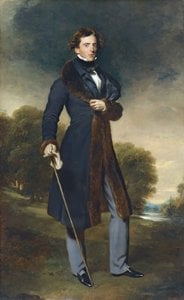
Thomas Lawrence, 1769 – 1830

Obrazy: 100 najsłynniejszych dzieł artysty Thomas Lawrence, zestawienie

Najsłynniejszym obrazem Thomas Lawrence jest Satan Summoning His Legions (1797). Wraz z John Philip Kemble (1757–1823), as Coriolanus (1798) i Lord Granville Leveson Gower, later 1st Earl Granville (1809) tworzy to zestaw trzech dzieł, które zna każdy. Nasz katalog zawiera 466 dzieł autorstwa Thomas Lawrence; poniższych 100 to te, na które świat patrzy najczęściej – każde z podaniem roku powstania, muzeum, w którym się znajduje, oraz uzasadnieniem jego znaczenia.

Ranking oparty na naszym wskaźniku popularności, który łączy liczbę wyszukiwań, wizyt oraz zamówień dla każdego dzieła. Aktualizacja: Październik 2026. Każde arcydzieło na tej stronie można zamówić jako ręcznie malowaną reprodukcję olejną o jakości muzealnej lub jako wysokiej jakości wydruk artystyczny, w wybranym przez Ciebie rozmiarze.

Portret Thomas Lawrence
Thomas Lawrence · 1769 – 1830
Urodzony · zmarł
1769 – 1830, Bristol
Nurt
Romanticism
Dzieła w naszym katalogu
466
Najsłynniejsze
Satan Summoning His Legions (1797)
Najwięcej dzieł w
Royal Collection

10 najsłynniejszych obrazów artysty Thomas Lawrence

Satan Summoning His Legions (1797) autorstwa Thomas Lawrence
1

Satan Summoning His Legions

1797 · Oil On Canvas

In the vast, dramatic expanse of Sir Thomas Lawrence’s 1797 masterpiece, Satan Summoning His Legions, viewers are transported into the heart of a cosmic rebellion. This monumental oil on canvas, measuring an imposing 432 x 274 cm, serves as a breathtaking window into the depths of Miltonic epic. The painting captures the precise moment of transition described in John Milton’s Paradise Lost—the chilling command to "Awake, arise, or be for…

John Philip Kemble (1757–1823), as Coriolanus (1798) autorstwa Thomas Lawrence
2

John Philip Kemble (1757–1823), as Coriolanus

1798 · Oil On Canvas · Guildhall Art Gallery, Londyn

To stand before this portrait of John Philip Kemble as Coriolanus is to step directly into the tempestuous heart of the late eighteenth century. Sir Thomas Lawrence has captured not merely a likeness, but an overwhelming emotional state—a moment suspended between public grandeur and private turmoil. The composition immediately draws the viewer into its dramatic embrace, dominated by the figure shrouded in shadow. It is a masterclass in Romantic sensibility,…

Lord Granville Leveson Gower, later 1st Earl Granville (1809) autorstwa Thomas Lawrence
3

Lord Granville Leveson Gower, later 1st Earl Granville

1809 · Oil On Canvas · Yale Center for British Art, New Haven

In the sweeping annals of British portraiture, few eras capture the intoxicating blend of aristocratic poise and romantic idealism quite like the Regency period. Sir Thomas Lawrence’s portrait of Lord Granville Levan Gower, completed between 1804 and 1809, serves as a breathtaking window into this gilded age. As a quintessential emblem of high society, the painting transcends a mere physical likeness; it is a meticulously crafted tableau that speaks to…

William van Mildhert (1765–1836), biskup Durham (1829) autorstwa Thomas Lawrence
4

William van Mildhert (1765–1836), biskup Durham

1829 · Akryl na płótnie · Auckland Castle, Auckland

William van Mildhert (1765–1836), Bishop of Durham (1826–1836) – A Portrait Steeped in Dignity and Atmospheric Depth Sir Thomas Lawrence’s depiction of William van Mildhert, Bishop of Durham, transcends mere representation; it embodies the spirit of late Neoclassical portraiture—a genre defined by meticulous realism, formal composition, and an unwavering commitment to conveying character with profound grace. Painted in 1829, this monumental canvas (measuring 143 x 111 cm) offers a glimpse…

John, Count Capo d'Istria (1776-1831) (1819) autorstwa Thomas Lawrence
5

John, Count Capo d'Istria (1776-1831)

1819 · Oil On Canvas · Royal Collection, Londyn

In the sweeping landscape of early 19th-century portraiture, few works capture the intersection of political gravity and aristocratic grace as masterfully as Sir Thomas Lawrence’s 'John, Count Capo d'Istria (1776-18ABS)'. Painted in 1819, this exquisite oil on canvas serves as a profound window into an era defined by shifting borders and the rise of influential statesmen. The subject, John, Count Capo d'Istria, emerges from the frame not merely as a…

The 3rd Marquess of Hertford (1823) autorstwa Thomas Lawrence
6

The 3rd Marquess of Hertford

1823 · Painting · Wallace Collection, Londyn

To stand before this portrait of The 3rd Marquess of Hertford is to step directly into the polished drawing rooms and sophisticated salons of early nineteenth-century England. Painted in 1823, this work captures not merely a likeness, but an entire epoch—the height of Regency elegance and aristocratic confidence. Sir Thomas Lawrence, master chronicler of the British elite, has rendered the Marquess with a masterful blend of formality and undeniable vitality.…

LA COMTESSE D'INCHIQUIN autorstwa Thomas Lawrence
7

LA COMTESSE D'INCHIQUIN

Oil On Canvas · Luwr, Paryż

In this portrait, we encounter the Comtesse d'Inchiquin, captured in a moment of quiet composure. The sitter is presented in a three-quarter view, her presence defined by an air of dignity and refinement that speaks to her social standing. There is a certain stillness here; she sits facing us slightly, her hands resting upon the soft folds of a draped garment or perhaps the arm of a chair. The composition…

William Windham (1750–1810), MP, Lord Lieutenant of Ireland (1783), Secretary for War (1792–1801), Secretary for War and the Colonies (1806) (1803) autorstwa Thomas Lawrence
8

William Windham (1750–1810), MP, Lord Lieutenant of Ireland (1783), Secretary for War (1792–1801), Secretary for War and the Colonies (1806)

1803 · Oil On Canvas · University College, Oxford

In the grand tapestry of British portraiture, few works capture the intersection of political gravity and artistic elegance as profoundly as Sir Thomas Lawrence’s 1803 masterpiece, William Windham. This portrait is far more than a mere recording of a statesman's features; it is a compelling visual narrative of power, intellect, and the pervasive influence of aristocratic patronage during the Napoleonic era. As the viewer encounters Windham, they are met with…

Thomas Lawrence, obrazy od 11 do 100

George IV (1822) autorstwa Thomas Lawrence
#13

George IV

1822 · Wallace Collection

To stand before Sir Thomas Lawrence’s “George IV” is to be transported directly into the opulent drawing rooms of early nineteenth-century England, where every brushstroke whispers of a…

Zamów reprodukcję →
Queen Charlotte (1789) autorstwa Thomas Lawrence
#14

Queen Charlotte

1789 · National Gallery

In the grand tapestry of British portraiture, few works capture the delicate balance between sovereign authority and human vulnerability as exquisitely as Sir Thomas Lawrence’s 1789 masterpiece, Queen…

Zamów reprodukcję →
Robert Southey (1774–1843) (1810) autorstwa Thomas Lawrence
#15

Robert Southey (1774–1843)

1810 · Llyfrgell Genedlaethol Cymru / The National Library of Wales

Robert Southey (1774–1843): A Portrait of Romantic Idealism Sir Thomas Lawrence’s depiction of Robert Southey embodies the spirit of Romantic idealism, capturing not merely a likeness but also…

Zamów ręcznie malowaną kopię →
Portrait of David Lyon (1825) autorstwa Thomas Lawrence
#16

Portrait of David Lyon

1825 · Thyssen-Bornemisza Museum

Sir Thomas Lawrence's “Portrait of David Lyon,” completed in 1825, stands as a quintessential emblem of the English Romantic era’s preoccupation with aristocratic grandeur and psychological nuance. Currently…

Zamów reprodukcję →
A Gypsy Girl (1794) autorstwa Thomas Lawrence
#21

A Gypsy Girl

1794

In 1794, Thomas Lawrence painted A Gypsy Girl. This work belongs to the Romanticism movement of the 19th Century. The canvas captures a portrait of a woman with…

Zamów reprodukcję →
Admiral John Markham (1793) autorstwa Thomas Lawrence
#25

Admiral John Markham

1793 · Yale Center for British Art

This oil on canvas portrait, executed around 1793, depicts Admiral John Markham in a bust-length composition. The subject is positioned slightly off-center, facing the viewer with a steady,…

Zamów ręcznie malowaną kopię →
Sir Alexander Mackenzie (1800) autorstwa Thomas Lawrence
#26

Sir Alexander Mackenzie

1800 · Narodowa Galeria Kanady

This oil on canvas portrait presents Sir Alexander Mackenzie, a figure of significant historical weight. Painted by Thomas Lawrence in 1800, the work captures the likeness of a…

Zamów reprodukcję →
John Bradburne (d.1809 ) (1800) autorstwa Thomas Lawrence
#27

John Bradburne (d.1809 )

1800 · Walker Art Gallery

Sir Thomas Lawrence’s “John Bradburne,” painted in 1800, is more than just a likeness; it's a carefully constructed embodiment of Regency-era dignity and restrained power. This portrait, measuring…

Zabierz ją do domu →
MRS ISAAC CUTHBERT autorstwa Thomas Lawrence
#28

MRS ISAAC CUTHBERT

Luwr

Sir Thomas Lawrence's "Mrs. Isaac Cuthbert" is more than just a portrait; it’s a meticulously crafted window into the opulent world of Regency England. Painted around 1795, this…

Zamów reprodukcję →
Ewan Law, M.P. (1788) autorstwa Thomas Lawrence
#29

Ewan Law, M.P.

1788 · Detroit Institute of Arts

The gaze of Ewan Law, M.P., meets the viewer from within a frame that captures a specific moment of political and social standing. This portrait, titled Ewan Law,…

Zamów reprodukcję →
Sir Samuel Romilly (1808) autorstwa Thomas Lawrence
#31

Sir Samuel Romilly

1808 · National Portrait Gallery

In this bust-length portrait of Sir Samuel Romilly, Thomas Lawrence presents an elderly gentleman with a quiet, commanding presence. The subject is positioned slightly off-center, his body turned…

Zabierz ją do domu →
The Marchioness of Sutherland (1816) autorstwa Thomas Lawrence
#34

The Marchioness of Sutherland

1816 · The Walters Art Museum

Sir Thomas Lawrence’s “The Marchioness of Sutherland,” painted in 1816, is more than just a portrait; it's a meticulously crafted window into the opulent world of early 19th-century…

Zamów reprodukcję →
Lady Caroline Lamb (d.1828) (1827) autorstwa Thomas Lawrence
#37

Lady Caroline Lamb (d.1828)

1827 · Bristol Museum - Art Gallery

Explore the life & art of Thomas Sully (1783-1872), a British-American portrait painter famed for his Romantic style. Discover portraits of Jefferson, Adams, Lafayette & 'Passage of the…

Zamów reprodukcję →

Obrazy Thomas Lawrence według okresów

Tematy, które najczęściej malował Thomas Lawrence

Cztery tematy najczęściej powracające w tych arcydziełach, wraz z najdoskonalszym przykładem każdego z nich.

Gdzie można zobaczyć obrazy Thomas Lawrence

8 muzeów, w których znajduje się najwięcej obrazów z tej strony.

Muzeum Miasto Dzieła artysty Thomas Lawrence Obrazy z tej listy
Royal Collection, LondynRoyal Collection Londyn 43 John, Count Capo d'Istria (1776-1831), Ercole, Cardinal Consalvi (1757 1824), Princess Amelia (1783-1810)
Museum of Fine Arts, BostonMuseum of Fine Arts Boston 5 Portrait of a Man in a Blue Coat, William Lock of Norbury (1732–1810), William Eden (1744–1814), Baron Auckland
Wallace Collection, LondynWallace Collection Londyn 6 The 3rd Marquess of Hertford, George IV, Portrait of a Lady
Ermitaż, Sankt PetersburgErmitaż Sankt Petersburg 4 Portrait of Klemens Wenzel von Metternich, Portrait of Count Mikhail S. Vorontsov (1782-1856), Portrait of Emily Harriet Wellesley-Pole (Lady Raglan) (1792-1881)
Luwr, ParyżLuwr Paryż 10 LA COMTESSE D'INCHIQUIN, Portrait of the Children of John Angerstein, MRS ISAAC CUTHBERT
Yale Center for British Art, New HavenYale Center for British Art New Haven 5 Lord Granville Leveson Gower, later 1st Earl Granville, Admiral John Markham, Samuel Lyson
Bawarskie Państwowe Zbiory Malarstwa, MonachiumBawarskie Państwowe Zbiory Malarstwa Monachium 3 Henry Phipps, 1st Earl of Mulgrave, Portrait of George Canning, Lady Orde with her Daughter Anne
Guildhall Art Gallery, LondynGuildhall Art Gallery Londyn 5 John Philip Kemble (1757–1823), as Coriolanus, George Dance the Younger (1741–1825), Architect and Surveyor

Najsłynniejsze obrazy Thomas Lawrence z każdej dekady

  1. 1780s
    Queen Charlotte (1789) autorstwa Thomas Lawrence
    14 z 100

    Queen Charlotte

    Wiek 11 – 20 · National Gallery

    In the grand tapestry of British portraiture, few works capture the delicate balance between sovereign authority and human vulnerability as exquisitely as Sir Thomas Lawrence’s 1789 masterpiece, Queen…

  2. 1790s
    Satan Summoning His Legions (1797) autorstwa Thomas Lawrence
    1 z 100

    Satan Summoning His Legions

    Wiek 21 – 30

    In the vast, dramatic expanse of Sir Thomas Lawrence’s 1797 masterpiece, Satan Summoning His Legions, viewers are transported into the heart of a cosmic rebellion. This monumental oil…

  3. 1800s
    Lord Granville Leveson Gower, later 1st Earl Granville (1809) autorstwa Thomas Lawrence
    3 z 100

    Lord Granville Leveson Gower, later 1st Earl Granville

    Wiek 31 – 40 · Yale Center for British Art

    In the sweeping annals of British portraiture, few eras capture the intoxicating blend of aristocratic poise and romantic idealism quite like the Regency period. Sir Thomas Lawrence’s portrait…

  4. 1810s
    John, Count Capo d'Istria (1776-1831) (1819) autorstwa Thomas Lawrence
    5 z 100

    John, Count Capo d'Istria (1776-1831)

    Wiek 41 – 50 · Royal Collection

    In the sweeping landscape of early 19th-century portraiture, few works capture the intersection of political gravity and aristocratic grace as masterfully as Sir Thomas Lawrence’s 'John, Count Capo…

  5. 1820s
    William van Mildhert (1765–1836), biskup Durham (1829) autorstwa Thomas Lawrence
    Nr 4 z 100

    William van Mildhert (1765–1836), biskup Durham

    Wiek 51 – 60 · Auckland Castle

    William van Mildhert (1765–1836), Bishop of Durham (1826–1836) – A Portrait Steeped in Dignity and Atmospheric Depth Sir Thomas Lawrence’s depiction of William van Mildhert, Bishop of Durham,…

  6. 1830s
    George IV (1762–1830) (1830) autorstwa Thomas Lawrence
    Nr 35 z 100

    George IV (1762–1830)

    Wiek: 61 · Walker Art Gallery

    In this formal portrait, Sir Thomas Lawrence captures the essence of George IV through a lens of neoclassical majesty. The composition is centered on the figure of the…

Pytania o obrazy Thomas Lawrence

Jakie jest najsłynniejsze dzieło Thomas Lawrence?Pokaż odpowiedź

Satan Summoning His Legions (1797). Następnie John Philip Kemble (1757–1823), as Coriolanus (1798) i Lord Granville Leveson Gower, later 1st Earl Granville (1809).

Ile lat miał Thomas Lawrence, gdy namalowano Satan Summoning His Legions?Pokaż odpowiedź

28 lat: Satan Summoning His Legions pochodzi z 1797, a Thomas Lawrence urodził(a) się w 1769.

Jakie są 10 najlepszych obrazów autorstwa Thomas Lawrence?Pokaż odpowiedź

Satan Summoning His Legions, John Philip Kemble (1757–1823), as Coriolanus, Lord Granville Leveson Gower, later 1st Earl Granville, William van Mildhert (1765–1836), biskup Durham, John, Count Capo d'Istria (1776-1831), The 3rd Marquess of Hertford, LA COMTESSE D'INCHIQUIN, William Windham (1750–1810), MP, Lord Lieutenant of Ireland (1783), Secretary for War (1792–1801), Secretary for War and the Colonies (1806), The Two Sons of the 1st Earl of Talbot i Portrait of the Children of John Angerstein. Powyższy ranking zawiera rok oraz muzeum dla każdego z nich.

Ile obrazów stworzył/a Thomas Lawrence?Pokaż odpowiedź

Nasz katalog obejmuje 466 dzieł autorstwa Thomas Lawrence, datowanych od 1780 do 1830.

Gdzie znajdują się najsłynniejsze obrazy Thomas Lawrence?Pokaż odpowiedź

Większość z nich znajduje się w Royal Collection (Londyn), Museum of Fine Arts (Boston) i Wallace Collection (Londyn). Powyższa tabela zawiera listę muzeów po kolei.

Kiedy Thomas Lawrence namalował swoje najsłynniejsze dzieła?Pokaż odpowiedź

W okresie 1800s: 32 z 100 dzieł na tej stronie pochodzi z tego czasu, w tym Lord Granville Leveson Gower, later 1st Earl Granville.

Jakie są najwcześniejsze i najpóźniejsze słynne obrazy Thomas Lawrence?Pokaż odpowiedź

Najwcześniejszy na tej stronie to Portrait of Georgina Lennox, later Countess Bathurst (1780), najpóźniejszy George IV (1762–1830) (1830).

Co najczęściej malował Thomas Lawrence?Pokaż odpowiedź

Portraiture (13), Regency era (13) i Portrait (13), spośród 100 dzieł na tej stronie.

Jakiej techniki najczęściej używał/a Thomas Lawrence?Pokaż odpowiedź

Oil On Canvas: 31 z 100 dzieł na tej stronie.

Do jakiego nurtu artystycznego należy Thomas Lawrence?Pokaż odpowiedź

Romanticism i Neoclassicism, co pokazują obrazy na tej stronie.

Które obrazy Thomas Lawrence można zobaczyć w Royal Collection?Pokaż odpowiedź

John, Count Capo d'Istria (1776-1831), Ercole, Cardinal Consalvi (1757 1824) i Princess Amelia (1783-1810) to jedne z 8 dzieł na tej stronie znajdujących się w zbiorach Royal Collection, Londyn.

Czy mogę kupić reprodukcję obrazu Thomas Lawrence?Pokaż odpowiedź

Tak. Każdy obraz na tej stronie można zamówić jako ręcznie malowaną reprodukcję olejną o jakości muzealnej lub jako wysokiej jakości wydruk artystyczny w wybranym przez Ciebie rozmiarze, bezpośrednio ze strony danego dzieła.

O Thomas Lawrence

A Brushstroke of Regency Splendor: The Life and Art of Sir Thomas Lawrence

Sir Thomas Lawrence, a name synonymous with the elegance and sophistication of the Regency era, was more than just a portrait painter; he was a chronicler of his time. Born in Bristol in 1769 amidst the bustling port city’s vibrant atmosphere, his early life was marked by a nomadic existence, following his father's innkeeping ventures through Devizes and Bath. It was within these convivial settings that young Lawrence first discovered his artistic talent, sketching remarkably accurate portraits for patrons – a skill honed without formal instruction, fueled by innate ability and keen observation. Even at a young age, he demonstrated an entrepreneurial spirit, supporting his family with his pastel drawings while still in Bath, showcasing a remarkable independence of character.

Ascension to Portraiture’s Pinnacle

The move to London at the tender age of eighteen marked Lawrence's true ascent into the heart of British society. He swiftly established himself as a portrait painter in oils, securing his first royal commission – a captivating portrait of Queen Charlotte in 1789 – which catapulted him to prominence. This was not merely a display of technical skill; Lawrence possessed an extraordinary ability to capture *character*, imbuing his subjects with a flattering yet insightful presence. He became renowned for his capacity to portray the glamour and sophistication of the Regency period, painting nobility, royalty, and prominent figures with a virtuoso handling of paint that drew comparisons to Sir Joshua Reynolds, whom he deeply admired. His election as an associate, then full member, of the Royal Academy in 1791 and 1794 respectively solidified his position within the established art world, marking him as one of Britain’s leading artists. He succeeded Reynolds as Painter-in-Ordinary to the King in 1792, a prestigious role that afforded him unparalleled access to the highest echelons of power and further elevated his status.

Patronage, Prestige, and the Waterloo Chamber

The patronage of the Prince Regent (later King George IV) proved instrumental in Lawrence’s career trajectory. This influential relationship led to one of his most ambitious undertakings: the commission to paint portraits of allied leaders for the Waterloo Chamber at Windsor Castle. These monumental works, intended as a lasting tribute to the victory over Napoleon, showcased not only Lawrence's exceptional technical prowess but also his ability to handle large-scale compositions and capture the gravitas of international figures. The project, a testament to his artistic vision and organizational skills, brought him widespread acclaim across Europe and cemented his reputation as one of Britain’s foremost artists. Lawrence’s meticulous attention to detail, combined with his understanding of historical context and political significance, resulted in portraits that were both aesthetically pleasing and historically informative.

A Complex Life and Enduring Legacy

Despite his considerable success and the admiration he garnered, Lawrence's life was not without its complexities. He grappled with persistent financial difficulties throughout much of his career, often burdened by debt despite earning substantial sums from his commissions. His personal life was marked by tumultuous relationships, notably with Sally and Maria Siddons, daughters of the celebrated actress Sarah Siddons – connections that provided inspiration but also brought heartache and scandal. Furthermore, Lawrence’s sitters reflected the social realities of his time, including both slave owners and abolitionists, a poignant reminder of the moral ambiguities inherent in Regency society. His reputation experienced a decline during the Victorian era as tastes shifted towards more didactic art forms, yet his work has since been reevaluated and recognized for its elegance, technical brilliance, and ability to capture the essence of an era. His portraits offer a captivating glimpse into the world of Regency England, revealing not only the outward appearances of the aristocracy but also their personalities and aspirations.

Influences and Artistic Development

Lawrence’s artistic development was profoundly shaped by Sir Joshua Reynolds, whose emphasis on capturing character and employing a fluid brushstroke resonated deeply with the young artist. He diligently studied Old Master drawings, particularly those by Michelangelo and Raphael, absorbing their anatomical precision and compositional skills. While rooted in tradition, Lawrence's work also reflected the emerging Romantic sensibilities of his time, embracing glamour and emotional intensity. His influence can be seen in the works of later portrait painters who sought to emulate his style and capture the spirit of an era. Though he faced personal struggles and a decline in popularity during the Victorian period, Sir Thomas Lawrence’s legacy endures as one of Britain's most accomplished and captivating portraitists, a testament to his talent, charm, and enduring contribution to the world of art.

Wszystkie 466 dzieła artysty Thomas Lawrence →