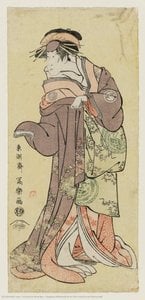
Sharaku: 100 najsłynniejszych obrazów

Kabuki Actor Ōtani Oniji III as Yakko Edobei (1794) to najsłynniejszy obraz autorstwa Sharaku, znajdujący się w Metropolitan Museum of Art w Nowy Jork. Bandō Hikosaburō III as Kudōzaemon Suketsune (1795) i Iwai Hanshirō IV as O-Han of the Shinanoya (1795) to dwa kolejne dzieła, które świat zna najlepiej. Z 147 dzieł Sharaku w naszym katalogu, oto 100 najczęściej wybieranych przez kolekcjonerów i zwiedzających muzea, wraz z rokiem powstania, informacją o muzeum oraz historią każdego z nich.

Ranking oparty na naszym wskaźniku popularności, który łączy liczbę wyszukiwań, wizyt oraz zamówień dla każdego dzieła. Aktualizacja: Październik 2026. Każde arcydzieło na tej stronie można zamówić jako ręcznie malowaną reprodukcję olejną o jakości muzealnej lub jako wysokiej jakości wydruk artystyczny, w wybranym przez Ciebie rozmiarze.

Portret Sharaku
Sharaku
Nurt
Ukiyo-e
Dzieła w naszym katalogu
147
Najsłynniejsze
Kabuki Actor Ōtani Oniji III as Yakko Edobei (1794)
Najwięcej dzieł w
Metropolitan Museum of Art

Top 10: najsłynniejsze obrazy artysty Sharaku

Kabuki Actor Ōtani Oniji III as Yakko Edobei (1794) autorstwa Sharaku
1

Kabuki Actor Ōtani Oniji III as Yakko Edobei

1794 · Woodblock Print · Metropolitan Museum of Art, Nowy Jork

In the fleeting moments of the Edo period, few artists captured the raw, unbridled energy of human emotion as piercingly as Tōshūsai Sharaku. His masterpiece, Kabuki Actor Ōtani Oniji III as Yakko Edobei, serves as a breathtaking window into the heart of Kabuki theater, frozen in time since 1794. This woodblock print does not merely depict a performer; it captures a psychological crescendo. The actor, portrayed with startling realism, is…

Bandō Hikosaburō III as Kudōzaemon Suketsune (1795) autorstwa Sharaku
2

Bandō Hikosaburō III as Kudōzaemon Suketsune

1795 · Woodblock Print

In the fleeting, vibrant world of the Edo period, few images capture the raw, theatrical intensity of the stage quite like Tōshūsai Sharaku’s 1795 masterpiece, Bandō Hikosaburō III as Kudōzaemon Suketsune. This monochrome woodblock print is not merely a portrait; it is a psychological study of a moment frozen in time. The subject, the celebrated Kabuki actor Bandō Hikosaburō III, is captured mid-performance, embodying the formidable character of Kudōzaemon Suketsune.…

Iwai Hanshirō IV as O-Han of the Shinanoya (1795) autorstwa Sharaku
3

Iwai Hanshirō IV as O-Han of the Shinanoya

1795 · Woodblock Print

In the fleeting, vibrant world of Edo-period Japan, few artists captured the raw, theatrical essence of human emotion as piercingly as Tōshūsai Sharaku. His masterpiece, Iwai Hanshirō IV as O-Hano of the Shinanoya, serves as a breathtaking window into the Kabuki stage of 1795. This woodblock print does not merely depict an actor in costume; it captures a moment of profound character study. The subject, portrayed with a striking three-quarter…

Nakajima Wadaemon I as Tanbaya Hachiemon (1794) autorstwa Sharaku
4

Nakajima Wadaemon I as Tanbaya Hachiemon

1794 · Woodblock Print

In the fleeting moments of the Edo period, few artists captured the raw, unvarnished essence of human emotion as strikingly as Tōshūsai Sharaku. His masterpiece, Nakajima Wadaemon I as Tanbaya Hachiemon, serves as a profound window into the theatrical soul of 1794 Japan. This woodblock print does not merely depict an actor; it captures a psychological state. The subject, portrayed with Sharaku’s signature intensity, sits in a moment of palpable…

Iwai Hanshirō IV as Kōtō no Naishi (1795) autorstwa Sharaku
5

Iwai Hanshirō IV as Kōtō no Naishi

1795 · Woodblock Print

In the fleeting history of Japanese ukiyo-e, few names command as much intrigue and reverence as Tōshūsai Sharaku. His brief, explosive appearance on the art scene—lasting a mere ten months between 1794 and 1795—left behind a legacy that continues to haunt and fascinate the modern collector. This particular masterpiece, Iwai Hanshirō IV as Kōtō no Naishi, serves as a profound testament to Sharaku’s unparalleled ability to capture the raw, psychological…

Morita Kan'ya VIII as Genkaibō Ajari (1794) autorstwa Sharaku
8

Morita Kan'ya VIII as Genkaibō Ajari

1794 · Woodblock Print

In the fleeting moments of the Edo period, few artists captured the raw, electric energy of the Kabuki stage as profoundly as Tōshūsai Sharaku. His masterpiece, Morita Kan'ya VIII as Genkaibō Ajari, serves as a breathtaking window into a vanished era of Japanese theatrical splendor. This woodblock print is not merely a portrait; it is a captured heartbeat, a frozen instant of high drama where the boundary between performer and…

Matsumoto Koshiro IV as the Fish Peddler Gorobei autorstwa Sharaku
9

Matsumoto Koshiro IV as the Fish Peddler Gorobei

Woodblock Print · Metropolitan Museum of Art, Nowy Jork

To stand before a portrait in the style of Tōshūsai Sharaku is to confront not merely an image, but a moment suspended between life and memory. This depiction of Matsumoto Koshiro IV as the fish peddler Gorobei captures the very essence of the Edo period's vibrant, yet often melancholic, undercurrents. The print possesses an almost startling immediacy; it feels less like an artistic rendering and more like a captured breath…

Nakamura Nakazō II, also called Sakaiya Shūkaku (1794) autorstwa Sharaku
10

Nakamura Nakazō II, also called Sakaiya Shūkaku

1794 · Woodblock Print

This woodblock print presents a portrait of Nakamura Nakazō II, also called Sakaiya Shūkaku. The subject was a prominent Japanese kabuki actor, captured during a period of significant theatrical activity in Edo. The work is attributed to the artist Toshusai Sharaku, a figure whose brief and intense presence in the ukiyo-e genre remains a subject of much interest. This specific piece dates to 1794.

Pozostała część rankingu Sharaku, od 11 do 100

The Actor Sawamura Sojuro III (1795) autorstwa Sharaku
#16

The Actor Sawamura Sojuro III

1795 · Metropolitan Museum of Art

In the fleeting history of Japanese Ukiyo-e, few names evoke as much mystery and intense fascination as Tōshūsai Sharaku. His brief, explosive appearance on the art scene—lasting a…

Zabierz ją do domu →
Ebisu (1795) autorstwa Sharaku
#21

Ebisu

1795

In the fleeting, brilliant ten-month career of Tōshūsai Sharaku, few works capture the vibrant pulse of Japanese folklore as effectively as his 1795 masterpiece, Ebisu. This woodblock print…

Zabierz ją do domu →

Obrazy Sharaku według okresów

Tematy, które najczęściej malował Sharaku

Cztery tematy najczęściej powracające w tych arcydziełach, wraz z najdoskonalszym przykładem każdego z nich.

Gdzie można zobaczyć obrazy Sharaku

5 muzeów, w których znajduje się najwięcej obrazów z tej strony.

Muzeum Miasto Dzieła artysty Sharaku Obrazy z tej listy
Metropolitan Museum of Art, Nowy JorkMetropolitan Museum of Art Nowy Jork 36 Kabuki Actor Ōtani Oniji III as Yakko Edobei, Matsumoto Koshiro IV as the Fish Peddler Gorobei, Bandō Mitsugorō II as Ishii Genzō in the Play "Hana Ayame Bunroku Soga"
Brooklyn Museum, BrooklynBrooklyn Museum Brooklyn 3 Segawa Kikujuro Iii as Oshizu, Wife of Tanabe Bunzo, Kubuki Actor Ichikawa Ebizō as Takemura Sadanoshin, Daizo the Substitute
Art Institute of Chicago, ChicagoArt Institute of Chicago Chicago 1 Otafuku Throwing Black Beans to Chase Away the Demons on New Year's Eve
Tokyo National Museum, TokioTokyo National Museum Tokio 1 Kabuki Actor Ōtani Tokuji as Monogusa Tarō
Toledo Museum of Art, ToledoToledo Museum of Art Toledo 1 Onoe Matsusuke as Ashikaga TukaujiPublished by Tsutaya Juzaburo

Sharaku na przestrzeni lat: arcydzieła każdego roku

Między 1794 a 1795, w sumie w ciągu 2 lat, Sharaku namalował każdy datowany utwór na tej stronie: oto one, rok po roku.

  1. 1794
    Kabuki Actor Ōtani Oniji III as Yakko Edobei (1794) autorstwa Sharaku
    1 z 100

    Kabuki Actor Ōtani Oniji III as Yakko Edobei

    Metropolitan Museum of Art

    In the fleeting moments of the Edo period, few artists captured the raw, unbridled energy of human emotion as piercingly as Tōshūsai Sharaku. His masterpiece, Kabuki Actor Ōtani…

  2. 1794
    Nakajima Wadaemon I as Tanbaya Hachiemon (1794) autorstwa Sharaku
    Nr 4 z 100

    Nakajima Wadaemon I as Tanbaya Hachiemon

    In the fleeting moments of the Edo period, few artists captured the raw, unvarnished essence of human emotion as strikingly as Tōshūsai Sharaku. His masterpiece, Nakajima Wadaemon I…

  3. 1794
  4. 1794
    Morita Kan'ya VIII as Genkaibō Ajari (1794) autorstwa Sharaku
    8 z 100

    Morita Kan'ya VIII as Genkaibō Ajari

    In the fleeting moments of the Edo period, few artists captured the raw, electric energy of the Kabuki stage as profoundly as Tōshūsai Sharaku. His masterpiece, Morita Kan'ya…

  5. 1794
    Nakamura Nakazō II, also called Sakaiya Shūkaku (1794) autorstwa Sharaku
    Nr 10 z 100

    Nakamura Nakazō II, also called Sakaiya Shūkaku

    This woodblock print presents a portrait of Nakamura Nakazō II, also called Sakaiya Shūkaku. The subject was a prominent Japanese kabuki actor, captured during a period of significant…

  6. 1794
  7. 1794
  8. 1794
    Nakajima Wadaemon I as Migawari no Jizō (1794) autorstwa Sharaku
    Nr 20 z 100

    Nakajima Wadaemon I as Migawari no Jizō

    This striking woodblock print, created by the enigmatic artist Tōshūsai Sharaku in 1794, offers a captivating portrait of Nakajima Wadaemon I embodying the role of Migawari no Jizō.…

  9. 1794
  10. 1794
  11. 1794
  12. 1794
  13. 1795
    Bandō Hikosaburō III as Kudōzaemon Suketsune (1795) autorstwa Sharaku
    2 z 100

    Bandō Hikosaburō III as Kudōzaemon Suketsune

    In the fleeting, vibrant world of the Edo period, few images capture the raw, theatrical intensity of the stage quite like Tōshūsai Sharaku’s 1795 masterpiece, Bandō Hikosaburō III…

  14. 1795
    Iwai Hanshirō IV as O-Han of the Shinanoya (1795) autorstwa Sharaku
    Nr 3 z 100

    Iwai Hanshirō IV as O-Han of the Shinanoya

    In the fleeting, vibrant world of Edo-period Japan, few artists captured the raw, theatrical essence of human emotion as piercingly as Tōshūsai Sharaku. His masterpiece, Iwai Hanshirō IV…

  15. 1795
    Iwai Hanshirō IV as Kōtō no Naishi (1795) autorstwa Sharaku
    5 z 100

    Iwai Hanshirō IV as Kōtō no Naishi

    In the fleeting history of Japanese ukiyo-e, few names command as much intrigue and reverence as Tōshūsai Sharaku. His brief, explosive appearance on the art scene—lasting a mere…

  16. 1795
  17. 1795
  18. 1795
  19. 1795
    The Actor Sawamura Sojuro III (1795) autorstwa Sharaku
    Miejsce 16 / 100

    The Actor Sawamura Sojuro III

    Metropolitan Museum of Art

    In the fleeting history of Japanese Ukiyo-e, few names evoke as much mystery and intense fascination as Tōshūsai Sharaku. His brief, explosive appearance on the art scene—lasting a…

  20. 1795
  21. 1795
    Segawa Kikunojo III in an Unidentified Role (1795) autorstwa Sharaku
    Nr 18 z 100

    Segawa Kikunojo III in an Unidentified Role

    Metropolitan Museum of Art

    In the fleeting moments of the Edo period, few names ignite as much curiosity as Tōshūsai Sharaku. His brief, explosive career—lasting a mere ten months between 1794 and…

  22. 1795
    Ebisu (1795) autorstwa Sharaku
    Miejsce 21 / 100

    Ebisu

    In the fleeting, brilliant ten-month career of Tōshūsai Sharaku, few works capture the vibrant pulse of Japanese folklore as effectively as his 1795 masterpiece, Ebisu. This woodblock print…

  23. 1795
  24. 1795
  25. 1795

Obrazy artysty Sharaku: najczęściej zadawane pytania

Który obraz Sharaku jest najbardziej znany?Pokaż odpowiedź

Kabuki Actor Ōtani Oniji III as Yakko Edobei (1794), Metropolitan Museum of Art, Nowy Jork. Następnie pojawiają się Bandō Hikosaburō III as Kudōzaemon Suketsune (1795) oraz Iwai Hanshirō IV as O-Han of the Shinanoya (1795).

Które są 10 najsłynniejszych obrazów, których autorem jest Sharaku?Pokaż odpowiedź

Kabuki Actor Ōtani Oniji III as Yakko Edobei, Bandō Hikosaburō III as Kudōzaemon Suketsune, Iwai Hanshirō IV as O-Han of the Shinanoya, Nakajima Wadaemon I as Tanbaya Hachiemon, Iwai Hanshirō IV as Kōtō no Naishi, Bandō Hikosaburō III as Godai Saburō Chikatada, Osagawa Tsuneyo II as Okinu, wife of Chōemon, Morita Kan'ya VIII as Genkaibō Ajari, Matsumoto Koshiro IV as the Fish Peddler Gorobei i Nakamura Nakazō II, also called Sakaiya Shūkaku. Powyższy ranking zawiera rok oraz muzeum dla każdego z nich.

Ile obrazów autorstwa Sharaku znajduje się w kolekcji?Pokaż odpowiedź

Nasz katalog obejmuje 147 dzieł autorstwa Sharaku, datowanych od 1794 do 1795.

Gdzie mogę zobaczyć najsłynniejsze obrazy, których autorem jest Sharaku?Pokaż odpowiedź

Większość z nich znajduje się w Metropolitan Museum of Art (Nowy Jork), Brooklyn Museum (Brooklyn) i Art Institute of Chicago (Chicago). Powyższa tabela zawiera listę muzeów po kolei.

W jakim okresie Sharaku namalował swoje najsłynniejsze dzieła?Pokaż odpowiedź

W okresie 1794: 49 z 100 dzieł na tej stronie pochodzi z tego czasu, w tym Kabuki Actor Ōtani Oniji III as Yakko Edobei.

Jakie jest najwcześniejsze i najpóźniejsze słynne dzieło, którego autorem jest Sharaku?Pokaż odpowiedź

Najwcześniejszy na tej stronie to Kabuki Actor Ōtani Oniji III as Yakko Edobei (1794), najpóźniejszy Bandō Hikosaburō III as Kudōzaemon Suketsune (1795).

Jakie tematy malował Sharaku?Pokaż odpowiedź

Kabuki actor (17), Woodblock print (17) i Portrait (11), spośród 100 dzieł na tej stronie.

Na czym i czym malował Sharaku?Pokaż odpowiedź

Woodblock Print: 29 z 100 dzieł na tej stronie.

Do jakiego nurtu należy twórczość Sharaku?Pokaż odpowiedź

Ukiyo-e, co pokazują obrazy na tej stronie.

Jakie obrazy Sharaku znajdują się w zbiorach Metropolitan Museum of Art?Pokaż odpowiedź

Kabuki Actor Ōtani Oniji III as Yakko Edobei, Matsumoto Koshiro IV as the Fish Peddler Gorobei i Bandō Mitsugorō II as Ishii Genzō in the Play "Hana Ayame Bunroku Soga" to jedne z 19 dzieł na tej stronie znajdujących się w zbiorach Metropolitan Museum of Art, Nowy Jork.

Gdzie mogę kupić reprodukcję Sharaku?Pokaż odpowiedź

Tak. Każdy obraz na tej stronie można zamówić jako ręcznie malowaną reprodukcję olejną o jakości muzealnej lub jako wysokiej jakości wydruk artystyczny w wybranym przez Ciebie rozmiarze, bezpośrednio ze strony danego dzieła.

Sharaku: biografia

The Enigmatic Presence of Sharaku

Sharaku was a Japanese ukiyo-e print designer active between 1794 and 1795. His prolific output focused primarily on yakusha-e, which are portraits of kabuki actors. These works often emphasized the dynamism and energy of the subjects, frequently utilizing a realism that highlighted unflattering details such as wrinkles or large noses. His compositions often featured a focus on facial expressions, sometimes presenting a single figure or contrasting different types of faces.

The artist's career was brief, spanning approximately ten months. His work is categorized into four distinct periods:

Artistic Style and Legacy

Sharaku's technique involved the use of woodblock prints, sometimes employing extravagant methods such as the dusting of mica in the backgrounds to create a glittering effect. His portraits are noted for their ability to capture the psychology of a character through heightened theatrical gestures and expressive, almost caricature-like exaggerations.

Despite the mystery surrounding his true identity, his work has been recognized for its mastery of the medium. His reputation rests largely on his earlier prints, while his later output is often considered to have a declining artistry. His subjects included kabuki actors, sumo wrestlers, and warriors.

Wszystkie 147 dzieła artysty Sharaku →