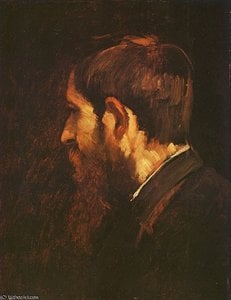
Mihály Munkácsy, 1844 – 1900

Mihály Munkácsy: 100 najsłynniejszych obrazów

Landscape with Lake (1881) to najsłynniejszy obraz autorstwa Mihály Munkácsy, znajdujący się w Galeria Narodowa w Budapeszcie w Budapeszt. The Wrestler's Challenge (1875) i Self-Portrait II. (1881) to dwa kolejne dzieła, które świat zna najlepiej. Z 139 dzieł Mihály Munkácsy w naszym katalogu, oto 100 najczęściej wybieranych przez kolekcjonerów i zwiedzających muzea, wraz z rokiem powstania, informacją o muzeum oraz historią każdego z nich.

Ranking oparty na naszym wskaźniku popularności, który łączy liczbę wyszukiwań, wizyt oraz zamówień dla każdego dzieła. Aktualizacja: Październik 2026. Każde arcydzieło na tej stronie można zamówić jako ręcznie malowaną reprodukcję olejną o jakości muzealnej lub jako wysokiej jakości wydruk artystyczny, w wybranym przez Ciebie rozmiarze.

Portret Mihály Munkácsy
Mihály Munkácsy · 1844 – 1900
Urodzony · zmarł
1844 – 1900, Mukaczewo
Nurt
Realism
Dzieła w naszym katalogu
139
Najsłynniejsze
Landscape with Lake (1881)
Najwięcej dzieł w
Galeria Narodowa w Budapeszcie

Top 10: najsłynniejsze obrazy artysty Mihály Munkácsy

Landscape with Lake (1881) autorstwa Mihály Munkácsy
1

Landscape with Lake

1881 · Oil · Galeria Narodowa w Budapeszcie, Budapeszt

A Quiet Observation of Light and Form Landscape with Lake There is a certain stillness in this 1881 work that invites a slower pace of observation. The composition focuses on the interplay between the terrestrial and the aquatic, capturing a moment where the landscape seems to hold its breath. The palette relies on muted, professional tones—deep blues, soft greys, and earthy tans—that suggest a specific, perhaps overcast, atmospheric condition. It…

The Wrestler's Challenge (1875) autorstwa Mihály Munkácsy
2

The Wrestler's Challenge

1875 · Oil On Panel · Art Institute of Chicago, Chicago

The Wrestler's Challenge is an oil on panel painting created by the Hungarian artist Mihály Munkácsy. The work emerged in 1875. It captures a moment of physical tension held within a dim, rustic space. The artist, Mihály Munkácsy, was born in Mukachevo, Ukraine, and brought his specific vision to this composition.

Apotheosis of the Renaissance (1888) autorstwa Mihály Munkácsy
5

Apotheosis of the Renaissance

1888 · Oil · Kunsthistorisches Museum, Wiedeń

The ceiling of the Kunsthistorisches Museum in Vienna does not merely exist; it breathes. It is a grand, multi-layered vision of celestial triumph, where the heavy architecture of the Renaissance meets the infinite blue of the heavens. A dome, seemingly sliced open, invites the eye upward through a complex, swirling motion of light and shadow. Below, the terrestrial world is crowded and heavy, filled with the deep reds and earthy…

Portrait of a Little Girl (1890) autorstwa Mihály Munkácsy
6

Portrait of a Little Girl

1890 · Oil On Canvas · Kunsthalle Bremen, Brema

Mihály Munkácsy’s Portrait of a Little Girl is a vertical composition focusing on the subject from the waist up. Positioned slightly off-center, the girl is set against a dark, indistinct background. This void of detail pushes the figure forward, emphasizing the stark contrast between the deep, moody tones of black and dark brown and the subject herself. A bright, creamy white blouse and a crimson skirt provide the primary points…

Pozostała część rankingu Mihály Munkácsy, od 11 do 100

The Music Room (1878) autorstwa Mihály Munkácsy
#44

The Music Room

1878 · Metropolitan Museum of Art

In this 1878 work, Mihály Munkácsy turns his gaze toward the private sphere of his own life in Paris. The painting, titled The Music Room, captures a richly…

Zamów reprodukcję →
A Study for "Paradise Lost (1899) autorstwa Mihály Munkácsy
#45

A Study for "Paradise Lost

1899 · Brooklyn Museum

A Study for "Paradise Lost" by Mihály Munkácsy emerges from the shadows of 1899, a moment frozen in oil. This painting by Mihály Munkácsy captures a quiet, singular…

Zabierz ją do domu →
Dark Street (1871) autorstwa Mihály Munkácsy
#91

Dark Street

1871 · Galeria Narodowa w Budapeszcie

In "Dark Street" by Mihály Munkácsy, a sense of heavy verticality pulls the eye through a narrow, shadowed passage. Towering, weathered walls rise on either side, framing a…

Zabierz ją do domu →

Tematy, które najczęściej malował Mihály Munkácsy

Cztery tematy najczęściej powracające w tych arcydziełach, wraz z najdoskonalszym przykładem każdego z nich.

Gdzie można zobaczyć obrazy Mihály Munkácsy

8 muzeów, w których znajduje się najwięcej obrazów z tej strony.

Muzeum Miasto Dzieła artysty Mihály Munkácsy Obrazy z tej listy
Galeria Narodowa w Budapeszcie, BudapesztGaleria Narodowa w Budapeszcie Budapeszt 53 Landscape with Lake, Self-Portrait II., In front of the Collecting Box
Déri Museum, DebrecenDéri Museum Debrecen 3 Christ on the Cross, Christ before Pilate, untitled (537)
Kunsthistorisches Museum, WiedeńKunsthistorisches Museum Wiedeń 2 Apotheosis of the Renaissance, Apotheosis of the Renaissance
Art Institute of Chicago, ChicagoArt Institute of Chicago Chicago 1 The Wrestler's Challenge
Kunsthalle Bremen, BremaKunsthalle Bremen Brema 1 Portrait of a Little Girl
Ernest Zmeták Art Gallery Nové Zámky 1 In Front of the Inn
The Mesdag Collection, The HagueThe Mesdag Collection The Hague 1 A condemned man
Frye Art Museum, Washington, D.C.Frye Art Museum Washington, D.C. 1 The Condemned

Mihály Munkácsy na przestrzeni dekad: jedno arcydzieło na każde dziesięciolecie

  1. 1860s
  2. 1870s
    The Wrestler's Challenge (1875) autorstwa Mihály Munkácsy
    2 z 100

    The Wrestler's Challenge

    Wiek 26 – 35 · Art Institute of Chicago

    The Wrestler's Challenge is an oil on panel painting created by the Hungarian artist Mihály Munkácsy. The work emerged in 1875. It captures a moment of physical tension…

  3. 1880s
    Landscape with Lake (1881) autorstwa Mihály Munkácsy
    1 z 100

    Landscape with Lake

    Wiek 36 – 45 · Galeria Narodowa w Budapeszcie

    A Quiet Observation of Light and Form Landscape with Lake There is a certain stillness in this 1881 work that invites a slower pace of observation. The composition…

  4. 1890s
    Portrait of a Little Girl (1890) autorstwa Mihály Munkácsy
    Nr 6 z 100

    Portrait of a Little Girl

    Wiek 46 – 55 · Kunsthalle Bremen

    Mihály Munkácsy’s Portrait of a Little Girl is a vertical composition focusing on the subject from the waist up. Positioned slightly off-center, the girl is set against a…

Obrazy artysty Mihály Munkácsy: najczęściej zadawane pytania

Który obraz Mihály Munkácsy jest najbardziej znany?Pokaż odpowiedź

Landscape with Lake (1881), Galeria Narodowa w Budapeszcie, Budapeszt. Następnie pojawiają się The Wrestler's Challenge (1875) oraz Self-Portrait II. (1881).

W jakim wieku Mihály Munkácsy namalował/a Landscape with Lake?Pokaż odpowiedź

37 lat: Landscape with Lake pochodzi z 1881, a Mihály Munkácsy urodził(a) się w 1844.

Które są 10 najsłynniejszych obrazów, których autorem jest Mihály Munkácsy?Pokaż odpowiedź

Landscape with Lake, The Wrestler's Challenge, Self-Portrait II., Christ on the Cross, Apotheosis of the Renaissance, Portrait of a Little Girl, In front of the Collecting Box, In Front of the Inn, Hay Wagon in a Grove i Making Lint. Powyższy ranking zawiera rok oraz muzeum dla każdego z nich.

Ile obrazów autorstwa Mihály Munkácsy znajduje się w kolekcji?Pokaż odpowiedź

Nasz katalog obejmuje 139 dzieł autorstwa Mihály Munkácsy, datowanych od 1864 do 1899.

Gdzie mogę zobaczyć najsłynniejsze obrazy, których autorem jest Mihály Munkácsy?Pokaż odpowiedź

Większość z nich znajduje się w Galeria Narodowa w Budapeszcie (Budapeszt), Déri Museum (Debrecen) i Kunsthistorisches Museum (Wiedeń). Powyższa tabela zawiera listę muzeów po kolei.

W jakim okresie Mihály Munkácsy namalował swoje najsłynniejsze dzieła?Pokaż odpowiedź

W okresie 1870s: 27 z 100 dzieł na tej stronie pochodzi z tego czasu, w tym The Wrestler's Challenge.

Jakie jest najwcześniejsze i najpóźniejsze słynne dzieło, którego autorem jest Mihály Munkácsy?Pokaż odpowiedź

Najwcześniejszy na tej stronie to In Front of the Inn (1864), najpóźniejszy A Study for "Paradise Lost (1899).

Jakie tematy malował Mihály Munkácsy?Pokaż odpowiedź

Shadows (4), Woman (4) i 19th century (4), spośród 100 dzieł na tej stronie.

Na czym i czym malował Mihály Munkácsy?Pokaż odpowiedź

Oil: 4 z 100 dzieł na tej stronie.

Do jakiego nurtu należy twórczość Mihály Munkácsy?Pokaż odpowiedź

Realism, co pokazują obrazy na tej stronie.

Jakie obrazy Mihály Munkácsy znajdują się w zbiorach Galeria Narodowa w Budapeszcie?Pokaż odpowiedź

Landscape with Lake, Self-Portrait II. i In front of the Collecting Box to jedne z 45 dzieł na tej stronie znajdujących się w zbiorach Galeria Narodowa w Budapeszcie, Budapeszt.

Gdzie mogę kupić reprodukcję Mihály Munkácsy?Pokaż odpowiedź

Tak. Każdy obraz na tej stronie można zamówić jako ręcznie malowaną reprodukcję olejną o jakości muzealnej lub jako wysokiej jakości wydruk artystyczny w wybranym przez Ciebie rozmiarze, bezpośrednio ze strony danego dzieła.

Mihály Munkácsy: biografia

Mihály Munkácsy – The Hungarian Pioneer Painter in Genre Art

Mihály Munkácsy (także Mihály von Munkácsy, niem. Michael Lieb) (ur. 20 lutego 1844 w Mukaczewie na Węgrzech, zm. 1 maja 1900 w Endenich (dzielnica Bonn)) – węgierski malarz-realista, twórca fresków. Mihály von Munkácsy pochodził z osiadłej przed dwustu laty na Węgrzech bawarskiej rodziny. W roku 1863 przybrał nazwisko od nazwy miejsca urodzenia. Początkowo przez cztery lata uczył się rzemiosła stolarskiego. W roku 1863 rozpoczął studia malarskie w Budapeszcie, od roku 1864 na Akademii Sztuk Pięknych w Wiedniu. Studia kontynuował w latach 1866–1868 w Monachium, i 1868–1870 w Düsseldorfie. Lata 1872–1896 spędził w Paryżu, gdzie wystawiał obrazy na salonach malarstwa. Jego twórczość obejmuje krajobrazy, sceny rodzajowe, martwe natury i portrety.
  • Early Life and Apprenticeship: Mihály Lieb’s childhood was marked by profound loss; orphaned at the tender age of seven with the passing of both parents, he faced a future fraught with uncertainty. Initially apprenticed as a joiner – a practical trade meant to secure his livelihood – his innate artistic inclinations could not be suppressed. This yearning for creative expression led him to Elek Szamossy, an itinerant painter who recognized and nurtured the young boy’s talent, providing foundational instruction that would set him on a path toward artistic mastery.
  • Studies Abroad: A pivotal moment arrived with a state grant enabling Munkácsy to broaden his horizons through study abroad, first in Vienna (1865), then Munich (1866), and finally Düsseldorf (1868). It was within the walls of these academies, particularly under the influence of the Düsseldorfschool of painting, that he honed his technical skills and began to formulate a distinctive artistic voice.
  • The Influence of Gustave Courbet and Rembrandt: Munkácsy’s artistic development was shaped by a confluence of influences. His early grounding in Hungarian genre painting provided a foundation for his realistic depictions of everyday life. The Düsseldorfschool instilled in him an emphasis on emotional expression within figures, while exposure to French Realism – particularly the work of Gustave Courbet – encouraged a focus on social commentary and unvarnished portrayals of reality.

Genre Painting and Early Masterpieces

Munkácsy’s early works were deeply rooted in the realities of Hungarian peasant life, reflecting a commitment to depicting the hardships and dignity of rural existence. Paintings like “The Cauldron” (1864) and “Easter Merrymaking” (1865) showcase his initial style – vibrant colors and theatrical compositions influenced by contemporaries such as Károly Lotz and János Jankó. First he followed the colourful, theatrical style of contemporary Hungarian genre painters (e. g. Károly Lotz, János Jankó), for example in The Cauldron (1864) or Easter Merrymaking (1865). In his next years he paid more attention to the landscape around his figures (Storm in the Puszta, 1867). From the Düsseldorf school he learnt to represent different emotions in his figures and to treat them as a group (The Last Day of a Condemned Man, 1869). He is associated with the Düsseldorf school of painting.

“The Last Day of a Condemned Man” – A Turning Point

In 1869, Munkácsy painted his much acclaimed work “The Last Day of a Condemned Man”, considered his first masterpiece. The picture was rewarded with the Gold Medal of the Paris Salon in 1870. It portrays oppression, moral uncertainty and looming tragic in a unique and unprecedented visual form. It suggests torture caused by oppression, moral uncertainty and reactions to an impending tragic end in visual form. However, it aptly captures the capabilities of the Hungarian master in painting. The painting made Munkácsy a popular painter in an instant.

The Christ Trilogy – A Monumental Achievement

In 1882 Munkácsy painted Christ in front of Pilate, followed by Golgotha in 1884 and later, in 1896 Ecce Homo (‘Behold the Man!’—Pontius Pilate’s words to the crowd seeing Christ with a crown of thorns on his head). The paintings of three significant and defining scenes from the Bible were displayed in Paris, Vienna and Budapest and his exhibitions attracted thousands. His works transformed genre art – the pictorial representation of scenes or events from everyday life – significantly and Munkácsy is still considered as one of the pioneers of the field.

Legacy and Recognition

Mihály Munkácsy achieved unprecedented fame during his lifetime, becoming arguably the most successful Hungarian artist of his era. His *Christ Trilogy* remains a landmark achievement in religious art, celebrated for its scale, emotional intensity, and historical accuracy. The commercial success of his paintings played a significant role in popularizing Realist art among American audiences, broadening its reach and influence. Today, his works are held in prestigious museums worldwide, including the Hungarian National Gallery, the Déri Museum (which houses the complete *Christ Trilogy*) and the Art Gallery of Hamilton. His legacy extends beyond his technical mastery; it lies in his ability to bridge artistic traditions, synthesize diverse influences, and create paintings that continue to captivate and move audiences across cultures and generations. He died in Paris on May 1, 1900, leaving behind a body of work that stands as a testament to the power of art to illuminate the human condition.

Wszystkie 139 dzieła artysty Mihály Munkácsy →