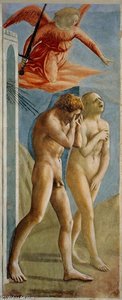
Masaccio, 1401 – 1428

Obrazy: 97 najsłynniejszych dzieł artysty Masaccio, zestawienie

Najsłynniejszym obrazem Masaccio jest Trójca Święta (1428). Wraz z Podatek od świątyni (1425) i Wygnanie z raju (1426) tworzy to zestaw trzech dzieł, które zna każdy. Nasz katalog zawiera 97 dzieł autorstwa Masaccio; poniższych 97 to te, na które świat patrzy najczęściej – każde z podaniem roku powstania, muzeum, w którym się znajduje, oraz uzasadnieniem jego znaczenia.

Ranking oparty na naszym wskaźniku popularności, który łączy liczbę wyszukiwań, wizyt oraz zamówień dla każdego dzieła. Aktualizacja: Październik 2026. Każde arcydzieło na tej stronie można zamówić jako ręcznie malowaną reprodukcję olejną o jakości muzealnej lub jako wysokiej jakości wydruk artystyczny, w wybranym przez Ciebie rozmiarze.

Portret Masaccio
Masaccio · 1401 – 1428
Urodzony · zmarł
1401 – 1428, San Giovanni Valdarno
Nurt
Wczesny renesans
Dzieła w naszym katalogu
97
Najsłynniejsze
Trójca Święta (1428)
Najwięcej dzieł w
Santa Maria del Carmine

10 najsłynniejszych obrazów artysty Masaccio

Trójca Święta (1428) autorstwa Masaccio
1

Trójca Święta

1428 · Fresk

The Trinity by Masaccio is a fresco painting that marked the beginning of the Renaissance in Italy. Created in 1425, it is considered one of the most important works of the early Renaissance period. The painting is housed in the Santa Maria Novella church in Florence, Italy. Artistic Innovations The Trinity by Masaccio was a groundbreaking work that introduced several artistic innovations. It is one of the first monumental Renaissance…

Podatek od świątyni (1425) autorstwa Masaccio
2

Podatek od świątyni

1425 · Fresk

Scena ta rozgrywa się wewnątrz Kaplicy Brancacci w bazylice Santa Maria del Carmine we Florencji. To właśnie tutaj fresk zatytułowany Podatek od świątyni, wyszły spod pędzla Masaccia, tchnie życie w biblijną narrację, malując ją na ścianach kaplicy. Dzieło zamówione przez Felice Brancacciego stanowi istotną część większego cyklu poświęconego życiu św. Piotra. Powietrze w kaplicy zdaje się dźwigać ciężar tej świętej historii, gdy postacie przechodzą przez moment o głębokim znaczeniu duchowym.

Wygnanie z raju (1426) autorstwa Masaccio
3

Wygnanie z raju

1426 · Fresk

Ciężka cisza Kaplicy Brancaccich w kościele Santa Maria del Carmine we Florencji, we Włoszech, niesie w sobie ciężar głębokiej tragedii. To tutaj ściany oddychają historią przedstawioną w dziele Wygnanie z raju, którym jest fresco namalowane przez Masaccia około 1425 roku. Powietrze zdaje się gęstnieć wokół postaci, gdy stają one w obliczu swojego nagłego, nieodwracalnego odejścia z raju. Scena ta wyznacza początek szerszej narracji, stanowiąc pierwsze fresco w cyklu poświęconym życiu…

Rendering of the Tribute Money (detail) autorstwa Masaccio
4

Rendering of the Tribute Money (detail)

Fresk

Ten urzekający detal pochodzi z przełomowego fresku Masaccia pt. „Pieniądz pogłówkowy”, kluczowego dzieła znajdującego się w Kaplicy Brancacci we Florencji. Powstałe około 1426 roku dzieło stanowi punkt zwrotny w sztuce zachodniej, odchodząc od stylizowanych konwencji okresu gotyckiego w stronę nowej ery naturalizmu i humanistycznej ekspresji.

Predella panel from the Pisa Altar (1426) autorstwa Masaccio
5

Predella panel from the Pisa Altar

1426 · Oil On Panel · Berlińskie Muzea Państwowe, Berlin

To stand before this Predella panel from the Pisa Altar is to encounter a moment frozen in time, yet vibrating with raw, undeniable human drama. Dating to 1426, this work captures Masaccio at the zenith of his revolutionary power. It is not merely a depiction of the Crucifixion; it is a profound meditation on sacrifice, community, and the weight of divine narrative rendered with startling immediacy. The composition draws the…

The Madonna of Humility (1424) autorstwa Masaccio
6

The Madonna of Humility

1424 · Tempera On Panel

In the quiet, profound stillness of Masaccio’s The Madonna of Humility, we encounter one of the most moving snapshots of the Early Italian Renaissance. Created around 1424, this masterpiece transcends mere religious iconography to offer a window into a moment of raw, maternal intimacy. The scene is set not upon a celestial throne, but on the earth itself, where the Virgin Mary sits upon a blue patterned cushion. This choice…

Trinity (detail) (1425) autorstwa Masaccio
7

Trinity (detail)

1425 · Fresco · Santa Maria Novella, Florencja

The image presents a detail from a fresco painting created in 1425 by Masaccio. Within this specific view, a figure is depicted that appears to be Mary Magdalene, identified by the traditional iconography of her long hair and a head covering. She possesses a contemplative expression, directing her gaze slightly downwards toward an object held in her right hand, which may be interpreted as a symbol of faith or devotion.

Two panels from the Pisa Altarpiece (1426) autorstwa Masaccio
8

Two panels from the Pisa Altarpiece

1426 · Tempera On Panel · Berlińskie Muzea Państwowe, Berlin

In the quiet, hallowed halls of art history, few works capture the dawn of a new era as poignantly as Masaccio’s Two Panels from the Pisa Altarpiece. Completed in 1426, these panels are far more than mere fragments of a lost polyptych; they are windows into a transformative moment when the rigid conventions of the Gothic period began to dissolve, giving way to the profound humanism of the Early Italian…

Trinity (1425) autorstwa Masaccio
9

Trinity

1425 · Fresco · Santa Maria Novella, Florencja

To step before Masaccio’s Holy Trinity is to witness the exact moment when the flattened, symbolic world of the Middle Ages dissolved into the profound, breathing reality of the Renaissance. Painted between 1425 and 1427 within the hallowed walls of Santa Maria Novella in Florence, this fresco does not merely depict a religious scene; it carves a hole in the very wall of the chapel, inviting the viewer to step…

Trinity (detail) (1425) autorstwa Masaccio
10

Trinity (detail)

1425 · Acrylic On Canvas · Santa Maria Novella, Florencja

Masaccio’s “Trinity (detail),” housed within the magnificent Santa Maria Novella in Florence, isn't merely a fresco; it’s a pivotal moment in art history – a visual manifesto declaring the arrival of the High Renaissance. Painted between 1425 and 1427, this intimate section captures the essence of Masaccio’s revolutionary approach to depicting reality, a departure from the stylized elegance of the preceding Gothic era and a profound influence on generations of…

Masaccio, obrazy od 11 do 97

Madonna Casini (1426) autorstwa Masaccio
#16

Madonna Casini

1426

The Madonna Casini is a painting by the artist Masaccio. This intimate work carries several other names, including Madonna del Solletico, Madonna col bambino, Madonna con bambino, and…

Zamów reprodukcję →
Adam and Eve banished from Paradise (1427) autorstwa Masaccio
#17

Adam and Eve banished from Paradise

1427

Adam and Eve banished from Paradise by Masaccio is a single scene from a larger fresco cycle located in the Brancacci Chapel of Santa Maria del Carmine in…

Baptism of the Neophytes (1427) autorstwa Masaccio
#20

Baptism of the Neophytes

1427

In the quiet dimness of the Brancacci Chapel, within the Santa Maria del Carmine in Florence, Italy, a profound scene unfolds. This fresco, executed between 1426 and 1427,…

Crucifixion (1426) autorstwa Masaccio
#22

Crucifixion

1426 · Museo di Capodimonte

Masaccio’s Crucifixion, painted in 1426 during his tragically brief career, isn’t merely a depiction of a pivotal biblical event; it’s a foundational moment in Western art. Born in…

Zamów reprodukcję →
Distribution of Alms and Death of Ananias (1425) autorstwa Masaccio
#48

Distribution of Alms and Death of Ananias

1425

In the quiet, profound depths of Masaccio’s Distribution of Alms and Death of Ananias, we encounter a moment where the divine intersects with the earthly through the simple,…

Adoration of the Magi (1426) autorstwa Masaccio
#85

Adoration of the Magi

1426 · Berlińskie Muzea Państwowe

To stand before Masaccio’s Adoration of the Magi is not merely to observe a painting; it is to step directly into the revolutionary atmosphere of the early Italian…

Zamów reprodukcję →
St. Andrew (1426) autorstwa Masaccio
#93

St. Andrew

1426 · Muzeum J. Paula Getty'ego

A Revolutionary Vision of Faith: Masaccio’s St. Andrew Masaccio's *St. Andrew*, painted in 1426, is a landmark work of the Early Renaissance, embodying the seismic shift towards naturalism…

Zabierz ją do domu →
Crucifixion of St Peter (1426) autorstwa Masaccio
#97

Crucifixion of St Peter

1426 · Berlińskie Muzea Państwowe

Masaccio's 1426 painting, *Crucifixion of St. Peter*, is not merely a depiction of a pivotal moment in Christian history; it’s a foundational cornerstone of the Early Italian Renaissance.…

Zamów ręcznie malowaną kopię →

Obrazy Masaccio według okresów

Tematy, które najczęściej malował Masaccio

Cztery tematy najczęściej powracające w tych arcydziełach, wraz z najdoskonalszym przykładem każdego z nich.

Gdzie można zobaczyć obrazy Masaccio

8 muzeów, w których znajduje się najwięcej obrazów z tej strony.

Muzeum Miasto Dzieła artysty Masaccio Obrazy z tej listy
Santa Maria del Carmine, FlorencjaSanta Maria del Carmine Florencja 7 Widok na Kapelę Brancacci (przed odrestaurowaniem), Fresko z Kapelli Brancacci (prawy widok), Fresko z Kaplicy Brancacci (lewy widok)
Berlińskie Muzea Państwowe, BerlinBerlińskie Muzea Państwowe Berlin 6 Predella panel from the Pisa Altar, Two panels from the Pisa Altarpiece, Plate of Nativity (Berlin Tondo)
Gemäldegalerie, BerlinGemäldegalerie Berlin 5 Martyrdom of San Giovanni Battista, A Bearded Carmelite Saint, San Agustín
Santa Maria Novella, FlorencjaSanta Maria Novella Florencja 4 Trinity (detail), Trinity, Trinity (detail)
Lindenau-Museum, AltengauLindenau-Museum Altengau 3 Christ in the Garden of Gethsemane (detail), Christ in the Garden of Gethsemane (detail), Christ in the Garden of Gethsemane
National Gallery of Art, WaszyngtonNational Gallery of Art Waszyngton 2 Profile Portrait of a Young Man, Madonna of Humility
National Gallery, LondynNational Gallery Londyn 2 Madonna with Child and Angels, St.Girolamo end Giovanni Battista
Museo di Capodimonte, NapoliMuseo di Capodimonte Napoli 1 Crucifixion

Najsłynniejsze obrazy artysty Masaccio, rok po roku

Masaccio tworzył przez zaledwie 9 lat, od 1420 do 1428: śledź tę dekadę rok po roku, poprzez obrazy, które przyniosły mu sławę.

  1. 1420
  2. 1422
  3. 1422
  4. 1422
    San Giovenale Triptych. Left panel (1422) autorstwa Masaccio
    Nr 63 z 97

    San Giovenale Triptych. Left panel

    Wiek: 21

    The San Giovenale Triptych, Left Panel by Masaccio is a seminal work of art that showcases the artist's innovative style and technique. Created in 1422, this painting is…

  5. 1422
  6. 1423
  7. 1423
  8. 1424
    The Madonna of Humility (1424) autorstwa Masaccio
    Nr 6 z 97

    The Madonna of Humility

    Wiek: 23

    In the quiet, profound stillness of Masaccio’s The Madonna of Humility, we encounter one of the most moving snapshots of the Early Italian Renaissance. Created around 1424, this…

  9. 1424
    Christ in the Garden of Gethsemane (detail) (1424) autorstwa Masaccio
    Nr 21 z 97

    Christ in the Garden of Gethsemane (detail)

    Wiek: 23 · Lindenau-Museum

    The garden holds a heavy stillness. In this detail from 1424, a single figure kneels upon the earth, hands clasped in a tight knot of devotion. The light…

  10. 1424
  11. 1424
    Christ in the Garden of Gethsemane (1424) autorstwa Masaccio
    Miejsce 62 / 97

    Christ in the Garden of Gethsemane

    Wiek: 23 · Lindenau-Museum

    The painting Christ in the Garden of Gethsemane is a renowned work by the Italian artist Masaccio, created in 1424. This tempera painting, measuring 62 x 44 cm,…

  12. 1425
    Podatek od świątyni (1425) autorstwa Masaccio
    Nr 2 z 97

    Podatek od świątyni

    Wiek: 24

    Scena ta rozgrywa się wewnątrz Kaplicy Brancacci w bazylice Santa Maria del Carmine we Florencji. To właśnie tutaj fresk zatytułowany Podatek od świątyni, wyszły spod pędzla Masaccia, tchnie…

  13. 1425
    Trinity (detail) (1425) autorstwa Masaccio
    7 z 97

    Trinity (detail)

    Wiek: 24 · Santa Maria Novella

    The image presents a detail from a fresco painting created in 1425 by Masaccio. Within this specific view, a figure is depicted that appears to be Mary Magdalene,…

  14. 1425
    Trinity (1425) autorstwa Masaccio
    9 z 97

    Trinity

    Wiek: 24 · Santa Maria Novella

    To step before Masaccio’s Holy Trinity is to witness the exact moment when the flattened, symbolic world of the Middle Ages dissolved into the profound, breathing reality of…

  15. 1425
    Trinity (detail) (1425) autorstwa Masaccio
    Nr 10 z 97

    Trinity (detail)

    Wiek: 24 · Santa Maria Novella

    Masaccio’s “Trinity (detail),” housed within the magnificent Santa Maria Novella in Florence, isn't merely a fresco; it’s a pivotal moment in art history – a visual manifesto declaring…

  16. 1426
    Wygnanie z raju (1426) autorstwa Masaccio
    Miejsce 3 / 97

    Wygnanie z raju

    Wiek: 25

    Ciężka cisza Kaplicy Brancaccich w kościele Santa Maria del Carmine we Florencji, we Włoszech, niesie w sobie ciężar głębokiej tragedii. To tutaj ściany oddychają historią przedstawioną w dziele…

  17. 1426
    Predella panel from the Pisa Altar (1426) autorstwa Masaccio
    Miejsce 5 / 97

    Predella panel from the Pisa Altar

    Wiek: 25 · Berlińskie Muzea Państwowe

    To stand before this Predella panel from the Pisa Altar is to encounter a moment frozen in time, yet vibrating with raw, undeniable human drama. Dating to 1426,…

  18. 1426
    Two panels from the Pisa Altarpiece (1426) autorstwa Masaccio
    8 z 97

    Two panels from the Pisa Altarpiece

    Wiek: 25 · Berlińskie Muzea Państwowe

    In the quiet, hallowed halls of art history, few works capture the dawn of a new era as poignantly as Masaccio’s Two Panels from the Pisa Altarpiece. Completed…

  19. 1426
    Widok na Kapelę Brancacci (przed odrestaurowaniem) (1426) autorstwa Masaccio
    Miejsce 11 / 97

    Widok na Kapelę Brancacci (przed odrestaurowaniem)

    Wiek: 25 · Santa Maria del Carmine

    Obraz, przedstawiający widok na kapelę Brancacci w Santa Maria del Carmine we Florencji, jest świadectwem rewolucyjnego spojrzenia Masaccio na malarstwo. Zrobiony przed odrestaurowaniem, uchwycił on pierwotny, surowy charakter…

  20. 1427
    Adam and Eve banished from Paradise (1427) autorstwa Masaccio
    Miejsce 17 / 97

    Adam and Eve banished from Paradise

    Wiek: 26

    Adam and Eve banished from Paradise by Masaccio is a single scene from a larger fresco cycle located in the Brancacci Chapel of Santa Maria del Carmine in…

  21. 1427
    Baptism of the Neophytes (1427) autorstwa Masaccio
    Nr 20 z 97

    Baptism of the Neophytes

    Wiek: 26

    In the quiet dimness of the Brancacci Chapel, within the Santa Maria del Carmine in Florence, Italy, a profound scene unfolds. This fresco, executed between 1426 and 1427,…

  22. 1427
    Plate of Nativity (Berlin Tondo) (1427) autorstwa Masaccio
    Miejsce 77 / 97

    Plate of Nativity (Berlin Tondo)

    Wiek: 26 · Berlińskie Muzea Państwowe

    In the quiet intimacy of the Plate of Nativity (Berlin Tondo), we witness one of the most profound transformations in the history of Western art. Painted in 1427…

  23. 1428
    Trójca Święta (1428) autorstwa Masaccio
    1 z 97

    Trójca Święta

    Wiek: 27

    The Trinity by Masaccio is a fresco painting that marked the beginning of the Renaissance in Italy. Created in 1425, it is considered one of the most important…

  24. 1428
  25. 1428

Pytania o obrazy Masaccio

Jakie jest najsłynniejsze dzieło Masaccio?Pokaż odpowiedź

Trójca Święta (1428). Następnie Podatek od świątyni (1425) i Wygnanie z raju (1426).

Ile lat miał Masaccio, gdy namalowano Trójca Święta?Pokaż odpowiedź

27 lat: Trójca Święta pochodzi z 1428, a Masaccio urodził(a) się w 1401.

Jakie są 10 najlepszych obrazów autorstwa Masaccio?Pokaż odpowiedź

Trójca Święta, Podatek od świątyni, Wygnanie z raju, Rendering of the Tribute Money (detail), Predella panel from the Pisa Altar, The Madonna of Humility, Trinity (detail), Two panels from the Pisa Altarpiece, Trinity i Trinity (detail). Powyższy ranking zawiera rok oraz muzeum dla każdego z nich.

Ile obrazów stworzył/a Masaccio?Pokaż odpowiedź

Nasz katalog obejmuje 97 dzieł autorstwa Masaccio, datowanych od 1420 do 1428.

Gdzie znajdują się najsłynniejsze obrazy Masaccio?Pokaż odpowiedź

Większość z nich znajduje się w Santa Maria del Carmine (Florencja), Berlińskie Muzea Państwowe (Berlin) i Gemäldegalerie (Berlin). Powyższa tabela zawiera listę muzeów po kolei.

Kiedy Masaccio namalował swoje najsłynniejsze dzieła?Pokaż odpowiedź

W okresie 1426: 41 z 97 dzieł na tej stronie pochodzi z tego czasu, w tym Wygnanie z raju.

Jakie są najwcześniejsze i najpóźniejsze słynne obrazy Masaccio?Pokaż odpowiedź

Najwcześniejszy na tej stronie to Madonna of Humility (1420), najpóźniejszy Trójca Święta (1428).

Co najczęściej malował Masaccio?Pokaż odpowiedź

Saints (29), Religious (23) i Renaissance (15), spośród 97 dzieł na tej stronie.

Jakiej techniki najczęściej używał/a Masaccio?Pokaż odpowiedź

Fresco: 8 z 97 dzieł na tej stronie.

Do jakiego nurtu artystycznego należy Masaccio?Pokaż odpowiedź

Wczesny renesans, co pokazują obrazy na tej stronie.

Które obrazy Masaccio można zobaczyć w Santa Maria del Carmine?Pokaż odpowiedź

Widok na Kapelę Brancacci (przed odrestaurowaniem), Fresko z Kapelli Brancacci (prawy widok) i Fresko z Kaplicy Brancacci (lewy widok) to jedne z 7 dzieł na tej stronie znajdujących się w zbiorach Santa Maria del Carmine, Florencja.

Czy mogę kupić reprodukcję obrazu Masaccio?Pokaż odpowiedź

Tak. Każdy obraz na tej stronie można zamówić jako ręcznie malowaną reprodukcję olejną o jakości muzealnej lub jako wysokiej jakości wydruk artystyczny w wybranym przez Ciebie rozmiarze, bezpośrednio ze strony danego dzieła.

O Masaccio

Masaccio (1401-1428): The Dawn of Renaissance Realism

Tommaso di Ser Giovanni di Simone Guidi, better known as Masaccio (meaning "clumsy Tom"), was a pivotal figure in the Early Italian Renaissance. Born on December 21, 1401, in San Giovanni Valdarno, Italy, and dying tragically young in 1428, his brief career revolutionized painting with groundbreaking realism, perspective, and chiaroscuro (the use of strong contrasts between light and dark). Despite his short life, Masaccio’s impact on subsequent generations of artists was profound, establishing a new standard for naturalism and influencing the course of Western art.

Early Life and Training

Masaccio's origins were humble; he descended from a family involved in cabinet making – Ser Giovanni Cassai, his father, practiced this craft. Orphaned at age five due to his father’s untimely death, Masaccio was cared for by his brother, Giovanni (Lo Scheggia), who also pursued artistic endeavors. The details surrounding Masaccio's formative years remain shrouded in obscurity—a rarity amongst Renaissance artists—underscoring the mystery surrounding his rapid ascent and innovative techniques. It is believed he began his apprenticeship around 12 years old, though definitive documentation of his master remains elusive. This lack of verifiable training contributes to speculation about how he achieved such remarkable artistic prowess. He joined the painters’ guild in Florence on January 7, 1422, marking his emergence as an independent artist and signaling a decisive step toward establishing himself within the burgeoning Florentine art scene.

Artistic Development and Major Works

Masaccio's artistic journey commenced with an initial fascination for Giotto di Bondone—a predecessor who championed naturalism—but he swiftly surpassed Giotto’s achievements in mastering perspective and anatomical accuracy. He drew inspiration from Filippo Brunelleschi’s groundbreaking rediscovery of linear perspective, particularly Brunelleschi’s architectural innovations at the Duomo in Florence. Masaccio pioneered several transformative techniques that fundamentally reshaped painting:
  • Linear Perspective: Employing vanishing points and mathematical precision, he created a convincing illusion of depth on canvas—a technique previously unheard of in art—effectively capturing spatial realism.
  • Chiaroscuro: He skillfully manipulated light and shadow to sculpt forms with astonishing detail, generating volume and conveying emotion with unparalleled effectiveness.
  • Naturalism: Masaccio depicted human figures with meticulous anatomical precision and expressive gestures, departing from stylized representations prevalent in earlier artistic traditions.
His most celebrated achievements reside within the Brancacci Chapel frescoes—a monumental undertaking begun in 1425 and completed shortly before his death. These paintings, including “The Tribute Money,” “Expulsion from Paradise,” and “St. Peter Baptizing the Neophytes,” stand as enduring symbols of Early Renaissance artistry, demonstrating Masaccio’s mastery of perspective, narrative depth, and emotional resonance. Furthermore, "Holy Trinity," commissioned by Lorenzo Medici, exemplifies his profound understanding of theological symbolism alongside technical brilliance.

Historical Significance and Legacy

Masaccio's influence extended far beyond his lifetime, profoundly impacting subsequent generations of artists—Leonardo da Vinci, Michelangelo, Raphael—who sought to emulate his unparalleled skill in portraying the human form and conveying emotion. Vasari famously lauded Masaccio as “the best painter of his generation,” recognizing him as a catalyst for artistic innovation and establishing a new standard for naturalism that would dominate Western art for decades to come. Despite his tragically curtailed life, Masaccio’s legacy persists as one of the most significant figures in Renaissance history—a testament to the transformative power of artistic genius and an enduring inspiration for artists across centuries.

Wszystkie 97 dzieła artysty Masaccio →