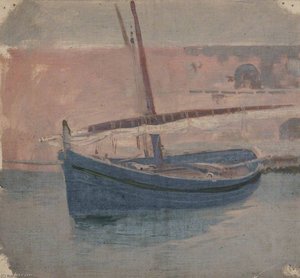
John Fraser, 1838 – 1898

Obrazy: 60 najsłynniejszych dzieł artysty John Fraser, zestawienie

Najsłynniejszym obrazem John Fraser jest 'Defender' in the Atlantic (1910), znajdujący się w Torre Abbey Historic House And Gardens w Torquay. Wraz z Low Tide, Whitstable Harbour, Kent (1885) i Chain Pier, Brighton, East Sussex (1883) tworzy to zestaw trzech dzieł, które zna każdy. Nasz katalog zawiera 60 dzieł autorstwa John Fraser; poniższych 60 to te, na które świat patrzy najczęściej – każde z podaniem roku powstania, muzeum, w którym się znajduje, oraz uzasadnieniem jego znaczenia.

Ranking oparty na naszym wskaźniku popularności, który łączy liczbę wyszukiwań, wizyt oraz zamówień dla każdego dzieła. Aktualizacja: Październik 2026. Każde arcydzieło na tej stronie można zamówić jako ręcznie malowaną reprodukcję olejną o jakości muzealnej lub jako wysokiej jakości wydruk artystyczny, w wybranym przez Ciebie rozmiarze.

Portret John Fraser
John Fraser · 1838 – 1898
Urodzony · zmarł
1838 – 1898
Nurt
Impressionism
Dzieła w naszym katalogu
60
Najsłynniejsze
'Defender' in the Atlantic (1910)
Najwięcej dzieł w
National Maritime Museum

10 najsłynniejszych obrazów artysty John Fraser

'Defender' in the Atlantic (1910) autorstwa John Fraser
1

'Defender' in the Atlantic

1910 · Oil On Canvas · Torre Abbey Historic House And Gardens, Torquay

A large sailboat with three sails occupies the center of a vast, blue expanse. The vessel floats amidst the open ocean, isolated from any visible land or human presence. The composition focuses entirely on the boat, which remains the singular point of interest against the surrounding waters. The scene is characterized by a sense of stillness and calm, capturing a moment of quietude on the Atlantic.

John Fraser, obrazy od 11 do 60

Kwadrat w kwadracie II (2002) autorstwa John Fraser
#14

Kwadrat w kwadracie II

2002 · McNay Art Museum

Square Within Square II – John Fraser: Minimalist Elegance Rooted in Craft Tradition John Fraser’s “Square Within Square II,” created in 2002, is more than just a decorative…

Zamów reprodukcję →

Obrazy John Fraser według okresów

Tematy, które najczęściej malował John Fraser

Cztery tematy najczęściej powracające w tych arcydziełach, wraz z najdoskonalszym przykładem każdego z nich.

Gdzie można zobaczyć obrazy John Fraser

5 muzeów, w których znajduje się najwięcej obrazów z tej strony.

Muzeum Miasto Dzieła artysty John Fraser Obrazy z tej listy
National Maritime Museum, LondynNational Maritime Museum Londyn 24 A Large Sloop Yacht and a Barge, A Zeppelin Raid, 8 October 1915, A Lifeboat, c.1920
Torre Abbey Historic House And Gardens, TorquayTorre Abbey Historic House And Gardens Torquay 1 'Defender' in the Atlantic
Walker Art Gallery, LiverpoolWalker Art Gallery Liverpool 1 On the Moray Firth
McNay Art Museum, San AntonioMcNay Art Museum San Antonio 1 Kwadrat w kwadracie II
Royal College of Music Museum, LondonRoyal College of Music Museum London 1 Costume design for Miss Bentson in Lakme by Delibes

Najsłynniejsze obrazy artysty John Fraser, rok po roku

John Fraser tworzył tylko przez 5 lat, od 1881 do 1885. Oto krótka historia tej kariery, rok po roku, poprzez jego najsłynniejsze obrazy.

  1. 1881
  2. 1883
  3. 1885
  4. 1885

Pytania o obrazy John Fraser

Jakie jest najsłynniejsze dzieło John Fraser?Pokaż odpowiedź

'Defender' in the Atlantic (1910), Torre Abbey Historic House And Gardens, Torquay. Następnie pojawiają się Low Tide, Whitstable Harbour, Kent (1885) oraz Chain Pier, Brighton, East Sussex (1883).

Jakie są 10 najlepszych obrazów autorstwa John Fraser?Pokaż odpowiedź

'Defender' in the Atlantic, Low Tide, Whitstable Harbour, Kent, Chain Pier, Brighton, East Sussex, Low Tide, Whitstable Harbour, Kent, On the Moray Firth, Hulks off Portsmouth, From the Leas, A Large Sloop Yacht and a Barge, A Large Sloop Yacht and a Barge i A Lifeboat. Powyższy ranking zawiera rok oraz muzeum dla każdego z nich.

Ile obrazów stworzył/a John Fraser?Pokaż odpowiedź

Nasz katalog obejmuje 60 dzieł autorstwa John Fraser, datowanych od 1881 do 1885.

Gdzie znajdują się najsłynniejsze obrazy John Fraser?Pokaż odpowiedź

Większość z nich znajduje się w National Maritime Museum (Londyn), Torre Abbey Historic House And Gardens (Torquay) i Walker Art Gallery (Liverpool). Powyższa tabela zawiera listę muzeów po kolei.

Kiedy John Fraser namalował swoje najsłynniejsze dzieła?Pokaż odpowiedź

W okresie 1885: 2 z 60 dzieł na tej stronie pochodzi z tego czasu, w tym Low Tide, Whitstable Harbour, Kent.

Jakie są najwcześniejsze i najpóźniejsze słynne obrazy John Fraser?Pokaż odpowiedź

Najwcześniejszy na tej stronie to On the Moray Firth (1881), najpóźniejszy Low Tide, Whitstable Harbour, Kent (1885).

Co najczęściej malował John Fraser?Pokaż odpowiedź

Ocean (3), Tranquility (3) i Water (2), spośród 60 dzieł na tej stronie.

Do jakiego nurtu artystycznego należy John Fraser?Pokaż odpowiedź

Impressionism i Realism, co pokazują obrazy na tej stronie.

Które obrazy John Fraser można zobaczyć w National Maritime Museum?Pokaż odpowiedź

A Large Sloop Yacht and a Barge, A Zeppelin Raid, 8 October 1915 i A Lifeboat, c.1920 to jedne z 24 dzieł na tej stronie znajdujących się w zbiorach National Maritime Museum, Londyn.

Czy mogę kupić reprodukcję obrazu John Fraser?Pokaż odpowiedź

Tak. Każdy obraz na tej stronie można zamówić jako ręcznie malowaną reprodukcję olejną o jakości muzealnej lub jako wysokiej jakości wydruk artystyczny w wybranym przez Ciebie rozmiarze, bezpośrednio ze strony danego dzieła.

O John Fraser

A Life Between Light and Paper

John Arthur Fraser began his days in London, England, born on January 9th, 1838. His father, a tailor from Portsoy, Scotland, carried the political weight of the Chartist movement into their home, while his maternal grandparents had settled in Stanstead, Lower Canada, years earlier. By the time Fraser reached his twenties, he moved to Montreal, finding work as a decorative painter. It was here, in 1860, that his path crossed with William Notman. He joined Notman’s firm not merely as an artist, but as a specialist in color printing. His hands worked on the edges of photography, tinting portraits and adding watercolor washes to photographic paper to create depth and life.

This period in Montreal shaped his eye for detail. Working within the art department of a major photographic studio required a disciplined way of seeing. He learned to translate the flat reality of a negative into something with atmosphere. Alongside assistants like Henry Sandham, he helped produce cartes-de-visite and cabinet photographs that carried his subtle touches of color. His work was often about what could be added to a captured moment—a soft sky or a textured landscape behind a seated subject.

The Expansion Westward

As the Canadian Pacific Railway pushed its tracks toward the mountains, Fraser found himself documenting the changing terrain. He took on commissions that placed him in the heart of the wilderness, from Banff to Jasper National Park. These were not mere sketches; they were records of a landscape being opened to the world. His paintings of the Rockies, such as Fishing Camp, the Rockies, captured the heavy presence of mountains like Mt. Carroll. He used a precise brush to note the way light hit a granite face or how shadows pooled in a mountain pass.

His style grew from these observations. While his roots were in the meticulous realism required for photographic tinting, he began to use color with a lightness that suggested the influence of Impressionism. He focused on the clarity of the air and the specific hues of the Canadian woods and waterways. His landscapes often moved between the heavy textures of oil on canvas and the translucent layers of watercolor, always seeking to capture the actual light of the Eastern Townships or the New Hampshire forests.

Institutional Roots and Later Years

Fraser’s presence was felt in the very structures of the Canadian art community. He did not just paint; he helped build the organizations that supported others. His name is tied to several foundational groups:

  • Royal Canadian Academy of Arts: He was a charter member.
  • Society of Canadian Artists: He was also a charter member.
  • Ontario Society of Artists: He served as a founder and held the position of vice-president from 1872 to 1874.

In 1868, he moved to Toronto, eventually opening the firm Notman and Fraser. This business venture combined his entrepreneurial spirit with his technical skill. Even as he moved through cities like Boston and New York, his subjects remained tied to the North American landscape. He died in New York City on January 1st, 1898, leaving behind a body of work that documented the physical and cultural expansion of a young nation through the lens of both the brush and the camera.

Wszystkie 60 dzieła artysty John Fraser →