Hiroshige Andō, 1797 – 1858

Obrazy: 100 najsłynniejszych dzieł artysty Hiroshige Andō, zestawienie

Najsłynniejszym obrazem Hiroshige Andō jest Early Department from a Daimyo, znajdujący się w Nakagawa-machi Bato Hiroshige Museum of Art w Nagasaki. Wraz z The maple leaves of Mama, Tekona shrine and Tsugi bridge (1857) i Hakone (1834) tworzy to zestaw trzech dzieł, które zna każdy. Nasz katalog zawiera 353 dzieł autorstwa Hiroshige Andō; poniższych 100 to te, na które świat patrzy najczęściej – każde z podaniem roku powstania, muzeum, w którym się znajduje, oraz uzasadnieniem jego znaczenia.

Ranking oparty na naszym wskaźniku popularności, który łączy liczbę wyszukiwań, wizyt oraz zamówień dla każdego dzieła. Aktualizacja: Październik 2026. Każde arcydzieło na tej stronie można zamówić jako ręcznie malowaną reprodukcję olejną o jakości muzealnej lub jako wysokiej jakości wydruk artystyczny, w wybranym przez Ciebie rozmiarze.

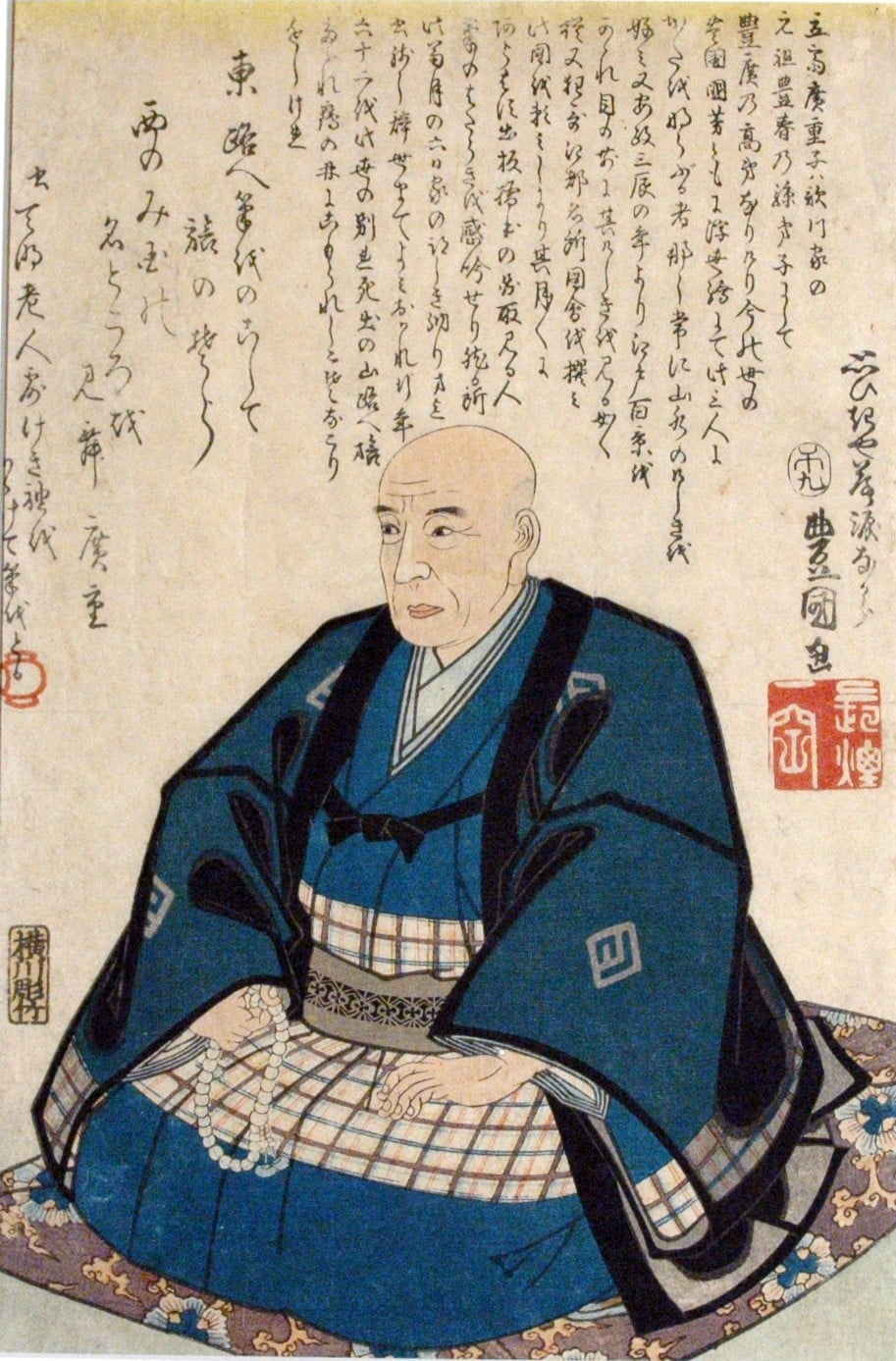
Portret Hiroshige Andō
Hiroshige Andō · 1797 – 1858
Urodzony · zmarł
1797 – 1858, Edo
Nurt
Japanese landscape painting
Dzieła w naszym katalogu
353
Najsłynniejsze
Early Department from a Daimyo
Najwięcej dzieł w
Nakagawa-machi Bato Hiroshige Museum of Art

10 najsłynniejszych obrazów artysty Hiroshige Andō

Early Department from a Daimyo autorstwa Hiroshige Andō
1

Early Department from a Daimyo

Woodblock Print · Nakagawa-machi Bato Hiroshige Museum of Art, Nagasaki

In the delicate dance of lines and muted pigments, Utagawa Hiroshige’s Early Department from a Daimyo invites us to step through a portal into the heart of Edo-period Japan. This exquisite woodblock print captures a moment of vibrant communal life along a bustling riverside, where the rigid structures of social hierarchy melt into the shared leisure of a sunny afternoon. As we gaze upon the scene, we are not merely…

The maple leaves of Mama, Tekona shrine and Tsugi bridge (1857) autorstwa Hiroshige Andō
2

The maple leaves of Mama, Tekona shrine and Tsugi bridge

1857 · Woodblock Print · Van Gogh Museum, Amsterdam

Utagawa Hiroshige (1797-1858), arguably the last titan of *ukiyo-e*, didn't merely depict landscapes; he crafted them into meditations on beauty and impermanence. “The Maple Leaves of Mama, Tekona Shrine and Tsugi Bridge,” created in 1857 during a period of significant societal transformation—the waning influence of feudal Japan as Western ideas crept in—stands as a testament to his enduring artistic legacy. More than just a visual record, it’s an embodiment of…

Hakone (1834) autorstwa Hiroshige Andō
3

Hakone

1834 · Woodblock Print · Indianapolis Museum of Art, Indianapolis

Utagawa Hiroshige’s “Hakone,” created in 1834, is more than just a landscape; it's a poetic meditation on the beauty and transience of nature within Edo-period Japan. This woodblock print, part of his renowned series "The Fifty-three Stations of the Tōkaidō," captures a specific moment along the vital trade route connecting Tokyo (then Edo) with Kyoto. However, Hiroshige elevates this seemingly simple depiction of a mountain pass into something profoundly evocative,…

Station 36, Goyu; Kyoka Tokaido Series (1855) autorstwa Hiroshige Andō
4

Station 36, Goyu; Kyoka Tokaido Series

1855 · Woodblock Print · Indianapolis Museum of Art, Indianapolis

In the delicate interplay of ink and paper, Utagawa Hiroshige’s "Station 36, Goyu; Kyoka Tokaido Series" offers much more than a mere topographical record of a journey. Completed in 1855, this exquisite woodblock print serves as a profound distillation of Edo-period sensibilities, capturing a yearning for tranquility amidst the burgeoning dynamism of a Japan in transition. As the nation stood at a pivotal crossroads between ancient feudal traditions and the…

Fushimi, Kolej #51 (1842) autorstwa Hiroshige Andō
5

Fushimi, Kolej #51

1842 · Akryl na płótnie · Indianapolis Museum of Art, Indianapolis

Fushimi Station #51 – A Snapshot of Edo Tranquility Utagawa Hiroshige’s “Fushimi Station #51,” created in 1842, isn't merely a depiction of a railway stop; it’s a masterful distillation of Edo-period Japan—a testament to Hiroshige’s unparalleled ability to capture the spirit of his time and convey profound emotion through meticulously crafted woodblock prints. This horizontal *ōban* composition transports us back to a bustling yet serene landscape, skillfully blending observation with…

Ichikoku Bridge in the Eastern Capital (Tōto: Ichikoku bashi) (1858) autorstwa Hiroshige Andō
6

Ichikoku Bridge in the Eastern Capital (Tōto: Ichikoku bashi)

1858 · Woodblock Print · Indianapolis Museum of Art, Indianapolis

The Ichikoku Bridge spans a quiet stretch of water in the Eastern Capital. Beneath its wooden arch, two boats drift through the current. People move across the structure, some carrying backpacks and others clutching small handbags. A mountain rises in the distance, watching over the scene. Trees frame the edges of the view, their leaves casting shadows near the water's edge.

Shinagawa Sunrise from the series Fifty-three Stations on the Tokaido Road (1834) autorstwa Hiroshige Andō
7

Shinagawa Sunrise from the series Fifty-three Stations on the Tokaido Road

1834 · Woodblock Print · Hill-Stead Museum, Farmington

In the soft, burgeoning light of a nineteenth-century morning, Utagawa Hiroshige invites us to witness a moment of profound stillness along the Tōkaidō road. Shinagawa Sunrise is not merely a depiction of a coastal village; it is a masterclass in the art of atmosphere. As the sun begins its ascent, the boundary between the heavens and the earth dissolves into a luminous haze. The water of the bay reflects a…

The Rokugo River Ferry, Kawasaki, from the series the Fifty-three Stations of the Tokaido (Hoeido edition ) autorstwa Hiroshige Andō
8

The Rokugo River Ferry, Kawasaki, from the series the Fifty-three Stations of the Tokaido (Hoeido edition )

Woodblock Print · Nakagawa-machi Bato Hiroshige Museum of Art, Nagasaki

In the delicate dance of woodblock printing, few masters captured the ephemeral beauty of Japanese life as profoundly as Utagawa Hiroshige. His masterpiece, The Rokugo River Ferry, Kawasaki, serves as a breathtaking window into the Edo period, inviting the viewer to step onto the bustling banks of one of the most vital crossings on the Tokaido road. This evocative scene from his legendary series, The Fifty-three Stations of the Tokaido,…

Itsukushima in Aki Province (1858) autorstwa Hiroshige Andō
9

Itsukushima in Aki Province

1858 · Woodblock Print · Brooklyn Museum, Brooklyn

In the delicate interplay of mist and water, Itsukushima in Aki Province offers more than a mere glimpse of a Japanese landmark; it provides a profound meditation on the ephemeral nature of existence. Created by the legendary ukiyo-e master Ando Hiroshige in 1858, this woodcut print captures the spiritual essence of the Itsukushima shrine area with a poetic sensitivity that remains unparalleled. As one gazes upon the composition, the eye…

Tenryu River Ferry Crossing, Mitsuke, from the series The Fifty-three Stations of the Tokaido (Gyosho Edition) autorstwa Hiroshige Andō
10

Tenryu River Ferry Crossing, Mitsuke, from the series The Fifty-three Stations of the Tokaido (Gyosho Edition)

Woodblock Print · Nakagawa-machi Bato Hiroshige Museum of Art, Nagasaki

The woodblock print depicts a section of the Tenryu River near the station of Mitsuke. In the center of the composition, a large sandbank divides the water into two distinct currents. Several small wooden boats occupy the river, with figures positioned within them to manage the crossing. Some vessels are moored directly against the central sandbank, while others navigate the moving water. The far shore is visible in the distance,…

Hiroshige Andō, obrazy od 11 do 100

Papuga i winogrona (1800) autorstwa Hiroshige Andō
#11

Papuga i winogrona

1800 · Indianapolis Museum of Art

Utagawa Hiroshige: A Poetic Vision of Edo Japan The woodblock print “Parrot and Grape Vines” by Utagawa Hiroshige is more than just a depiction of a tranquil garden…

Zamów reprodukcję →
Evening Snow at Kanbara (1834) autorstwa Hiroshige Andō
#14

Evening Snow at Kanbara

1834 · Los Angeles County Museum of Art

“Evening Snow at Kanbara,” a captivating woodblock print by the legendary Utagawa Hiroshige, isn't merely a depiction of a winter landscape; it’s an invitation to step into a…

Zabierz ją do domu →
Dawn in the licensed quarters (1857) autorstwa Hiroshige Andō
#15

Dawn in the licensed quarters

1857 · Art Gallery of New South Wales

To gaze upon Utagawa Hiroshige's "Dawn in the licensed quarters" is to step directly into the vibrant, ephemeral heart of Edo during the mid-nineteenth century. This painting captures…

Zabierz ją do domu →
Night View of Saruwakacho autorstwa Hiroshige Andō
#16

Night View of Saruwakacho

Wizja Nocy nad Saruwakacho: Zanurzenie w Świetle Edo Ando Hiroshige’s “Night View of Saruwakacho” to nie tylko przedstawienie XIX-wiecznej Japonii, ale zaproszenie do podróży w czasie i doświadczenia…

Zabierz ją do domu →
Station 28, Fukuroi (1855) autorstwa Hiroshige Andō
#17

Station 28, Fukuroi

1855 · Indianapolis Museum of Art

The woodblock print titled Station 28, Fukuroi depicts a serene landscape featuring a field dotted with trees displaying vibrant autumn foliage. Within this scene, a group of at…

Zamów ręcznie malowaną kopię →
Kawachi (1853) autorstwa Hiroshige Andō
#28

Kawachi

1853 · Indianapolis Museum of Art

Utagawa Hiroshige’s “Kawachi,” painted in 1853, isn’t merely a landscape; it’s a distilled moment of profound serenity captured with the meticulous precision and poetic sensibility that defined his…

Zamów reprodukcję →
Kanbara, Śnieżna noc (1834) autorstwa Hiroshige Andō
#37

Kanbara, Śnieżna noc

1834 · Indianapolis Museum of Art

Kanbara, Night Snow – A Vision of Tranquility Amidst Winter’s Embrace Utagawa Hiroshige's “Night Snow at Kanbara,” created in 1834, transcends mere depiction; it embodies a profound poetic…

Zabierz ją do domu →
Ptaki wracające do Katata (1834) autorstwa Hiroshige Andō
#42

Ptaki wracające do Katata

1834 · Indianapolis Museum of Art

Utagawa Hiroshige’s Poetic Vision of Edo Japan – “Geese Homing at Katata” “Geese Homing at Katata,” created in 1834 by Utagawa Hiroshige, transcends mere landscape depiction; it embodies…

Zamów reprodukcję →
Wakasa (1853) autorstwa Hiroshige Andō
#51

Wakasa

1853 · Indianapolis Museum of Art

A Poetic Vision of Edo Japan: The Life and Art of Utagawa Hiroshige Utagawa Hiroshige (1797-1858) stands as an unparalleled luminary in the realm of *ukiyo-e*, or “pictures…

Zamów ręcznie malowaną kopię →
Sakanoshita autorstwa Hiroshige Andō
#62

Sakanoshita

Indianapolis Museum of Art

Utagawa Hiroshige’s “Sakanoshita,” part of his renowned series The Fifty-three Stations of the Tōkaidō, offers more than just a scenic view; it provides a window into the heart…

Zamów reprodukcję →
Stacja 23 Fujieda autorstwa Hiroshige Andō
#63

Stacja 23 Fujieda

Indianapolis Museum of Art

Utagawa Hiroshige (1797-1858), a titan amongst *ukiyo-e* artists, didn't merely depict landscapes; he crafted visions imbued with the spirit of his era—a time of burgeoning commerce alongside profound…

Zabierz ją do domu →
Dog (1858) autorstwa Hiroshige Andō
#91

Dog

1858 · Indianapolis Museum of Art

This woodblock print, titled Dog, presents a landscape featuring a mountain topped with snow in the background. A river flows through the valley below the mountain. Several trees…

Zamów reprodukcję →
Akasaka autorstwa Hiroshige Andō
#95

Akasaka

Indianapolis Museum of Art

Akasaka, No. 37 – A Moment Frozen in Edo Tranquility Utagawa Hiroshige’s “Akasaka, No. 37,” part of his celebrated *Fifty-three Stations of the Tokaido* series (Tokaido gojusan tsugi),…

Zamów reprodukcję →
Yoshiwara autorstwa Hiroshige Andō
#97

Yoshiwara

Indianapolis Museum of Art

A landscape unfolds through a series of layered compositions, leading the eye toward distant, hazy mountains. In the foreground, figures on horseback traverse a narrow path cutting through…

Zamów reprodukcję →
82. Moon Viewing (1857) autorstwa Hiroshige Andō
#100

82. Moon Viewing

1857

A Serene Escape: Ando Hiroshige’s “82. Moon Viewing” Subject & Composition: This exquisite ukiyo-e woodblock print transports viewers to a tranquil scene of Edo-era Japan, capturing the intimate…

Zabierz ją do domu →

Obrazy Hiroshige Andō według okresów

Tematy, które najczęściej malował Hiroshige Andō

Cztery tematy najczęściej powracające w tych arcydziełach, wraz z najdoskonalszym przykładem każdego z nich.

Gdzie można zobaczyć obrazy Hiroshige Andō

8 muzeów, w których znajduje się najwięcej obrazów z tej strony.

Muzeum Miasto Dzieła artysty Hiroshige Andō Obrazy z tej listy
Nakagawa-machi Bato Hiroshige Museum of Art, NagasakiNakagawa-machi Bato Hiroshige Museum of Art Nagasaki 30 Early Department from a Daimyo, The Rokugo River Ferry, Kawasaki, from the series the Fifty-three Stations of the Tokaido (Hoeido edition ), Tenryu River Ferry Crossing, Mitsuke, from the series The Fifty-three Stations of the Tokaido (Gyosho Edition)
Indianapolis Museum of Art, IndianapolisIndianapolis Museum of Art Indianapolis 36 Hakone, Station 36, Goyu; Kyoka Tokaido Series, Fushimi, Kolej #51
Metropolitan Museum of Art, Nowy JorkMetropolitan Museum of Art Nowy Jork 8 Shibaura Bay of Musashi Province, Koyurugi Beach of Sagami Province, Honmoku Bay of Musashi Province
Brooklyn Museum, BrooklynBrooklyn Museum Brooklyn 4 Itsukushima in Aki Province, 62 (55) Komakata Hall and Azuma Bridge, Sakanoshita: the Throwing Away the Brush Peak
Hill-Stead Museum, FarmingtonHill-Stead Museum Farmington 3 Shinagawa Sunrise from the series Fifty-three Stations on the Tokaido Road, Evening Snow at Asakusa or Woman with Umbrella from the series Eight Views of the Environs of Edo
Los Angeles County Museum of Art, Los AngelesLos Angeles County Museum of Art Los Angeles 2 Evening Snow at Kanbara, Night View of Matsuchiyama and the San
Van Gogh Museum, AmsterdamVan Gogh Museum Amsterdam 1 The maple leaves of Mama, Tekona shrine and Tsugi bridge
Art Gallery of New South Wales, SydneyArt Gallery of New South Wales Sydney 1 Dawn in the licensed quarters

Najsłynniejsze obrazy Hiroshige Andō z każdej dekady

  1. 1830s
    Hakone (1834) autorstwa Hiroshige Andō
    Nr 3 z 100

    Hakone

    Wiek 33 – 42 · Indianapolis Museum of Art

    Utagawa Hiroshige’s “Hakone,” created in 1834, is more than just a landscape; it's a poetic meditation on the beauty and transience of nature within Edo-period Japan. This woodblock…

  2. 1840s
    Fushimi, Kolej #51 (1842) autorstwa Hiroshige Andō
    5 z 100

    Fushimi, Kolej #51

    Wiek 43 – 52 · Indianapolis Museum of Art

    Fushimi Station #51 – A Snapshot of Edo Tranquility Utagawa Hiroshige’s “Fushimi Station #51,” created in 1842, isn't merely a depiction of a railway stop; it’s a masterful…

  3. 1850s
    The maple leaves of Mama, Tekona shrine and Tsugi bridge (1857) autorstwa Hiroshige Andō
    Miejsce 2 / 100

    The maple leaves of Mama, Tekona shrine and Tsugi bridge

    Wiek 53 – 61 · Van Gogh Museum

    Utagawa Hiroshige (1797-1858), arguably the last titan of *ukiyo-e*, didn't merely depict landscapes; he crafted them into meditations on beauty and impermanence. “The Maple Leaves of Mama, Tekona…

Pytania o obrazy Hiroshige Andō

Jakie jest najsłynniejsze dzieło Hiroshige Andō?Pokaż odpowiedź

Early Department from a Daimyo, Nakagawa-machi Bato Hiroshige Museum of Art, Nagasaki. Następnie pojawiają się The maple leaves of Mama, Tekona shrine and Tsugi bridge (1857) oraz Hakone (1834).

Jakie są 10 najlepszych obrazów autorstwa Hiroshige Andō?Pokaż odpowiedź

Early Department from a Daimyo, The maple leaves of Mama, Tekona shrine and Tsugi bridge, Hakone, Station 36, Goyu; Kyoka Tokaido Series, Fushimi, Kolej #51, Ichikoku Bridge in the Eastern Capital (Tōto: Ichikoku bashi), Shinagawa Sunrise from the series Fifty-three Stations on the Tokaido Road, The Rokugo River Ferry, Kawasaki, from the series the Fifty-three Stations of the Tokaido (Hoeido edition ), Itsukushima in Aki Province i Tenryu River Ferry Crossing, Mitsuke, from the series The Fifty-three Stations of the Tokaido (Gyosho Edition). Powyższy ranking zawiera rok oraz muzeum dla każdego z nich.

Ile obrazów stworzył/a Hiroshige Andō?Pokaż odpowiedź

Nasz katalog obejmuje 353 dzieł autorstwa Hiroshige Andō, datowanych od 1833 do 1858.

Gdzie znajdują się najsłynniejsze obrazy Hiroshige Andō?Pokaż odpowiedź

Większość z nich znajduje się w Nakagawa-machi Bato Hiroshige Museum of Art (Nagasaki), Indianapolis Museum of Art (Indianapolis) i Metropolitan Museum of Art (Nowy Jork). Powyższa tabela zawiera listę muzeów po kolei.

Kiedy Hiroshige Andō namalował swoje najsłynniejsze dzieła?Pokaż odpowiedź

W okresie 1850s: 43 z 100 dzieł na tej stronie pochodzi z tego czasu, w tym The maple leaves of Mama, Tekona shrine and Tsugi bridge.

Jakie są najwcześniejsze i najpóźniejsze słynne obrazy Hiroshige Andō?Pokaż odpowiedź

Najwcześniejszy na tej stronie to Widok na zbocze Shiomi (Shirasuga shiomizaka zu) (1833), najpóźniejszy Ichikoku Bridge in the Eastern Capital (Tōto: Ichikoku bashi) (1858).

Co najczęściej malował Hiroshige Andō?Pokaż odpowiedź

Edo period (33), Ukiyo-e (23) i Woodblock print (20), spośród 100 dzieł na tej stronie.

Jakiej techniki najczęściej używał/a Hiroshige Andō?Pokaż odpowiedź

Woodblock Print: 61 z 100 dzieł na tej stronie.

Do jakiego nurtu artystycznego należy Hiroshige Andō?Pokaż odpowiedź

Japanese landscape painting, co pokazują obrazy na tej stronie.

Które obrazy Hiroshige Andō można zobaczyć w Nakagawa-machi Bato Hiroshige Museum of Art?Pokaż odpowiedź

Early Department from a Daimyo, The Rokugo River Ferry, Kawasaki, from the series the Fifty-three Stations of the Tokaido (Hoeido edition ) i Tenryu River Ferry Crossing, Mitsuke, from the series The Fifty-three Stations of the Tokaido (Gyosho Edition) to jedne z 29 dzieł na tej stronie znajdujących się w zbiorach Nakagawa-machi Bato Hiroshige Museum of Art, Nagasaki.

Czy mogę kupić reprodukcję obrazu Hiroshige Andō?Pokaż odpowiedź

Tak. Każdy obraz na tej stronie można zamówić jako ręcznie malowaną reprodukcję olejną o jakości muzealnej lub jako wysokiej jakości wydruk artystyczny w wybranym przez Ciebie rozmiarze, bezpośrednio ze strony danego dzieła.

O Hiroshige Andō

A Poetic Vision of Edo Japan: The Life and Art of Utagawa Hiroshige

Utagawa Hiroshige, born Andō Tokutarō in 1797 in the bustling city of Edo (modern Tokyo), stands as a pivotal figure in the world of *ukiyo-e*, or “pictures of the floating world.” Though deeply rooted in the traditions of Japanese woodblock printing, Hiroshige transcended mere replication, imbuing his landscapes with a poetic sensibility that resonated profoundly both within Japan and, later, across the Western art world. His life unfolded during a period of relative peace and prosperity under the Tokugawa shogunate, yet also one marked by increasing social change and eventual westernization – forces that would ultimately contribute to the decline of *ukiyo-e* even as they amplified Hiroshige’s enduring legacy. Initially destined for a more conventional path within a samurai family—his father served as a fire warden—Hiroshige's artistic inclinations led him to apprenticeship under Utagawa Toyohiro, a master of the Utagawa school. This proved a crucial turning point, steering him away from the popular depictions of courtesans and actors favored by many *ukiyo-e* artists toward a focus on landscape, a genre he would ultimately redefine.

From Genre Scenes to Evocative Landscapes

Hiroshige’s early work adhered to the conventions of his school, featuring portraits and scenes from daily life. These initial pieces demonstrated technical proficiency but lacked the distinctive vision that would later characterize his most celebrated works. However, it was his embrace of landscape that truly distinguished him. Influenced by earlier masters like Hokusai—whose *Thirty-six Views of Mount Fuji* had already captivated audiences—Hiroshige developed a unique style characterized by atmospheric perspective, subtle color palettes, and a profound sensitivity to the changing seasons. He didn’t merely depict places; he evoked their mood, capturing the essence of a particular moment in time. The series *The Fifty-three Stations of the Tōkaidō* (1833–1834), perhaps his most celebrated achievement, exemplifies this approach. This monumental work documented the journey along the Tōkaidō road, the main route connecting Edo to Kyoto, not as a straightforward travelogue but as a series of evocative vignettes—a sudden rain shower at Shono, a distant view of Mount Fuji from Kanaya, the bustling activity at Odawara. Each print is imbued with a sense of transience and quiet beauty, inviting viewers to experience the journey alongside the travelers. He masterfully employed *bokashi*, a technique involving multiple impressions to create subtle gradations of color, adding depth and atmosphere to his compositions. The careful layering of colors, achieved through painstaking printing processes, created an illusion of movement and light—a hallmark of Hiroshige’s distinctive style.

A Master of Atmosphere and Technique

Hiroshige's technical skill was as remarkable as his artistic vision. He wasn't simply interested in accurate representation; he sought to capture the *feeling* of a place. His use of color, though often restrained compared to some of his contemporaries, was crucial in achieving this effect. He frequently employed multiple blocks for a single color, allowing him to create nuanced shades and atmospheric effects that were incredibly difficult to replicate. The delicate washes of blue in his depictions of rain or mist, the warm hues of autumn foliage—these weren’t accidental; they were carefully considered elements designed to evoke specific emotions and sensations. Beyond *bokashi*, Hiroshige was adept at utilizing blank space – *ma* – a concept central to Japanese aesthetics, allowing areas of the print to “breathe” and enhancing the overall sense of tranquility. His series *One Hundred Famous Views of Edo* (1856–1858) further showcased his mastery, offering intimate glimpses into the life and landscapes of his beloved city. These prints weren’t simply topographical representations; they were carefully constructed narratives, capturing the energy and rhythm of urban life—the flow of people along the streets, the smoke rising from tea houses, the reflections in canals.

The Enduring Legacy: Japonisme and Beyond

Though the *ukiyo-e* tradition began to wane after Hiroshige’s death in 1858—a decline accelerated by the Meiji Restoration and the subsequent influx of Western culture—his influence on the art world proved remarkably enduring. In the late 19th century, Japanese prints flooded Europe, sparking a phenomenon known as *Japonisme*. Artists like Édouard Manet, Claude Monet, and Edgar Degas were captivated by the bold compositions, flattened perspectives, and unconventional color schemes of *ukiyo-e*, incorporating these elements into their own work. Vincent van Gogh was particularly enthralled with Hiroshige’s prints, creating copies of several, including “Flowering Plum Tree after Hiroshige,” demonstrating his deep admiration for the Japanese master's use of color and composition. Hiroshige’s influence extended beyond painting; it can be seen in architecture, design, and even literature. Today, Utagawa Hiroshige is remembered not only as a brilliant artist but also as a cultural ambassador who helped bridge the gap between East and West, leaving an indelible mark on the history of art. His serene landscapes continue to inspire awe and contemplation, reminding us of the beauty and transience of the natural world.

Notable Works

  • The Fifty-three Stations of the Tōkaidō: Hiroshige’s most famous series, depicting the journey along the main road between Edo and Kyoto.
  • One Hundred Famous Views of Edo: A captivating portrayal of life and landscapes in his beloved city.
  • Influence on Vincent van Gogh's Japonaiserie Series: Including “Flowering Plum Tree after Hiroshige,” demonstrating Van Gogh’s deep admiration for the Japanese master.

Wszystkie 353 dzieła artysty Hiroshige Andō →