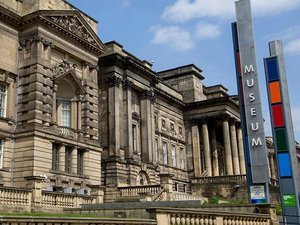
Henry Moore, 1898 – 1986

Henry Moore Paintings: The 100 Most Famous Works, Ranked

Henry Moore's most famous painting is Reclining Figure, in the Detroit Institute of Arts, Detroit. With Falling Warrior (1957) and Sculptural Objects (Cramer 47), it completes the three works everyone recognises. Our catalogue lists 492 works by Henry Moore; the 100 below are the ones the world looks at most, each with its year, the museum that holds it and why it matters.

Ranking oparty na naszym wskaźniku popularności, który łączy liczbę wyszukiwań, wizyt oraz zamówień dla każdego dzieła. Aktualizacja: Październik 2026.

Portret Henry Moore
Henry Moore · 1898 – 1986
Urodzony · zmarł
1898 – 1986, Castleford
Nurt
Modernism
Dzieła w naszym katalogu
492
Najsłynniejsze
Reclining Figure
Najwięcej dzieł w
Tate Britain

The 10 most famous Henry Moore paintings

Reclining Figure autorstwa Henry Moore
1

Reclining Figure

Wood · Detroit Institute of Arts, Detroit

Form and Materiality This elmwood carving presents an abstracted human form through sinuous lines and organic voids. The sculpture utilizes the wide grain of the wood to emphasize its undulating limbs and torso. Holes are integrated into the composition, allowing light and space to penetrate the solid mass. These openings create a relationship between the internal volume and the surrounding environment. Compositional Elements The figure features a looped head and…

Falling Warrior (1957) autorstwa Henry Moore
2

Falling Warrior

1957 · Bronze · Narodowe Muzea Liverpool, Liverpool

In the quiet halls of Tate Britain, there exists a moment of profound stillness captured in bronze—a masterpiece that breathes with the weight of history and the lightness of spirit. Henry Moore’s “Falling Warrior,” created between 1956 and 1957, is far more than a mere sculpture; it is a meditation on the very nature of existence. As one approaches this monumental work, the eye is immediately drawn to the fluid,…

Sculptural Objects (Cramer 47) autorstwa Henry Moore
3

Sculptural Objects (Cramer 47)

Painting

In the vast landscape of twentieth-century modernism, few names resonate with as much tactile power and organic grace as Henry Moore. While the world often recognizes him through his monumental bronze figures that command public squares across the globe, his foray into the two-dimensional realm offers a uniquely intimate window into his creative psyche. Sculptural Objects (Cramer 47) stands as a breathtaking testament to this versatility, a painting that does…

Sheep 1 autorstwa Henry Moore
4

Sheep 1

Oil

In the quiet, evocative lines of Sheep 1, we encounter a profound moment of connection between the viewer and the natural world. This striking black and white drawing by the legendary British master Henry Moore transcends simple animal portraiture to become an exploration of form, texture, and presence. The subject—a sheep with a thick, tactile wool coat—is rendered not merely as livestock, but as a sculptural entity. With its prominent…

A Miner at Work (1942) autorstwa Henry Moore
5

A Miner at Work

1942 · Sculpture · Imperial War Museums, Londyn

In the heavy, shadowed atmosphere of 1942, amidst the profound uncertainties of the Second World War, Henry Moore captured a moment of quiet, monumental strength in "A Miner at Work." This piece serves as much more than a mere depiction of industrial labor; it is a profound meditation on the human spirit under pressure. The artwork presents a solitary figure, a miner seated at the coal face, rendered through Moore’s…

Figure in a Shelter (1983) autorstwa Henry Moore
7

Figure in a Shelter

1983 · Sculpture Bronze · Kimbell Art Museum, Fort Worth

Henry Moore (1898-1986), a titan of twentieth-century sculpture, remains an artist whose work continues to resonate with audiences worldwide. His unwavering fascination with the human form—particularly its reclining postures—coupled with his exploration of organic shapes derived from nature—like pebbles and seashells—established him as a pioneer of abstract expressionism while simultaneously grounding his art in palpable physicality.

The Artist's Hand V (1979) autorstwa Henry Moore
8

The Artist's Hand V

1979 · Lithograph · Tate Britain, Londyn

In the quiet intimacy of Henry Moore’s “The Artist's Hand V,” created in 1979, we are invited into a profound dialogue between the creator and his medium. This exquisite lithograph serves as more than a mere anatomical study; it is a soulful meditation on the very act of making. Through the outstretched gesture of Moore’s own hand, the artwork captures a moment of suspended animation, where the boundary between the…

Reclining Figure. Points autorstwa Henry Moore
9

Reclining Figure. Points

Brąz

Exploring Organic Abstraction: Henry Moore’s “Reclining Figure. Points” Henry Moore's "Reclining Figure. Points," created sometime between 1967 and 1968, represents a pinnacle of British sculpture during the mid-20th century and embodies the core tenets of organic abstraction – a stylistic approach that prioritizes pure form and gesture over realistic representation. This monumental bronze piece speaks to a profound engagement with humanist ideals and contemplation of stillness amidst movement, cementing Moore’s…

Hands I (1973) autorstwa Henry Moore
10

Hands I

1973 · Lithograph · Tate Britain, Londyn

Henry Moore's 'Hands I,' created in 1973, is more than just a lithograph depicting two hands clasped together; it’s a profound meditation on connection, vulnerability, and the enduring human need for touch. Born in Castleford, Yorkshire, in 1898, Henry Spencer Moore rose to international prominence as a sculptor, yet his exploration of form extended into printmaking with remarkable sensitivity. This particular work, rendered in stark black and white, captures an…

Henry Moore, paintings 11 to 100

Rozłożona Figura; Otwarta Pozycja autorstwa Henry Moore
#11

Rozłożona Figura; Otwarta Pozycja

Henry Moore: Reclining Figure; Open Pose – A Meditation on Form and Tranquility Henry Spencer Moore (1898–1986), a titan of British sculpture, irrevocably altered the landscape of modern…

Two Piece Sculpture No. 7; Pipe autorstwa Henry Moore
#14

Two Piece Sculpture No. 7; Pipe

A Dance of Forms: Exploring Henry Moore’s ‘Two Piece Sculpture No. 7; Pipe’ This captivating bronze sculpture by Henry Moore exemplifies his mastery of abstract figurative form and…

Catspaws off the Land (1885) autorstwa Henry Moore
#18

Catspaws off the Land

1885 · Tate Britain

To gaze upon Catspaws off the Land is to be gently swept away by the vast, breathing expanse of the sea meeting the steadfast embrace of the shore.…

The subjects Henry Moore painted most

The four subjects that return most often among these masterpieces, with the finest example of each.

Where to see Henry Moore's paintings

8 muzeów, w których znajduje się najwięcej obrazów z tej strony.

Muzeum Miasto Dzieła artysty Henry Moore Obrazy z tej listy
Tate Britain, LondynTate Britain Londyn 3 The Artist's Hand V, Hands I, Catspaws off the Land
National Maritime Museum, LondynNational Maritime Museum Londyn 2 Setting Nets on the Coast of North Wales, Hove-to for a Pilot
Detroit Institute of Arts, DetroitDetroit Institute of Arts Detroit 1 Reclining Figure
Narodowe Muzea Liverpool, LiverpoolNarodowe Muzea Liverpool Liverpool 1 Falling Warrior
Imperial War Museums, LondynImperial War Museums Londyn 1 A Miner at Work
Kimbell Art Museum, Fort WorthKimbell Art Museum Fort Worth 1 Figure in a Shelter
Zaragoza Museum, SaragossaZaragoza Museum Saragossa 1 Portrait of Isabel de Cistué y Nieto (Retrato de Dª Isabel de Cistué y Nieto)
Finnish National Gallery, HelsinkiFinnish National Gallery Helsinki 1 Family Group

Henry Moore's most famous painting of each decade

  1. 1940s
    A Miner at Work (1942) autorstwa Henry Moore
    #5 of 100

    A Miner at Work

    Wiek 42 – 51 · Imperial War Museums

    In the heavy, shadowed atmosphere of 1942, amidst the profound uncertainties of the Second World War, Henry Moore captured a moment of quiet, monumental strength in "A Miner…

  2. 1950s
    Falling Warrior (1957) autorstwa Henry Moore
    Rank 2 / 100

    Falling Warrior

    Wiek 52 – 61 · Narodowe Muzea Liverpool

    In the quiet halls of Tate Britain, there exists a moment of profound stillness captured in bronze—a masterpiece that breathes with the weight of history and the lightness…

  3. 1970s
    The Artist's Hand V (1979) autorstwa Henry Moore
    #8 of 100

    The Artist's Hand V

    Wiek 72 – 81 · Tate Britain

    In the quiet intimacy of Henry Moore’s “The Artist's Hand V,” created in 1979, we are invited into a profound dialogue between the creator and his medium. This…

  4. 1980s
    Figure in a Shelter (1983) autorstwa Henry Moore
    #7 of 100

    Figure in a Shelter

    Wiek 82 – 88 · Kimbell Art Museum

    Henry Moore (1898-1986), a titan of twentieth-century sculpture, remains an artist whose work continues to resonate with audiences worldwide. His unwavering fascination with the human form—particularly its reclining…

Questions about Henry Moore's paintings

What is Henry Moore's most famous painting?Show the answer

Reclining Figure, Detroit Institute of Arts, Detroit. Next come Falling Warrior (1957) and Sculptural Objects (Cramer 47).

What are the top 10 paintings by Henry Moore?Show the answer

Reclining Figure, Falling Warrior, Sculptural Objects (Cramer 47), Sheep 1, A Miner at Work, Seated Figure on Square Steps, Figure in a Shelter, The Artist's Hand V, Reclining Figure. Points i Hands I. The ranking above gives the year and the museum of each.

How many paintings did Henry Moore make?Show the answer

Our catalogue lists 492 works by Henry Moore, dated from 1942 to 1983.

Where are Henry Moore's most famous paintings?Show the answer

Most of them are in Tate Britain (Londyn), National Maritime Museum (Londyn) i Detroit Institute of Arts (Detroit). The table above lists the museums one by one.

When did Henry Moore paint the most famous works?Show the answer

In 1970s: 2 of the 100 works on this page date from then, among them The Artist's Hand V.

What are Henry Moore's earliest and latest famous paintings?Show the answer

The earliest on this page is A Miner at Work (1942), the latest Figure in a Shelter (1983).

What did Henry Moore paint most often?Show the answer

Scenes (22), Children (15) i Mothers (15), among the 100 works on this page.

What medium did Henry Moore use most?Show the answer

Bronze: 2 of the 100 works on this page.

Which art movement does Henry Moore belong to?Show the answer

Modernism, as the paintings on this page show.

Which Henry Moore paintings can I see at the Tate Britain?Show the answer

The Artist's Hand V, Hands I i Catspaws off the Land are among the 3 works on this page held by the Tate Britain, Londyn.

About Henry Moore

A Life Sculpted in Form: The World of Henry Moore

Henry Spencer Moore, urodzony w 1898 roku w kaszubska osadzie Castleford, stał się jednym z najważniejszych i najbardziej rozpoznawalnych rzeźbiarzy XX wieku. Jego życie, od skromnych początków po światową sławę, to dowód niezachwianej pasji do artystycznej eksploracji i głęboka więź z ludzką formą oraz naturą. Ojciec Henry’ego, samouczek o zamiłowaniu do nauki, zainspirował go do odrzucenia życia górnika na rzecz edukacji, prowadząc go ku formalnym szkoleniom. Już jako dziecko Moore wykazywał naturalny talent do modelowania gliny i rzeźbienia w drewnie – zapowiedzią drogi, którą miał podjąć. Wczesne doświadczenia związane z dotykowymi materiałami ukształtowały jego estetykę, nadając jej organiczną płynność, która odzwierciedla krajobraz jego rodzinnego Yorkshire.

Wczesne Lata i Rozwój Artystyczny

Edukacja artystyczna Moore’a rozpoczęła się w Castleford Secondary School, gdzie nauczyciel sztuki dostrzegł i pielęgnował jego talent. Później studiował na Uniwersytecie Leeds, a następnie na Royal College of Art w Londynie, zanurzając się w badaniach nad rzeźbą klasyczną oraz nowoczesnymi nurtami, takimi jak kubizm. Jednak Moore nie był jedynie podopiecznym trendów; syntetyzował je w coś wyjątkowego dla siebie. Kluczowym momentem było jego pobyt w Meksyku w 1925 roku, gdzie zapoznał się z rzeźbami prekolumbijskimi – szczególnie dziełami cywilizacji azteckiej. Potężna prostota i abstrakcyjne formy tych prac głęboko poruszyły Moore’a, uwolniając go od konwencjonalnych ograniczeń reprezentacji. Zaczął eksplorować abstrakcję bardziej intensywnie, koncentrując się na ludzkim ciele jako źródle inspiracji, ale oddalając się od ścisłej anatomii. W tym okresie powstały jego charakterystyczne formy – półabstrakcyjne rzeźby o zaokrąglonych, organicznych kształtach i często z otworami lub przestrzeniami, które grały ze światłem i przestrzenią.

Reclining Figure i Matka i Dziecko

Przez całe życie Moore’a dominowały dwa motywy: postać leżąca i matka z dzieckiem. Szczególnie *postać leżąca* stała się synonimem jego imienia. Te rzeźby nie są jedynie przedstawieniami ludzkiego ciała w spoczynku; to eksploracje formy, objętości i relacji między ciałem a otaczającym go światem. Ich falujące linie wywołują poczucie wieczności i spokoju, a ich często fragmentaryczne lub przebijane formy sugerują kruchość i siłę. Motyw *matki z dzieckiem* równie silnie obecny w jego twórczości, odnosi się do uniwersalnych tematów miłości, ochrony i wychowania. Rzeźby Moore’a przedstawiające matki i dzieci są nasycone głębokim emocjonalnym przekazem, uchwycując intymną więź między rodzicem a potomkiem. Te rzeźby nie były idealizowanymi reprezentacjami, lecz szczerymi portretami ludzkiego związku, często odzwierciedlającymi obawy i niepewności epoki, w której powstały.

Wojenne Refleksje i Monumentalne Zlecenia

Wybuch II wojny światowej głęboko wpłynął na twórczość Moore’a. Dokumentował londyńczyków ukrywających się przed nalotami w tunelach metra, tworząc serię potężnych rysunków, które uchwyciły strach, odporność i poczucie wspólnoty w tym czasie. Te *Rysunki ze Schronów* nie są jedynie ważnymi dokumentami historycznymi, ale również demonstrują zdolność Moore’a do przekształcania swojej rzeźbiarskiej wrażliwości w formę dwuwymiarową. Po wojnie otrzymał liczne monumentalne zlecenia publiczne, które umożliwiły mu tworzenie dużych rzeźb dla szkół, szpitali i przestrzeni miejskich. Uważał, że sztuka powinna być dostępna dla wszystkich i aktywnie poszukiwał możliwości integracji swojej twórczości z codziennym życiem. Te monumentalne rzeźnie stały się punktami orientacyjnymi, przekształcając krajobrazy miejskie i inspirując kolejne pokolenia artystów i odbiorców. Jego umiejętność spełnienia tych imponujących zleceń przy jednoczesnym pozostaniu wiernym swojej wizji artystycznej umocniła jego pozycję jako lidera współczesnej rzeźby.

Dziedzictwo i Trwały Wpływ

Wpływ Henry’ego Moore’a na sztukę XX wieku jest niezaprzeczalny. Otworzył drogę dla kolejnych pokoleń rzeźbiarzy, kwestionując konwencjonalne pojęcia formy i przestrzeni oraz demonstrując siłę abstrakcji. Jego twórczość nadal rezonuje z odbiorcami dzisiejszych czasów, inspirując podziw i kontemplację. W 1977 roku Moore założył Fundację Henry’ego Moore’a, zapewniając, że jego dziedzictwo przetrwa dzięki edukacji i promocji sztuki. Fundacja wspiera artystów, naukowców i instytucje na całym świecie, promując kreatywność i innowacje artystyczne. Jego rzeźnie stanowią trwałe pomniki ludzkiej pomysłowości i świadectwo transformującej mocy sztuki.
  • Główne tematy: Forma ludzka, abstrakcja, matka i dziecko, postacie leżące, krajobraz.
  • Kluczowe wpływy: Rzeźba klasyczna, kubizm, rzeźby prekolumbijskie, krajobraz Yorkshire.
  • Znane dzieła: *Postać leżąca: 1951*, *Grupa Rodzinna*, *Rysunki ze Schronów*.
Praca Moore’a pozostaje potężnym przypomnieniem trwałego ducha ludzkiego i piękna, które można znaleźć nawet w najtrudniejszych okolicznościach.

Wszystkie 492 dzieła artysty Henry Moore →