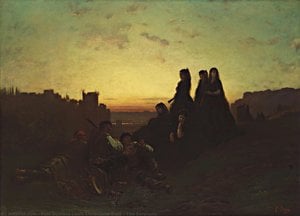
Gustave Doré, 1832 – 1883

The 100 Most Famous Paintings by Gustave Doré

The painting that made Gustave Doré famous is The Acrobats; it hangs in the Musée d'Art Roger-Quilliot, Clermont-Ferrand. The Christian Martyrs and The Inferno, Canto 9, lines 87-89. To the gate He came, and with his wand touch’d it, whereat Open without impediment it flew. follow it in the hearts of collectors and museum visitors. Of the 1,501 works by Gustave Doré in our catalogue, these 100 are the most admired, each presented with its date, its museum and what sets it apart.

Ranking oparty na naszym wskaźniku popularności, który łączy liczbę wyszukiwań, wizyt oraz zamówień dla każdego dzieła. Aktualizacja: Październik 2026. Every masterpiece on this page can be ordered as a museum-quality, hand-painted oil reproduction or a fine art print, at the size you choose.

Portret Gustave Doré
Gustave Doré · 1832 – 1883
Urodzony · zmarł
1832 – 1883, Strasburg
Nurt
Romantic illustration
Dzieła w naszym katalogu
1 501
Najsłynniejsze
The Acrobats
Najwięcej dzieł w
Musée d'Art Moderne et Contemporain de Strasbourg

Gustave Doré: the ten masterpieces

The Acrobats autorstwa Gustave Doré
1

The Acrobats

Acrylic On Canvas · Musée d'Art Roger-Quilliot, Clermont-Ferrand

Paul Gustave Doré's "The Acrobats" is not merely a depiction of a scene; it’s an immersion into a world brimming with theatricality, melancholy, and the quiet drama of everyday life. Painted in his signature style – a masterful blend of Romanticism and burgeoning Realism – this work captures a fleeting moment, likely intended for illustration within a larger narrative, yet possessing a profound emotional resonance that transcends its original purpose.…

The Christian Martyrs autorstwa Gustave Doré
2

The Christian Martyrs

Paul Gustave Doré's "The Christian Martyrs" is a powerful and emotionally charged painting that vividly portrays the suffering of early Christians facing persecution. Rooted in the Romantic style, this artwork emphasizes dramatic intensity, emotional expression, and a sense of awe-inspiring grandeur. The scene depicts a group of fallen martyrs under a dark, star-studded night sky, with three angelic figures hovering above, observing or perhaps intervening in their plight.

The Inferno, Canto 9, lines 87-89. To the gate He came, and with his wand touch’d it, whereat Open without impediment it flew. autorstwa Gustave Doré
3

The Inferno, Canto 9, lines 87-89. To the gate He came, and with his wand touch’d it, whereat Open without impediment it flew.

Engraving

Paul Gustave Doré’s “The Inferno, Canto 9, lines 87-89,” is more than just an illustration; it’s a visceral plunge into the heart of Dante Alighieri’s epic poem. Executed as a meticulously detailed black and white engraving, this artwork captures a pivotal moment – the arrival of an angel who opens the gate to Hell itself. Born in Strasbourg in 1832, Doré was a master of dramatic illustration, renowned for his…

Paradise Lost autorstwa Gustave Doré
4

Paradise Lost

Acrylic On Canvas

Gustave Doré’s “Paradise Lost,” etched onto a copper plate with meticulous precision, stands as an unparalleled testament to Romantic artistic fervor. Created in 1867, this monumental engraving isn't merely a depiction of Milton’s epic poem; it’s a visceral embodiment of its core themes – rebellion against divine authority and the devastating consequences of pride – rendered with breathtaking dramatic realism.

Gd 0001 Czerwona Róża spotyka Starożytny Wilk GustaveDore kwadratowy autorstwa Gustave Doré
5

Gd 0001 Czerwona Róża spotyka Starożytny Wilk GustaveDore kwadratowy

Rytownictwo

Gustave Doré’s “Prisoners’ Round,” completed in 1890 during Vincent van Gogh’s confinement at Saint-Paul Asylum, stands as a poignant testament to the artist's enduring spirit amidst profound psychological distress. More than just a depiction of prison life—though undeniably evocative of Newgate Prison’s grim reality—the painting operates on multiple levels, channeling Doré’s masterful engraving technique and mirroring Van Gogh’s own internal struggles.

Wyzwolenie piekielne, Księga XXII, wers 70. autorstwa Gustave Doré
6

Wyzwolenie piekielne, Księga XXII, wers 70.

Rytownictwo

A Descent into Darkness: Analyzing Gustave Doré’s “The Inferno, Canto XXII, Line 70” Paul Gustave Doré's engraving of Dante Alighieri’s *Inferno*, specifically Canto XXII, line seventy, stands as a monumental achievement in Romantic illustration—a testament to both artistic skill and the enduring power of literary narrative. Published in 1869, this print captures a pivotal moment within Dante’s epic poem, depicting Satan’s triumphant assertion over his captives amidst the tumultuous landscape…

Souvenir of Loch Lomond (1875) autorstwa Gustave Doré
7

Souvenir of Loch Lomond

1875 · Acrylic On Canvas · Narodowa Galeria Kanady, Ottawa

Gustave Doré's "Souvenir of Loch Lomond," painted in 1875, isn’t merely a landscape; it’s a meticulously crafted distillation of Victorian romanticism and the burgeoning fascination with the sublime. More than just depicting a picturesque Scottish loch, this work invites us into a world steeped in atmosphere, emotion, and a profound sense of melancholy. The scene unfolds beneath a brooding sky, heavy with suggestion rather than explicit detail – a hallmark…

Satan's Flight Through Chaos (1868) autorstwa Gustave Doré
8

Satan's Flight Through Chaos

1868 · Engraving

Satan's Flight Through Chaos: A Descent into Romantic Turmoil Paul Gustave Doré’s “Satan’s Flight Through Chaos,” created around 1868, is not merely an illustration; it’s a visceral plunge into the heart of despair and defiance. Born from the depths of Milton’s *Paradise Lost*, this black-and-white engraving captures a pivotal moment – Satan's tumultuous descent after his expulsion from Heaven. The artwork transcends its literary origins, becoming a powerful exploration of…

The Valley of Tears autorstwa Gustave Doré
9

The Valley of Tears

Oil On Canvas

Gustave Doré’s “The Valley of Tears” is not merely a painting; it's an immersive experience, a plunge into the depths of human sorrow and redemption. Completed in 1883, this monumental canvas – measuring a staggering 413.5 cm x 627 cm – transcends its physical dimensions to become a profound meditation on faith, suffering, and the universality of pain. Doré, a master of dramatic composition and evocative light, achieves an unparalleled…

Dante i Papież Adrian V (1868) autorstwa Gustave Doré
10

Dante i Papież Adrian V

1868 · Rytownictwo

A Descent into Darkness: Examining Gustave Doré’s Dante and Pope Adrian V The engraving “Dante and Pope Adrian V,” created by Paul Gustave Doré in 1868, stands as a monumental testament to Romantic artistic fervor and the enduring power of literary inspiration. More than just a depiction of Dante Alighieri's Inferno—a cornerstone of Western literature—it’s an immersive experience for the viewer, meticulously crafted to convey not only the narrative but…

More Gustave Doré masterpieces, 11 to 100

Paradise Lost (11) autorstwa Gustave Doré
#11

Paradise Lost (11)

Paradise Lost (11) by Gustave Doré presents a landscape characterized by desolation and a sense of foreboding. The scene depicts an infernal or hellish environment, populated by various…

Bring it home →
Godfrey Enters Jerusalem (1877) autorstwa Gustave Doré
#12

Godfrey Enters Jerusalem

1877

Paul Gustave Doré’s “Godfrey Enters Jerusalem,” completed in 1877, stands as a monumental achievement of Romantic illustration—a visceral depiction of the siege and triumph that marked the culmination…

Order a reproduction →
Dore Gustave - (66) autorstwa Gustave Doré
#13

Dore Gustave - (66)

Gustave Doré i „Dante Alighieri” – Dramatyczna Moc Linii i Cienia Paul Gustave Doré, jeden z najbardziej rozpoznawalnych ilustratorów XIX wieku, pozostawił po sobie bogate dziedzictwo twórczości, które…

Order a reproduction →
Paradise Lost autorstwa Gustave Doré
#14

Paradise Lost

Przepiękna melancholia: Analiza grafiki "Paradise Lost" Paula Gustavea Doré Doré, jeden z najbardziej rozpoznawalnych ilustratorów XIX wieku, stworzył dzieło, które nie tylko przedstawia scenę z biblijnej historii, ale…

Bring it home →
Condemned Christ (1877) autorstwa Gustave Doré
#15

Condemned Christ

1877 · Musée d'Art Moderne et Contemporain de Strasbourg

The air feels heavy, thick with the weight of an impending judgment. A single, piercing light source cuts through the darkness from the upper left, striking the subject…

Commission a hand-painted copy →
The Styx-The Irascible autorstwa Gustave Doré
#17

The Styx-The Irascible

The Styx-The Irascible is a profound work by Gustave Doré. This piece functions as an illustration for Canto VII of Dante's Inferno. It captures a specific, harrowing moment…

Order a reproduction →
Gigant Antaeus (1868) autorstwa Gustave Doré
#20

Gigant Antaeus

1868

A Descent Into Darkness: Exploring Gustave Doré’s “The Giant Antaeus” Paul Gustave Doré's "The Giant Antaeus" isn’t merely an engraving; it’s a visceral journey into the heart of…

Bring it home →
Purgatorio Canto 30 autorstwa Gustave Doré
#23

Purgatorio Canto 30

A Celestial Ascent: Decoding Gustave Doré’s *Purgatorio Canto 30* Paul Gustave Doré's *Purgatorio Canto 30*, an engraving that captures a pivotal moment in Dante Alighieri’s epic poem, transcends…

Order a reproduction →
Ecce Homo (1877) autorstwa Gustave Doré
#24

Ecce Homo

1877

„Ecce Homo” autorstwa Paula Gustave’a Doré, ukończone w 1877 roku, to nie tylko przedstawienie biblijnej sceny; to imersyjne doświadczenie, zanurzenie w samym sercu ludzkiego cierpienia i boskiego sądu.…

Order a reproduction →
Don Kiwot autorstwa Gustave Doré
#25

Don Kiwot

Don Quixote: A Triumph of Romantic Realism The engraving by Paul Gustave Doré depicting Don Quixote’s fall from his horse stands as a poignant emblem of disillusionment and…

Bring it home →
Doré Gustave autorstwa Gustave Doré
#26

Doré Gustave

Dore Gustave - (36): A Gothic Vision of Solitude Paul Gustave Doré, urodzony w Strasburgu Francji w 1832 roku, był artystą niezwykle wszechstronnym – ilustratorem, malarzem i rzeźbiarzem…

Bring it home →
dsjslafls autorstwa Gustave Doré
#28

dsjslafls

A Descent into Darkness: Analyzing Gustave Doré’s Engraving of Dante's Inferno The artwork, titled “dsjslafls,” is a monumental black-and-white engraving by Paul Gustave Doré that captures the visceral…

Bring it home →
Hipokryci autorstwa Gustave Doré
#32

Hipokryci

A Descent Into Darkness: Analyzing Gustave Doré’s “The Hypocrites” Gustave Doré's "The Hypocrites," etched from copper plate and destined for Dante Alighieri’s *Inferno*, transcends mere illustration; it embodies…

Bring it home →
Wieczna Królową Wizja Jana autorstwa Gustave Doré
#33

Wieczna Królową Wizja Jana

Gustave Doré i „Wizja Królowej Marii”: Dramatyczna Interpretacja Biblijnej Apokalipsy Paul Gustave Doré, urodzony w Strasburgu Francji w 1832 roku, był artystą niezwykle wszechstronnym – grafiką, malarstwem i…

Bring it home →
Satan i Beelzebub autorstwa Gustave Doré
#34

Satan i Beelzebub

A Descent Into Darkness: Examining Gustave Doré’s “Satan And Beelzebub” The engraving "Satan And Beelzebub," created by Paul Gustave Doré in 1867, stands as a monumental achievement of…

Order a reproduction →
Paolo i Francesca autorstwa Gustave Doré
#35

Paolo i Francesca

A Dramatic Encounter: Paolo and Francesca by Gustave Doré Paul Gustave Doré’s engraving, “Paolo and Francesca,” transcends mere visual representation; it's a visceral distillation of Dante Alighieri’s Inferno—a…

Commission a hand-painted copy →
Sen mnicha (1880) autorstwa Gustave Doré
#36

Sen mnicha

1880 · Art Gallery of Hamilton

Dzieło „Le Reve du Moine” („Sen mnicha”) to coś więcej niż tylko obraz; to pieczołowicie przygotowana esencja romantycznej fascynacji duchowością i tym, co wzniosłe. Powstały w 1880 roku…

Order a reproduction →
The Penny Gaff In Whitechapel autorstwa Gustave Doré
#37

The Penny Gaff In Whitechapel

Gustave Doré's “The Penny Gaff In Whitechapel” isn’t merely an illustration; it’s a meticulously crafted distillation of Victorian society, captured in stark monochrome and imbued with a palpable…

Order a reproduction →
untitled (4172) autorstwa Gustave Doré
#38

untitled (4172)

The scene unfolds within the dramatic lines of untitled (4172), a work that carries the unmistakable hand of the artist Gustave Doré. This piece emerges from a life…

Order a reproduction →
Forest at Twilight (1865) autorstwa Gustave Doré
#40

Forest at Twilight

1865

In Forest at Twilight by Gustave Doré, the composition centers on a forest scene captured during the twilight hours. A stream runs through the middle of the scene,…

Bring it home →
Mark thou each dire Erinnys. autorstwa Gustave Doré
#41

Mark thou each dire Erinnys.

A Descent Into Darkness: Analyzing Gustave Doré’s Illustration of Dante's Inferno Paul Gustave Doré’s depiction of Dante Alighieri’s *Inferno*, specifically Canto IX, Line 46 (“Mark thou each dire…

Order a reproduction →
The Serenade (1863) autorstwa Gustave Doré
#42

The Serenade

1863 · Museo de Arte de Ponce

Paul Gustave Doré's "The Serenade," completed in 1863, transcends mere depiction; it embodies a profound exploration of human connection and the melancholic beauty inherent in fleeting moments. Painted…

Commission a hand-painted copy →
Bitwa pod Nikią autorstwa Gustave Doré
#43

Bitwa pod Nikią

Bitwa pod Nikaią – Dramatyczna Ilustracja Gustave Doré Bitwa pod Nikaią Gustava Doré stanowi jedno z najbardziej ikonicznych obrazów epoki romantyzmu, ukazujące konflikt religijny i militarny pomiędzy Bizantyją…

Bring it home →
Don Quixote (122) autorstwa Gustave Doré
#44

Don Quixote (122)

Paul Gustave Doré’s “Don Quixote” isn't merely an illustration; it’s a meticulously crafted distillation of Cervantes’ epic tale into a visual language that speaks volumes about ambition, delusion,…

Commission a hand-painted copy →
Inferno Canto 5 autorstwa Gustave Doré
#46

Inferno Canto 5

Inferno Canto 5: A Descent into Darkness Rendered with Doré’s Masterful Technique The artwork, “Inferno Canto 5,” by Gustave Doré—a monumental engraving after Dante Alighieri's seminal poem—captures a…

Commission a hand-painted copy →
Don Quixote (146) autorstwa Gustave Doré
#47

Don Quixote (146)

Gustave Doré’s “Don Quixote” isn't merely an illustration; it’s a distillation of Cervantes’ epic tale into a powerfully emotive monochrome print. Executed in the Romantic style, Doré captures…

Commission a hand-painted copy →
Don Kiszot (83) autorstwa Gustave Doré
#48

Don Kiszot (83)

A Dramatic Encounter: Exploring Gustave Doré’s “Don Quixote” Paul Gustave Doré's "Don Quixote" isn’t merely an illustration; it’s a meticulously crafted tableau vivant—a living picture—that captures the essence…

Bring it home →
Śmierć Almoadam (1877) autorstwa Gustave Doré
#50

Śmierć Almoadam

1877

Śmierć Almoadam – Dramatyczna Ilustracja Gustave Doré Gustave Doré, jeden z najbardziej rozpoznawalnych twórców XIX wieku, stworzył dzieło „Śmierć Almoadam”, które zapiera dech w piersiom i przenosi widza…

Order a reproduction →
The Eagle autorstwa Gustave Doré
#52

The Eagle

Gustave Doré's 'The Eagle,' a monumental wood engraving, isn’t merely an illustration; it’s a visceral experience – a plunge into the heart of Romanticism. Completed in 1883 as…

Commission a hand-painted copy →
Ugolino i Gaddo autorstwa Gustave Doré
#53

Ugolino i Gaddo

Ugolino and Gaddo – A Descent Into Darkness Gustave Doré’s ‘Ugolino & Gaddo’, born from the crucible of Romanticism, transcends mere illustration; it's an immersive journey into Dante…

Bring it home →
Wyścig autorstwa Gustave Doré
#54

Wyścig

Gustave Doré’s “The Race,” completed in 1872, isn't merely an illustration; it’s a meticulously crafted tableau vivant—a living picture—that captures the fervent energy of a Victorian seaside spectacle.…

Commission a hand-painted copy →
Μύρρα autorstwa Gustave Doré
#55

Μύρρα

Paul Gustave Doré i Dramatyczna Monochromatyczna Ilustracja „Myrrha” Dante Alighieri Doré Gustave, jeden z najbardziej rozpoznawalnych ilustratorów XIX wieku, pozostawił po sobie bogate dziedzictwo twórczości, które fascynuje zarówno…

Bring it home →
Odwaga Matki autorstwa Gustave Doré
#56

Odwaga Matki

Subject Matter & Narrative Context: The artwork portrays a mother fiercely protecting her child from impending danger—likely symbolizing persecution—within the solemn grandeur of a cathedral. Doré’s choice to…

Bring it home →
Buonconte Da Montefeltro autorstwa Gustave Doré
#57

Buonconte Da Montefeltro

Gustave Doré’s “Buonconte Da Montefeltro,” a monumental wood engraving from his masterful adaptation of Dante Alighieri’s *Inferno*, stands as an enduring testament to Romanticism’s fascination with dramatic storytelling…

Commission a hand-painted copy →
Lambeth Gas Works autorstwa Gustave Doré
#61

Lambeth Gas Works

Captivating Urban Industrial Scene Immerse yourself in a powerful depiction of London's industrial heart, vividly brought to life through Gustave Doré’s masterful engraving. This artwork captures the bustling…

Bring it home →
Don Quixote (81) autorstwa Gustave Doré
#62

Don Quixote (81)

Gustave Doré’s “Don Quixote” (81) to prawdziwy rarytas – nie tylko ilustracja, lecz głębokie zanurzenie w epickim opowieści Cervantesa. Wykonana w czystym, białym kontraście, ta dwupagina oddaje dwa…

Bring it home →
Przybore Krusaderskiego autorstwa Gustave Doré
#64

Przybore Krusaderskiego

A Dramatic Encounter with History: Examining Gustave Doré’s “Crusades Enemy of Crusaders” Gustave Doré's "Crusades Enemy of Crusaders," completed in 1867, transcends mere visual representation; it embodies the…

Commission a hand-painted copy →
Wyobrażenie Śmierci autorstwa Gustave Doré
#65

Wyobrażenie Śmierci

A Descent Into Darkness: Exploring Doré’s “The Vision of Death” Paul Gustave Doré's "The Vision of Death" isn’t merely an engraving; it’s a visceral journey into the heart…

Bring it home →
Tumult i Ucieczka autorstwa Gustave Doré
#66

Tumult i Ucieczka

Tumult and Escape: A Descent into Dramatic Imagination A chilling glimpse into the abyss of human experience, Gustave Doré’s “Tumult and Escape” transcends mere visual representation; it embodies…

Order a reproduction →
Charon autorstwa Gustave Doré
#70

Charon

Charon: A Journey Into Darkness – Gustave Doré’s Dramatic Engraving Gustave Doré's "Charon" isn’t merely an illustration; it’s a visceral plunge into the heart of Greek mythology and…

Bring it home →
Gra w krykiet autorstwa Gustave Doré
#72

Gra w krykiet

A Gdzie Znajdziemy Elegancję Wiejskiego Rozkoszy: Studium „Gra w Krykiet” Gustawa Doré Gustaw Doré, jeden z najbardziej rozpoznawalnych twórców XIX wieku, pozostawił po sobie bogate dziedzictwo obrazów i…

Commission a hand-painted copy →
Porządek Rycerski autorstwa Gustave Doré
#74

Porządek Rycerski

Gustaw Dore i „Porządek Rycerski”: Elegancja Śmierci i Moc Symbolizmu Romantyzmu Paul Gustave Doré, urodzony w Strasburgu Francji w 1832 roku, był artystą niezwykle wszechstronnym – ilustratorem, malarzem…

Commission a hand-painted copy →
Wycieczka dusz autorstwa Gustave Doré
#75

Wycieczka dusz

Gustaw Doré i „Embarkation of Souls”: Dramatyczna Wizja Dantejowskiego Nieba Doré, urodzony w Strasburgu w 1832 roku, był artystą niezwykle wszechstronnym – ilustratorem, malarzem i rzeźbiarzem. Jego twórczość…

Bring it home →
Kara Simonistów autorstwa Gustave Doré
#76

Kara Simonistów

A Descent Into Darkness: Analyzing Gustave Doré’s “The Punishment of the Simonists” Paul Gustave Doré's "The Punishment of the Simonists," created around 1868, stands as a chilling testament…

Order a reproduction →
Paul Gustave Doré

Wpływ narracji biblijnej, alegorie religijne i moralność, obecność boska, upadek człowieka, wizualizacja historii stworzenia, mistrzostwo w grawerach na dużą skalę

Dojrzały okres

Niezdefiniowany

Ogólny wrażenie – dzieło sztuki przeds autorstwa Gustave Doré
#78

Paul Gustave Doré Wpływ narracji biblijnej, alegorie religijne i moralność, obecność boska, upadek człowieka, wizualizacja historii stworzenia, mistrzostwo w grawerach na dużą skalę Dojrzały okres Niezdefiniowany Ogólny wrażenie – dzieło sztuki przeds

Ten monumentalny odtwarzacz obrazu Gustave'a Doré przedstawia ikoniczną scenę z Księgi Rodzaju, ukazując moment narodzin ludzkiego świata. Wykonany w charakterystycznej dla Doré technice graficznej – precyzyjnym, liniowym rytmie…

Commission a hand-painted copy →
Ruth i Boaz autorstwa Gustave Doré
#79

Ruth i Boaz

Ruth and Boaz – A Dramatic Encounter Captured in Romantic Engraving Paul Gustave Doré’s “Ruth and Boaz” stands as a testament to the Romantic movement's fascination with biblical…

Bring it home →
Nie tytuł autorstwa Gustave Doré
#82

Nie tytuł

Gustave Doré’s “untitled (7034)” stands as a testament to the enduring power of Romantic landscape painting, capturing not merely a visual representation of an alpine valley but also…

Commission a hand-painted copy →
untitled (5737) autorstwa Gustave Doré
#83

untitled (5737)

A Dramatic Leap Across Desolation: Exploring Gustave Doré’s Untitled (5737) Paul Gustave Doré's *untitled (5737)* isn’t merely an image; it’s a visceral experience captured in monochrome. Executed as…

Commission a hand-painted copy →
Don Kiździec autorstwa Gustave Doré
#84

Don Kiździec

Don Quixote (87) – A Symphony of Shadow and Steel by Gustave Doré Paul Gustave Doré’s etching “Don Quixote” transcends mere illustration; it's an immersive experience into Cervantes’…

Order a reproduction →
Beatrice i Virgil autorstwa Gustave Doré
#86

Beatrice i Virgil

Paul Gustave Doré i „Beatrice” oraz „Virgil”: Elegancja Mroku i Światła Danteowskiego Inferno Paul Gustave Doré, urodzony w Strasburgu Francji w 1832 roku, był artystą niezwykle wszechstronnym –…

Commission a hand-painted copy →
Thieves autorstwa Gustave Doré
#87

Thieves

In "Thieves," executed in 1873, Gustave Doré presents a scene of profound struggle. The monochrome engraving captures figures caught in a desperate movement amidst a rugged, mountainous terrain.…

Bring it home →
Θαΐς autorstwa Gustave Doré
#88

Θαΐς

Gustave Doré’s engraving, “Thais,” stands as a cornerstone of Romantic illustration—a testament to the movement's obsession with emotion, grandeur, and psychological depth. Created in 1867, this artwork isn’t…

Commission a hand-painted copy →
Brunetto Latini autorstwa Gustave Doré
#92

Brunetto Latini

Brunetto Latini – A Descent Into Hell’s Grip Paul Gustave Doré's *Brunetto Latini* isn’t merely an engraving; it’s a visceral plunge into Dante Alighieri’s Inferno, meticulously rendered with…

Order a reproduction →
Diaboli i Grabieżcy autorstwa Gustave Doré
#93

Diaboli i Grabieżcy

Gustave Doré’s “Devils and Barrators,” a cornerstone of Romantic illustration, transcends mere visual representation; it embodies the anxieties and spiritual fervor characteristic of its era. Published in 1885…

Order a reproduction →
Orlando Furioso autorstwa Gustave Doré
#94

Orlando Furioso

Orlando Furioso – A Dramatic Tableau of Power and Intrigue Orlando Furioso, etched by Gustave Doré in 1867, isn’t merely an illustration; it's a meticulously crafted visual embodiment…

Commission a hand-painted copy →
Krzyżowanie III autorstwa Gustave Doré
#97

Krzyżowanie III

Edward III's Bold Gamble: A Chronicle of Faith and Failure The artwork depicts Edward III’s audacious attempt to revive Christendom’s fortunes in the Ninth Crusade, capturing a pivotal…

Order a reproduction →
Don Quixote (26) autorstwa Gustave Doré
#98

Don Quixote (26)

Obraz Gustave’a Dorégo, „Don Quixote i Sancho Podejdą do Sierra Moreny”, to nie tylko ilustracja; to precyzyjny portret w głąb Cervantesa. Wykonany w 1876 roku, ten drzeworyt uchwycił…

Bring it home →

Gustave Doré's paintings by period

The subjects Gustave Doré painted most

The four subjects that return most often among these masterpieces, with the finest example of each.

Where to see Gustave Doré's paintings

6 muzeów, w których znajduje się najwięcej obrazów z tej strony.

Muzeum Miasto Dzieła artysty Gustave Doré Obrazy z tej listy
Musée d'Art Moderne et Contemporain de Strasbourg, StrasbourgMusée d'Art Moderne et Contemporain de Strasbourg Strasbourg 10 The Christian Martyrs, Condemned Christ
Narodowa Galeria Kanady, OttawaNarodowa Galeria Kanady Ottawa 2 Souvenir of Loch Lomond
Art Gallery of Hamilton, HamiltonArt Gallery of Hamilton Hamilton 2 Sen mnicha
Musée d'Art Roger-Quilliot, Clermont-FerrandMusée d'Art Roger-Quilliot Clermont-Ferrand 1 The Acrobats
Chrysler Museum of Art, NorfolkChrysler Museum of Art Norfolk 1 The Neophyte (First Experience of the Monastery)
Museo de Arte de Ponce, PonceMuseo de Arte de Ponce Ponce 1 The Serenade

Gustave Doré, decade by decade: the defining painting of each

  1. 1860s
    Satan's Flight Through Chaos (1868) autorstwa Gustave Doré
    #8 of 100

    Satan's Flight Through Chaos

    Wiek 28 – 37

    Satan's Flight Through Chaos: A Descent into Romantic Turmoil Paul Gustave Doré’s “Satan’s Flight Through Chaos,” created around 1868, is not merely an illustration; it’s a visceral plunge…

  2. 1870s
    Souvenir of Loch Lomond (1875) autorstwa Gustave Doré
    Rank 7 / 100

    Souvenir of Loch Lomond

    Wiek 38 – 47 · Narodowa Galeria Kanady

    Gustave Doré's "Souvenir of Loch Lomond," painted in 1875, isn’t merely a landscape; it’s a meticulously crafted distillation of Victorian romanticism and the burgeoning fascination with the sublime.…

  3. 1880s
    Sen mnicha (1880) autorstwa Gustave Doré
    #36 of 100

    Sen mnicha

    Wiek 48 – 51 · Art Gallery of Hamilton

    Dzieło „Le Reve du Moine” („Sen mnicha”) to coś więcej niż tylko obraz; to pieczołowicie przygotowana esencja romantycznej fascynacji duchowością i tym, co wzniosłe. Powstały w 1880 roku…

Gustave Doré's masterpieces: questions and answers

Which painting is Gustave Doré best known for?Show the answer

The Acrobats, Musée d'Art Roger-Quilliot, Clermont-Ferrand. Next come The Christian Martyrs and The Inferno, Canto 9, lines 87-89. To the gate He came, and with his wand touch’d it, whereat Open without impediment it flew..

What are Gustave Doré's ten greatest paintings?Show the answer

The Acrobats, The Christian Martyrs, The Inferno, Canto 9, lines 87-89. To the gate He came, and with his wand touch’d it, whereat Open without impediment it flew., Paradise Lost, Gd 0001 Czerwona Róża spotyka Starożytny Wilk GustaveDore kwadratowy, Wyzwolenie piekielne, Księga XXII, wers 70., Souvenir of Loch Lomond, Satan's Flight Through Chaos, The Valley of Tears i Dante i Papież Adrian V. The ranking above gives the year and the museum of each.

How many works did Gustave Doré paint?Show the answer

Our catalogue lists 1,501 works by Gustave Doré, dated from 1860 to 1880.

In which museums can I see Gustave Doré's masterpieces?Show the answer

Most of them are in Musée d'Art Moderne et Contemporain de Strasbourg (Strasbourg), Narodowa Galeria Kanady (Ottawa) i Art Gallery of Hamilton (Hamilton). The table above lists the museums one by one.

When did Gustave Doré paint the masterpieces?Show the answer

In 1860s: 9 of the 100 works on this page date from then, among them Satan's Flight Through Chaos.

What are the first and last famous paintings of Gustave Doré?Show the answer

The earliest on this page is Portret Dżenty Alighieriego (1860), the latest Sen mnicha (1880).

What were Gustave Doré's favourite subjects?Show the answer

Dramatic lighting (20), Biblical narrative (14) i Inferno (14), among the 100 works on this page.

Which technique did Gustave Doré favour?Show the answer

Rytownictwo: 32 of the 100 works on this page.

What art movement is Gustave Doré part of?Show the answer

Romantic illustration, as the paintings on this page show.

Which masterpieces by Gustave Doré hang at the Musée d'Art Moderne et Contemporain de Strasbourg?Show the answer

The Christian Martyrs i Condemned Christ are among the 2 works on this page held by the Musée d'Art Moderne et Contemporain de Strasbourg, Strasbourg.

Can I own a reproduction of a Gustave Doré masterpiece?Show the answer

Yes. Every painting on this page can be ordered as a museum-quality, hand-painted oil reproduction or a fine art print, in the size you choose, from the painting's own page.

The life of Gustave Doré

Życie Gustawa Doré

Strasburg, Francja, 6 stycznia 1832 roku. To tutaj rozpoczyna się historia Paula Gustava Louisa Christophe’a Doré. Wkracza on w świat pełen zmieniających się prądów artystycznych, wędrując od brzegów Renu aż po tętniące życiem ulice Paryża. Już w wieku piętnastu lat porusza się w satyrycznym krajobrazie Le Journal pour rire, pracując jako karykaturzysta. Chłopiec obdarzony niezwykłym, przedwczesnym talentem do rysunku, błyskawicznie przeobraża się w profesjonalną siłę, a jego dłonie przechodzą od prostych szkiców do skomplikowanych wymagań wielkoformatowych drzeworytów.

Jego kariera nabiera nagłego, intensywnego tempa. Artysta nieustannie oscyluje między rolami projektanta, malarza i rzeźbiarza, nigdy nie dając się zamknąć w jednej, wąskiej specjalizacji. Ugruntowuje swoją pozycję w Londynie, otwierając galerię Doré przy Bond Street, a jego nazwisko staje się nieodłącznym elementem epoki wiktoriańskiej. Przebija się przez wymagający świat masowej produkcji, zatrudniając zespoły rytowników, którzy przekładają jego wizje na drzeworyty zalewające międzynarodowy rynek. Skala jego twórczości jest ogromna, napędzana nieustannym tempem pracy, które prowadzi go przez połowę i końcówkę XIX wieku.

Ten pęd zostaje przerwany w Paryżu. 23 stycznia 1883 roku Paul Gustave Doré umiera po krótkiej chorobie i ataku serca. Pozostawia po sobie monumentalny dorobek, który obejmuje całe spektrum ludzkich emocji – od tego, co boskie, aż po to, co groteskowe.

Wczesne lata i artystyczne początki

Strasburg we Francji stanowi tło dla początków życia zdefiniowanego przez wizualną precyzję. Już w wieku dziesięciu lat chłopiec jest samoukiem w dziedzinie rysunku. Nie czeka na formalne nauki, by opanować kreskę; zamiast tego rozwija biegłość techniczną, która pozwala mu ominąć tradycyjne sale lekcyjne. Ta wczesna autonomia wyznacza początek niezwykle płodnej twórczości, która z czasem obejmie wiele różnych mediów.

Przejście od prywatnych praktyk do profesjonalnej pracy następuje z nagłą intensywnością. W wieku piętnastu lat wkracza w tętniącą życiem, satyryczną atmosferę francuskiego czasopisma Le Journal pour rire. Pracuje jako karykaturzysta, wykorzystując pióro do poruszania się w gąszczu napięć społecznych i politycznych epoki. Ten okres pracy szlifuje jego zdolność do obserwacji i destylowania złożonych ludzkich ekspresji w ostre, natychmiastowe obrazy. Jest to swoiste pole treningowe w zakresie oszczędności formy i siły przekazu.

Podczas gdy jego pióro odnosi sukcesy w świecie druku, formalne kształcenie podąża w innym, bardziej namacalnym kierunku. Skupia on swoje studia na rzeźbie. To dążenie do trójwymiarowej formy kształtuje jego rozumienie objętości i ciężaru, nawet gdy jego kariera zaczyna zmierzać ku dwuwymiarowemu światu rytownictwa i ilustracji. Dyscyplina rzeźbiarska pozostaje fundamentalnym elementem jego technicznego podejścia do sztuki.

Mecenasi, warsztat i wielkie zamówienia

Skala twórczości, jaką pozostawił po sobie Gustaw Doré, wymagała funkcjonowania potężnej machiny przemysłowej. Artysta nie tworzył w odosobnieniu, w ciszy prywatnego studia; zamiast tego zarządzał wyspecjalizowanym warsztatem, który sprostał ogromnym wymaganiom światowego rynku wydawniczego. W szczytowym momencie swojej niezwykłej produktywności zatrudniał zespół około czterdziestu rytowników. Ci rzemieślnicy brali na siebie wyczerpujące zadanie przekładania jego misternych projektów na drewniane matryce, żłobiąc linie, które ostatecznie miały być powielane w milionach egzemplarzy na prasach cylindrycznych. Ta swoista linia montażowa talentu sprawiła, że jego wizualne narracje docierały do odbiorców w Paryżu, Londynie i Nowym Jorku niemal jednocześnie.

Sukces komercyjny był naturalną konsekwencją jego niezwykłej zdolności do budowania mostów między sztuką wysoką a mediami masowymi. Rok 1853, kiedy to otrzymał zlecenie na zilustrowanie dzieł Lorda Byrona, wyznaczył moment jego gwałtownego awansu zawodowego. Ten pęd kontynuował poprzez liczne współprace z największymi wydawcami, co prowadziło do prestiżowych projektów o ogromnej skali, gwarantujących wysokie honoraria. Pod koniec życia, w 1883 roku, pracował nad monumentalnym wydaniem „Kruka” Edgara Allana Poego – projektem, który przyniósł mu od Harper & Brothers niebagatelną sumę 30 000 franków. To ostatnie, gigantyczne przedsięwzięcie pozostaje świadectwem ogromnej wartości rynkowej, jaką jego wizja wnosiła do międzynarodowego przemysłu wydawniczego.

  • Legenda o Wędrownym Żydzie (1856)
  • Don Kichot (lata 60. XIX wieku)
  • Boska Komedia (1860)

Technika i styl artystyczny

Proces drzeworytniczy stał się fundamentem jego unikalnego języka wizualnego. Gustaw Doré działał przede wszystkim jako projektant, tworząc niezwykle misterne rysunki, które zespoły rytowników przenosiły na drewniane klocki drukarskie. Ta metoda pozwalała na masową skalę reprodukcji, a aby sprostać ogromnym wymaganiom międzynarodowego rynku wydawniczego, wykorzystywano proces elektrotypowy, umożliwiający powielanie dzieł na wielką skalę. Efekty jego pracy charakteryzują się głębokim wykorzystaniem światłocienia, gdzie intensywna czerń i przenikliwa biel budują niesamowite poczucie dramatycznego napięcia. W jego pracach każda, nawet najmniejsza linia, ma swój cel, służąc budowaniu tekstury oraz niebywałej głębi.

Niezwykła dbałość o detal stanowi kotwicę jego kompozycji. Poprzez precyzyjne stosowanie kreskowania i krzyżowania linii, potrafił oddać fakturę powierzchni z niemal dotykową dokładnością – od miękkości futra stworzeń po surowość kamienia. Ta techniczna rygorystyczność wykraczała poza ramy jednego medium; podczas podróży do Szkocji w 1873 roku artysta rozwinął również wybitne umiejętności w technice akwareli. W jego podejściu ekspresja i śmiałość kompozycji często brały górę nad sztywnym, akademickim realizmem. Gustaw Doré budował całe światy poprzez nieustanną grę światła i cienia, tworząc filmową, niemal namacalną atmosferę, która zdaje się posiadać własną, ciężką fizyczność.

Kluczowe dzieła i ilustracje literackie

Rozmach twórczości Gustawa Doré często dorównywał epickiemu charakterowi podejmowanych przez niego tematów. W 1856 roku stworzył dwanaście monumentalnych, folio-rozmiarowych ilustracji do Legendy o Wędrownym Żydzie, co ugruntowało jego reputację jako artysty potrafiącego udźwignąć ciężar wielkich narracji. W latach 60. XIX wieku jego wizja artystyczna zwróciła się ku postaciom stworzonym przez Cervantesa. Jego przedstawienia Don Kichota i Sancho Panny stały się ostatecznym wzorcem wizualnym dla tych bohaterów, trwale kształtując wyobraźnię czytelników oraz artystów, którzy od tamtej pory na nowo interpretowali postać rycerza i jego giermka.

Cienie stają się coraz głębsze, gdy twórczość artysty wkracza w sfery boskości i potępienia. Gustaw Doré przełożył przerażające wizje Boskiej Komedii Dantego na język drzeworytu, oddając mroczne i przejmujące sceny z Piekła Dantego. Te projekty nie były jedynie szkicami; stanowiły one precyzyjne plany dla masowej produkcji rycin. W 1866 roku artysta skierował swoją uwagę na dzieło Miltona Raj utracony, nakładając tę samą dramatyczną intensywność na opisy upadłych aniołów i niebiańskich zmagań zawartych w tym eposie.

  • Legenda o Wędrownym Żydzie (1856)
  • Don Kichot (lata 60. XIX w.)
  • Raj utracony (1866)

Późne lata i śmierć

Rok 1861 przyniósł przełomowy moment w jego karierze, kiedy to rząd francuski odznaczył go tytułem Kawalera Legii Honorowej. To prestiżowe wyróżnienie nadeszło w czasie, gdy jego artystyczny wpływ zaczął wykraczać daleko poza granice Francji. Do 1868 roku centrum jego zawodowego życia zaczęło przesuwać się w stronę Londynu. To właśnie tam, przy Bond Street, otworzył Doré Gallery – przestrzeń, która stała się kluczowym punktem odniesienia dla jego twórczości oraz fundamentem jego obecności na brytyjskiej scenie artystycznej.

Niezwykła wręcz płodność twórcza towarzyszyła mu aż do ostatnich chwil życia. W momencie śmierci Gustaw Doré był wciąż w pełni zaangażowany w tworzenie nowej serii ilustracji do dramatów Szekspira. Prace te wciąż pozostawały w fazie realizacji, gdy jego zdrowie gwałtownie podupadło. Artysta odszedł w Paryżu po krótkiej chorobie, a bezpośrednią przyczyną zgonu był atak serca.

Dziedzictwo i nieprzemijający wpływ

Wpływ twórczości, którą pozostawił po sobie Gustaw Doré, wykracza daleko poza ramy drukowanej strony, zajmując przestrzeń, w której sztuka wysoka spotyka się z mistrzowską narracją. Jego ilustracje do Biblii z 1866 roku odniosły kolosalny sukces, utrwalając wizualny język tekstów świętych, który wciąż żyje w zbiorowej wyobraźni. Ta niezwykła zdolność do przekładania złożonych opowieści na przejmujące, niemal namacalne obrazy, odcisnęła trwałe piętno na gigantach kolejnego pokolenia. Vincent van Gogh, na przykład, odnalazł głęboką inspirację w przedstawieniach ludzkiego cierpienia i trudów losu, które tak sugestywnie kreślił Doré.

Jego wpływ często dyktuje sposób, w jaki wizualizujemy literackie archetypy. Charakterystyczny wygląd Don Kichota i Sancho Panny, utrwalony w jego ilustracjach z lat 60. XIX wieku, stał się wzorcem dla późniejszych czytelników oraz artystów. On nie tylko ilustrował postacie; on definiował ich tożsamość wizualną dla nowoczesnej ery. To dziedzictwo trwa nadal, dzięki przetrwaniu jego oryginalnych projektów oraz nieustającej obecności jego dramatycznych kompozycji w najważniejszych kolekcjach na całym świecie.

  • Legenda o Wędrownym Żydzie (1856)
  • Don Kichot (lata 60. XIX w.)
  • Boska Komedia (1860)

Gdzie dziś można podziwiać jego dzieła

Fizyczne ślady niezwykle płodnego dorobku, jaki pozostawił Gustaw Doré, są rozproszone na kilku kontynentach, zachowane w instytucjach przechowujących jego różnorodne techniki artystyczne. We Francji Musée de Grenoble opiekuje się kolekcją jego akwareli, które oferują zupełnie inne spojrzenie na twórczość artysty niż wysokokontrastowe drzeworyty, które zapewniły mu światową sławę. Obecność artysty w najważniejszych zbiorach publicznych sięga aż do National Gallery of Canada w Ottawie, gdzie reprezentowany jest jego bogaty katalog.

W Wielkiej Brytanii Walker Art Gallery w Liverpoolu przechowuje wybrane dzieła z jego obszernych dokonań. Jego wpływ sięga również obu Ameryk, czego dowodem jest Museo de Arte de Ponce, posiadające w swoich zasobach prace z jego dorobku. Kolekcje te stanowią niepowtarzalną okazję, by osobiście doświadczyć skali i niesamowitej szczegółowości jego kompozycji.

Wszystkie 1501 dzieła artysty Gustave Doré →