

Najsłynniejszym obrazem Georg David Matthieu jest Portrait of Charlotte of Mecklenburg-Strelitz (1762), znajdujący się w National Portrait Gallery of Sweden w Strängnäs. Wraz z Joachim Ulrich Giese (1762) i Prince Heinrich of Prussia as Commander tworzy to zestaw trzech dzieł, które zna każdy. Nasz katalog zawiera 21 dzieł autorstwa Georg David Matthieu; poniższych 21 to te, na które świat patrzy najczęściej – każde z podaniem roku powstania, muzeum, w którym się znajduje, oraz uzasadnieniem jego znaczenia.
Ranking oparty na naszym wskaźniku popularności, który łączy liczbę wyszukiwań, wizyt oraz zamówień dla każdego dzieła. Aktualizacja: Październik 2026. Każde arcydzieło na tej stronie można zamówić jako ręcznie malowaną reprodukcję olejną o jakości muzealnej lub jako wysokiej jakości wydruk artystyczny, w wybranym przez Ciebie rozmiarze.


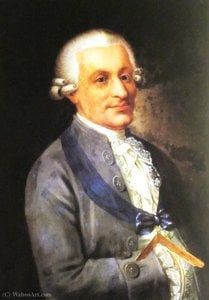
To gaze upon this portrait of Joachim Ulrich Giese is to step directly into the gilded salons of 18th-century Berlin. Painted in 1762 by Georg David Matthieu, the work transcends a mere likeness; it is a carefully constructed tableau of intellectual refinement and aristocratic grace. The very air surrounding the subject seems imbued with the delicate exuberance characteristic of the Rococo period. Everything about the composition whispers of an era…


Georg David Matthieu’s “The Wife of Joachim Ulrich Giese,” painted in 1762, is more than just a portrait; it's a meticulously crafted tableau of Rococo elegance and subtle psychological depth. Created during the height of Matthieu’s career – a period marked by his association with influential figures like Jakob Philipp Hackert and his service as court painter for the Duke of Mecklenburg – this work offers a captivating glimpse into…




Cztery tematy najczęściej powracające w tych arcydziełach, wraz z najdoskonalszym przykładem każdego z nich.
3 muzeów, w których znajduje się najwięcej obrazów z tej strony.
| Muzeum | Miasto | Dzieła artysty Georg David Matthieu | Obrazy z tej listy |
|---|---|---|---|
 Berlińskie Muzea Państwowe |
Berlin | 2 | Joachim Ulrich Giese, The Wife of Joachim Ulrich Giese |
 National Portrait Gallery of Sweden |
Strängnäs | 1 | Portrait of Charlotte of Mecklenburg-Strelitz |
 Muzeum Narodowe w Warszawie |
Warszawa | 1 | Portrait of a man in armour |
Wszystkie datowane dzieła Georg David Matthieu znajdujące się na tej stronie pochodzą z 1762: oto ich najsłynniejsze przykłady.


To gaze upon this portrait of Joachim Ulrich Giese is to step directly into the gilded salons of 18th-century Berlin. Painted in 1762 by Georg David Matthieu, the…

Georg David Matthieu’s “The Wife of Joachim Ulrich Giese,” painted in 1762, is more than just a portrait; it's a meticulously crafted tableau of Rococo elegance and subtle…
Portrait of Charlotte of Mecklenburg-Strelitz (1762), National Portrait Gallery of Sweden, Strängnäs. Następnie pojawiają się Joachim Ulrich Giese (1762) oraz Prince Heinrich of Prussia as Commander.
25 lat: Portrait of Charlotte of Mecklenburg-Strelitz pochodzi z 1762, a Georg David Matthieu urodził(a) się w 1737.
Portrait of Charlotte of Mecklenburg-Strelitz, Joachim Ulrich Giese, Prince Heinrich of Prussia as Commander, Portrait of a man in armour, Portrait of Amelie of Mecklenburg-Schwerin, The Wife of Joachim Ulrich Giese, Frederick the Great, King of Prussia, Friedrich der Fromme, Portrait of Grand-duke Friedrich Franz I of Mecklenburg-Schwerin and his tutor i Portrait of duchess Ulrike Sophie of Mecklenburg. Powyższy ranking zawiera rok oraz muzeum dla każdego z nich.
Nasz katalog zawiera 21 dzieł autorstwa Georg David Matthieu.
Większość z nich znajduje się w Berlińskie Muzea Państwowe (Berlin), National Portrait Gallery of Sweden (Strängnäs) i Muzeum Narodowe w Warszawie (Warszawa). Powyższa tabela zawiera listę muzeów po kolei.
W okresie 1762: 3 z 21 dzieł na tej stronie pochodzi z tego czasu, w tym Portrait of Charlotte of Mecklenburg-Strelitz.
Portraits (6), Royalty (4) i Portraiture (2), spośród 21 dzieł na tej stronie.
Oil On Canvas: 2 z 21 dzieł na tej stronie.
Rococo, co pokazują obrazy na tej stronie.
Joachim Ulrich Giese i The Wife of Joachim Ulrich Giese to jedne z 2 dzieł na tej stronie znajdujących się w zbiorach Berlińskie Muzea Państwowe, Berlin.
Tak. Każdy obraz na tej stronie można zamówić jako ręcznie malowaną reprodukcję olejną o jakości muzealnej lub jako wysokiej jakości wydruk artystyczny w wybranym przez Ciebie rozmiarze, bezpośrednio ze strony danego dzieła.
Berlin, 1737. The air in the studio of David Matthieu carries the scent of oil and pigment, a workspace where Georg David Matthieu begins his life within a family of established artists. He does not merely observe the craft; he breathes it through a lineage that connects him to the Prussian court. His father, David, holds the position of court painter in Prussia, providing a foundation of technical rigor. This connection extends through his stepmother, Anna Rosina, linking Georg to the influential Georg Lisiewski and the talented Anna Dorothea Therbusch.
The training is intimate and rigorous. He learns the precision required for engraving and the delicate touch needed for portraiture under his father's direct gaze. This early immersion in the mechanics of light and shadow prepares him for a life defined by the demands of the aristocracy. His path is not one of solitary wandering but of professional continuity, moving through the established circles of German and Swedish nobility.
A shift occurs in 1764. Following his work on a portrait of Queen Sophie Charlotte, Georg David Matthieu secures a position that alters his social and professional standing: court painter to the Duke of Mecklenburg-Schwerin. He moves into an apartment within the newly built Ludwigslust Palace. The transition from a student of the Prussian tradition to a resident of the ducal court brings a new set of responsibilities and a specific aesthetic demand.
Life at the court follows a strict hierarchy. As a painter ranked 20th out of 24, his existence is governed by the system established by Duke Friedrich William. His compensation is fixed—250 Reichstalers annually, supplemented by free food and housing for his family. He spends his days documenting the ducal family and their relatives, capturing the physical presence of the Mecklenburg-Schwerin line. The work is constant. He is on call, tasked with projecting the dignity of the house through the Rococo style.
The portraits produced during this period focus on the material reality of the 18th-century elite. In works such as the portrait of Joachim Ulrich Giese, the emphasis lies on texture and social signifiers. A red velvet coat is rendered with a weight that contrasts against white lace cuffs. The light does not merely illuminate; it sculpts figures from the surrounding darkness, providing a sense of three-dimensionality to the subjects.
Matthieu utilizes specific elements to communicate status:
His friendship with Jakob Philipp Hackert likely brings broader European influences into his practice, particularly through shared study trips to Italy. This exposure refines his ability to handle color schemes and the delicate exuberance of the Rococo period. Even in smaller works, such as his drawings in black and red chalk or blue pastel, the precision of his hand remains evident. He dies in 1778, leaving behind a body of work that remains housed in the collections of the Staatliches Museum Schwerin, the Gemäldegalerie Berlin, and The Metropolitan Museum of Art.

