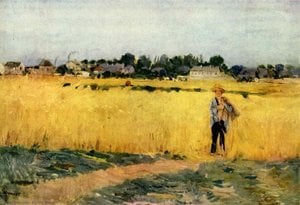
Berthe Morisot, 1841 – 1895

Berthe Morisot: The 100 Most Famous Paintings

Le Cień Violetów (1872) is the most famous painting by Berthe Morisot, held by the Musée d'Orsay in Paryż. A Fragment z Rosą (1885) and Thatched Cottage in Normandy (1865) are the next two works the world knows best. From the 361 works of Berthe Morisot in our catalogue, here are the 100 that collectors and museum visitors look at most, with the year, the museum and the story of each.

Ranking oparty na naszym wskaźniku popularności, który łączy liczbę wyszukiwań, wizyt oraz zamówień dla każdego dzieła. Aktualizacja: Październik 2026. Every masterpiece on this page can be ordered as a museum-quality, hand-painted oil reproduction or a fine art print, at the size you choose.

Portret Berthe Morisot
Berthe Morisot · 1841 – 1895
Urodzony · zmarł
1841 – 1895, Bourges
Nurt
Impressionist style
Dzieła w naszym katalogu
361
Najsłynniejsze
Le Cień Violetów (1872)
Najwięcej dzieł w
Musée Marmottan Monet

Top 10: Berthe Morisot's best-known paintings

Le Cień Violetów (1872) autorstwa Berthe Morisot
1

Le Cień Violetów

1872 · Obraz olejny na płótnie · Musée d'Orsay, Paryż

„Kradle” Berthe Morisot, namalowany w 1872 roku, to więcej niż tylko obrazek niemowlęcia. To intymny portret rodzinnego życia, uchwycony w sposób niezwykle subtelny i pełen emocji. To dzieło, które od lat fascynuje widzów swoją delikatnością, ciepłem i głębokim zrozumieniem dla ludzkich uczuć. Morisot, artystka, która zdołała znaleźć swoje miejsce w świecie dominującym przez męską perspektywę, stworzyła obraz, który mówi o macierzyństwie, trosce i bezwarunkowej miłości – tematach, które od zawsze…

A Fragment z Rosą (1885) autorstwa Berthe Morisot
2

A Fragment z Rosą

1885 · Obraz olejny na płótnie

O Kątku z Ogrodu Róży – Refleksja nad Elegancją i Zmysłowością „Kątek z Ogrodu Róży” Berthe Morisot, namalowany w 1885 roku, to więcej niż tylko obraz; to zaproszenie do chwili wytchnienia, do zanurzenia się w delikatnej atmosferze francuskiego ogrodu. To dzieło, które emanuje spokojem i subtelną zmysłowością, a jego siłą tkwi w precyzyjnym uchwyceniu ulotnych wrażeń – światła, koloru, i chwili. Morisot, jedna z „trzech dam” impresjonizmu, nie skupia się…

Thatched Cottage in Normandy (1865) autorstwa Berthe Morisot
3

Thatched Cottage in Normandy

1865 · Oil On Canvas

To stand before Berthe Morisot’s depiction of a Thatched Cottage in Normandy is to step through a veil and into the gentle embrace of a bygone French afternoon. This painting, executed in 1865, is far more than a mere record of rural architecture; it is an immersion into the very spirit of life lived at the rhythm of the seasons. Morisot captures that quintessential joie de vivre found in the…

Study, The Water's Edge (1864) autorstwa Berthe Morisot
4

Study, The Water's Edge

1864 · Oil On Canvas

Berthe Morisot’s “Study, The Water’s Edge,” painted in 1864, is more than just a depiction of a serene lakeside scene; it’s an intimate glimpse into the heart of Impressionism. This small canvas – measuring 60 x 73 cm – vibrates with a delicate energy, capturing not just what Morisot saw but also the fleeting emotions and sensations of that particular moment. The painting immediately draws the viewer in with its…

In the Garden at Maurecourt (1884) autorstwa Berthe Morisot
5

In the Garden at Maurecourt

1884 · Oil On Canvas · Muzeum Sztuki w Toledo, Toledo

In the soft, dappled sunlight of a French afternoon, Berthe Morisot’s “In the Garden at Maurecourt” invites the viewer into a sanctuary of profound stillness. Completed in 1884, this masterpiece serves as a window into the Belle Époque, capturing a moment that feels both fleeting and eternal. The scene unfolds within a lush, verdant garden—likely the Morisot estate near Maurecourt—where two young figures, including the artist’s daughter Julie, are nestled…

Portrait of Edma (1870) autorstwa Berthe Morisot
6

Portrait of Edma

1870 · Oil On Canvas · Courtauld Gallery, Londyn

In the soft, flickering light of a Parisian afternoon, Berthe Morisot captures more than just a likeness in her 1871 masterpiece, Portrait of Edma. This painting serves as a profound window into the intimate domesticity that defined much of the Impressionist movement’s early explorations. The subject, Edma Pontillon—Morisot’s own sister-in-law—is not presented with the stiff, formal grandeur typical of academic portraiture. Instead, she is nestled within a private, quiet moment,…

The Bath (1886) autorstwa Berthe Morisot
7

The Bath

1886 · Oil On Canvas

To stand before Berthe Morisot’s The Bath is to step into a moment suspended in time—a breath held within the soft glow of an afternoon indoors. This painting, executed in 1886, transcends a mere depiction of daily routine; it captures the very essence of private contemplation. The scene unfolds with remarkable delicacy: a woman seated amidst the quiet rituals of self-care, brushing her hair. Morisot does not merely record what…

The Quay at Bougival (1883) autorstwa Berthe Morisot
8

The Quay at Bougival

1883 · Oil On Canvas · Nasjonalgalleriet, Oslo

To gaze upon Berthe Morisot’s “The Quay at Bougival” is to step through a portal into the heart of French Impressionism, where the boundaries between reality and perception begin to dissolve. Completed in 1883, this exquisite oil on canvas serves as much more than a mere landscape; it is a rhythmic, breathing snapshot of life along the Seine. The scene captures the bustling waterfront of Bougival, a serene suburb of…

Daffodils (1885) autorstwa Berthe Morisot
9

Daffodils

1885 · Oil On Canvas

To stand before Berthe Morisot’s Daffodils is not merely to observe a still life; it is to step directly into a sun-drenched, breathlessly beautiful moment captured by the brush. Painted in 1885, this work radiates the delicate spirit of Impressionism, inviting the viewer into an intimate contemplation of nature’s cyclical promise. The composition centers on a simple arrangement: vibrant yellow daffodils gathered within a vase accented with cool blue hues,…

Young Woman Picking Oranges (1889) autorstwa Berthe Morisot
10

Young Woman Picking Oranges

1889 · Oil On Canvas

To stand before Berthe Morisot's Young Woman Picking Oranges is to step directly into a sun-dappled moment suspended in time. This exquisite oil on canvas, dating from 1889, is not merely a depiction of an afternoon chore; it is a lyrical meditation on leisure, femininity, and the very nature of light itself. Morisot, a central figure whose genius blossomed within the vibrant currents of Impressionism, captures life with an almost…

The rest of the Berthe Morisot ranking, 11 to 100

Woman in Black (1878) autorstwa Berthe Morisot
#12

Woman in Black

1878 · National Gallery of Ireland

To stand before Berthe Morisot's Woman in Black is to step directly into the luminous, fleeting moments of late nineteenth-century Parisian life. This portrait, painted in 1878, transcends…

Bring it home →
Little Dancer (1885) autorstwa Berthe Morisot
#14

Little Dancer

1885

To stand before Berthe Morisot's Little Dancer is not merely to observe a painting; it is to step into a suspended moment of quiet contemplation. This exquisite oil…

Bring it home →
Roses (1894) autorstwa Berthe Morisot
#15

Roses

1894

In this 1894 oil on canvas, Berthe Morisot presents us with Roses, a quiet study within the flower painting genre. This work emerged during a period when the…

Bring it home →
Young Girl with Basket (1892) autorstwa Berthe Morisot
#18

Young Girl with Basket

1892 · Philadelphia Museum of Art

In this 1892 oil on canvas, we find ourselves in a private, intimate space, observing a young girl seated in a wicker chair. She is captured in profile,…

Bring it home →
Young Girl with Hat (1891) autorstwa Berthe Morisot
#23

Young Girl with Hat

1891 · Art Institute of Chicago

A young girl is captured in a moment of quietude, her form emerging from a dark, indistinct background. She is positioned slightly off-center, viewed from the waist up…

Bring it home →
The Port of Nice (1882) autorstwa Berthe Morisot
#33

The Port of Nice

1882

Painted during a pivotal moment in art history, “The Port of Nice” reflects the burgeoning Impressionist movement’s challenge to traditional academic painting. Berthe Morisot, alongside artists like Monet…

Commission a hand-painted copy →
Bow of Milk (1890) autorstwa Berthe Morisot
#35

Bow of Milk

1890

Berthe Morisot’s “The Bowl of Milk,” painted in 1890, stands as a quintessential example of Impressionist art—a movement defined by its rejection of academic conventions and its fervent…

Order a reproduction →
A Woman and Child in a Garden (1884) autorstwa Berthe Morisot
#58

A Woman and Child in a Garden

1884 · Scottish National Gallery

Berthe Morisot's "A Woman and Child in a Garden," painted between 1883 and 1884, isn’t merely a depiction of a domestic scene; it’s a carefully constructed tableau brimming…

Order a reproduction →
Girl with a Dog (1887) autorstwa Berthe Morisot
#65

Girl with a Dog

1887

Berthe Morisot's "Girl with a Dog," painted in 1887, is a captivating portrait that showcases her unique style and skill as an artist. This oil on canvas painting…

Order a reproduction →
On a Bench in the Bois de Boulogne (1894) autorstwa Berthe Morisot
#67

On a Bench in the Bois de Boulogne

1894 · Musée d'Orsay

To gaze upon Berthe Morisot's "On a Bench in the Bois de Boulogne" is to step directly into a sun-dappled afternoon of late nineteenth-century Paris. This painting captures…

Bring it home →
Hide and Seek (1873) autorstwa Berthe Morisot
#68

Hide and Seek

1873

“Hide and Seek” is an oil on canvas painting created by Berthe Morisot in 1873, showcasing a beautiful depiction of everyday life in the 19th century. This artwork…

Order a reproduction →
Julie with Her Nurse (1880) autorstwa Berthe Morisot
#75

Julie with Her Nurse

1880 · Ny Carlsberg Glyptotek

Berthe Morisot's Julie with Her Nurse, painted in 1880, is more than just a portrait; it’s a tender exploration of motherhood and domestic life within the burgeoning Impressionist…

Bring it home →
The Mandolin (1889) autorstwa Berthe Morisot
#78

The Mandolin

1889

In the delicate brushstrokes of Berthe Morisot’s The Mandolin, we find ourselves transported to a private, melodic moment captured within the fleeting essence of the Impressionist era. The…

Commission a hand-painted copy →
Haying at Mezy (1891) autorstwa Berthe Morisot
#79

Haying at Mezy

1891

Berthe Morisot's "Haying at Mezy," painted in 1891, is a captivating example of Impressionist art that transports viewers to the serene landscapes of rural France. This oil on…

Bring it home →
Julie and Eugene Manet (1883) autorstwa Berthe Morisot
#80

Julie and Eugene Manet

1883

To gaze upon Berthe Morisot’s Julie and Eugene Manet is to step directly into the luminous, fleeting moments of late nineteenth-century Parisian life. This oil on canvas, dating…

Bring it home →
Lucie Leon at the Piano (1892) autorstwa Berthe Morisot
#84

Lucie Leon at the Piano

1892

In this 1892 oil on canvas, Berthe Morisot captures a quiet moment of musical focus. The work, titled Lucie Leon at the Piano, presents an unsmiling young lady…

Bring it home →
Child in the Rose Garden (1881) autorstwa Berthe Morisot
#86

Child in the Rose Garden

1881 · Wallraf-Richartz-Museum

Berthe Morisot's Child in the Rose Garden, painted in 1881, is a quintessential example of Impressionism, capturing a fleeting moment of childhood innocence within a tranquil garden setting.…

Bring it home →
Peasant Girl among Tulips (1890) autorstwa Berthe Morisot
#88

Peasant Girl among Tulips

1890

To gaze upon this depiction, Peasant Girl among Tulips, is to step directly into a sun-dappled moment suspended in time. The scene unfolds with an exquisite intimacy, centering…

Bring it home →

Berthe Morisot's paintings by period

The subjects Berthe Morisot painted most

The four subjects that return most often among these masterpieces, with the finest example of each.

Where to see Berthe Morisot's paintings

8 muzeów, w których znajduje się najwięcej obrazów z tej strony.

Muzeum Miasto Dzieła artysty Berthe Morisot Obrazy z tej listy
Musée Marmottan Monet, ParyżMusée Marmottan Monet Paryż 15 The Garden at Bougival, On the edge of the lake, In the apple tree
National Gallery of Art, WaszyngtonNational Gallery of Art Waszyngton 13 Two Sisters on a Couch (also known as The Sisters), Mother and Sister of the Artist, Hanging the Laundry out to Dry
Musée d'Orsay, ParyżMusée d'Orsay Paryż 10 Le Cień Violetów, On a Bench in the Bois de Boulogne, In the Wheatfield at Gennevilliers
Wallraf-Richartz-Museum, KölnWallraf-Richartz-Museum Köln 3 Child among the Hollyhocks, Child in the Rose Garden
Philadelphia Museum of Art, FiladelfiaPhiladelphia Museum of Art Filadelfia 2 Young Girl with Basket, Portrait of a Child
Museum of Fine Arts, HoustonMuseum of Fine Arts Houston 2 Young Woman, The Basket Chair
Yale University Art Gallery, Nowe HavaneYale University Art Gallery Nowe Havane 2 Young Woman and Child, The Harbor at Cherbourg
Art Institute of Chicago, ChicagoArt Institute of Chicago Chicago 4 Young Girl with Hat

Berthe Morisot through the decades: one masterpiece for each

  1. 1860s
    Thatched Cottage in Normandy (1865) autorstwa Berthe Morisot
    #3 of 100

    Thatched Cottage in Normandy

    Wiek 19 – 28

    To stand before Berthe Morisot’s depiction of a Thatched Cottage in Normandy is to step through a veil and into the gentle embrace of a bygone French afternoon.…

  2. 1870s
    Le Cień Violetów (1872) autorstwa Berthe Morisot
    Rank 1 / 100

    Le Cień Violetów

    Wiek 29 – 38 · Musée d'Orsay

    „Kradle” Berthe Morisot, namalowany w 1872 roku, to więcej niż tylko obrazek niemowlęcia. To intymny portret rodzinnego życia, uchwycony w sposób niezwykle subtelny i pełen emocji. To dzieło,…

  3. 1880s
    A Fragment z Rosą (1885) autorstwa Berthe Morisot
    Rank 2 / 100

    A Fragment z Rosą

    Wiek 39 – 48

    O Kątku z Ogrodu Róży – Refleksja nad Elegancją i Zmysłowością „Kątek z Ogrodu Róży” Berthe Morisot, namalowany w 1885 roku, to więcej niż tylko obraz; to zaproszenie…

  4. 1890s
    Roses (1894) autorstwa Berthe Morisot
    Rank 15 / 100

    Roses

    Wiek 49 – 54

    In this 1894 oil on canvas, Berthe Morisot presents us with Roses, a quiet study within the flower painting genre. This work emerged during a period when the…

Berthe Morisot's paintings: frequently asked questions

What is the most famous Berthe Morisot painting?Show the answer

Le Cień Violetów (1872), Musée d'Orsay, Paryż. Next come A Fragment z Rosą (1885) and Thatched Cottage in Normandy (1865).

At what age did Berthe Morisot paint Le Cień Violetów?Show the answer

31 years old: Le Cień Violetów dates from 1872 and Berthe Morisot was born in 1841.

Which are the 10 most famous Berthe Morisot paintings?Show the answer

Le Cień Violetów, A Fragment z Rosą, Thatched Cottage in Normandy, Study, The Water's Edge, In the Garden at Maurecourt, Portrait of Edma, The Bath, The Quay at Bougival, Daffodils i Young Woman Picking Oranges. The ranking above gives the year and the museum of each.

How many paintings by Berthe Morisot are there?Show the answer

Our catalogue lists 361 works by Berthe Morisot, dated from 1863 to 1894.

Where can I see the most famous Berthe Morisot paintings?Show the answer

Most of them are in Musée Marmottan Monet (Paryż), National Gallery of Art (Waszyngton) i Musée d'Orsay (Paryż). The table above lists the museums one by one.

In which period did Berthe Morisot paint the best-known works?Show the answer

In 1880s: 35 of the 100 works on this page date from then, among them A Fragment z Rosą.

What is the earliest famous Berthe Morisot painting, and the latest?Show the answer

The earliest on this page is Memory of the Banks of l'Oise (1863), the latest Roses (1894).

What subjects did Berthe Morisot paint?Show the answer

Portrait (15), Women (12) i Domestic scene (10), among the 100 works on this page.

What did Berthe Morisot paint on, and with what?Show the answer

Oil On Canvas: 39 of the 100 works on this page.

Which movement does Berthe Morisot's art belong to?Show the answer

Impressionist style, as the paintings on this page show.

What Berthe Morisot paintings does the Musée Marmottan Monet hold?Show the answer

The Garden at Bougival, On the edge of the lake i In the apple tree are among the 4 works on this page held by the Musée Marmottan Monet, Paryż.

Where can I buy a Berthe Morisot reproduction?Show the answer

Yes. Every painting on this page can be ordered as a museum-quality, hand-painted oil reproduction or a fine art print, in the size you choose, from the painting's own page.

Berthe Morisot: biography

Wczesne lata, rodzina i kształcenie artystyczne

Berthe Morisot przyszła na świat 14 stycznia 1841 roku w Bourges we Francji. Dorastała w zamożnej, burżuazyjnej rodzinie, w której granice między życiem domowym a sztuką często ulegały zatarciu. Jej ojciec, Edmé Tiburce Morisot, piastował urząd prefekta departamentu Cher. Z kolei matka, Marie-Joseph-Cornélie Thomas, niosła w sobie dziedzictwo tradycji rokoka jako siostrzenica Jean-Honoré Fragonarda. To rodowód artystyczny stanowił tło dla jej wrażliwości od najmłodszych lat.

Jej edukacja rozpoczęła się od prywatnych lekcji u Geoffroy-Alphonse Chocarne i Josepha Guicharda. Do 1858 roku spędzała już czas w Luwrze, zgłębiając tajniki malarstwa poprzez kopiowanie dzieł dawnych mistrzów. Ten okres intensywnej nauki dopełniała opieka Jean-Baptiste-Camille Corota oraz Achille-Francois Oudinot. Podczas zimy 1863–64 roku artystka zwróciła również swoją uwagę ku formie fizycznej, studiując rzeźbę pod okiem Aimé Millet.

Ruch impresjonistyczny i wystawy

W 1864 roku Morisot po raz pierwszy zaprezentowała swoje prace na paryskim Salonie. Był to krok o ogromnym znaczeniu, gdyż Salon pełnił wówczas rolę oficjalnego strażnika świata sztuki. Artystka jednak nie dała się jednak zamknąć w tych tradycyjnych ramach. Zamiast tego stała się nieodłączną częścią kręgu paryskich malarzy, którzy wkrótce przeszli do historii jako impresjoniści. Jej obecność w tym grupie była stała i niezaprzeczalna – między 1874 a 1886 rokiem wzięła udział we wszystkich, poza jedną, z ośmiu wystaw impresjonistycznych zorganizowanych w tamtym okresie.

Pierwsze z tych przełomowych spotkań odbyło się w pracowni fotografa Nadara. Wystawa otworzyła się 15 kwietnia i trwała do 15 maja 1874 roku, stanowiąc odważne odejście od obowiązujących wówczas norm estetycznych. Morisot była tam obecna u boku innych twórców, współtworząc nowy sposób patrzenia na świat i definiując świeże spojrzenie na rzeczywistość. Przez całą kolejną dekadę kontynuowała wystawy z grupą, wnosząc swoją unikalną, intymną perspektywę na kolejne wydarzenia artystyczne.

Życie prywatne i relacja z Manetem

Granice między prywatnością a twórczością Berthe Morisot często ulegały zatarciu, tworząc nierozerwalną jedność. Dorastała w pełnym ciepła domu, w którym dzielili z nią dwie starsze siostry, Yves i Edma, oraz młodszy brat, Tiburce. Przełomowym momentem w jej życiu był rok 1868, kiedy to poznała Édouarda Maneta – znajomość ta przerodziła się w głęboką, wzajemną inspirację. Manet wielokrotnie portretował ją na płótnach, chwytając jej obecność w różnych nastrojach i strojach, podczas gdy ona sama odnajdywała własną ścieżkę, próbując uchwycić ulotne, zmieniające się światło Paryża. Ich relacja była przede wszystkim dialogiem intelektualnym i wspólnym dążeniem do artystycznej prawdy.

W 1874 roku Morisot wyszła za mąż za Eugène’a Maneta, brata Édouarda, co jeszcze mocniej związało ją z kręgiem artystów redefiniujących wówczas pojęcie nowoczesnego malarstwa. W 1878 roku w Paryżu na świat przyszła ich córka, Julie Manet. Julie dorastała w domu, w którym granica między codziennością a radykalnymi debatami awangardy była niezwykle cienka; stawała się niemym świadkiem życia w tych samych pokojach, w których rodziła się i dyskutowano o nowej sztuce.

Technika i styl artystyczny

Podejście Berthe Morisot do płótna opiera się na niezwykłej lekkości dotyku. Często pracowała w plenerze, stosując metodę plein air, aby uchwycić zmienne właściwości światła i atmosfery bezpośrednio z natury. Ten nawyk malowania na otwartym powietrzu pozwalał jej przekładać ulotne niuanse koloru za pomocą swobodnych, pewnych pociągnięć pędzla. Jej warsztat jest płynny, porusza się po powierzchni obrazu z poczuciem natychmiastowości, unikając ciężkich, mozolnie nakładanych warstw. Artystka nie polegała wyłącznie na farbach olejnych; jej praktyka obejmowała również pracę akwarelami i pastelami, co pozwalało jej na zgłębianie różnorodnych tekstur oraz efektów świetlnych.

Istnieje specyficzny sposób, w jaki Morisot traktuje kontury swoich tematów. Zamiast twardych, zdefiniowanych linii, używa rozbitego koloru i drobnych pociągnięć pigmentu, aby budować formę. Technika ta tworzy migotliwy efekt, sprawiając, że powietrze między przedmiotami staje się równie namacalne, co same obiekty. W jej przedstawieniach życia domowego ta metoda pozwala uchwycić miękką poświatę na skórze lub sposób, w jaki światło przesiewa się przez ogród. Rezultatem jest poczucie spontaniczności, jak gdyby scena została utrwalona w jednym, niespieszny momencie obserwacji.

Kluczowe dzieła i ikoniczne obrazy

W 1872 roku Morisot namalowała Kołyskę, płótno olejowe, które w niezwykle czuły sposób uwiecznia jej siostrę Edmę, czuwającą nad śpiącą córką, Blanche. Kompozycja opiera się na linii diagonalnej, stworzonej przez spojrzenie matki oraz fałdy materiału kołyski, co nieuchronnie przyciąga wzrok widza ku niemowlęciu. To dzieło stanowi moment, w którym artystka po raz pierwszy zgłębiła temat macierzyństwa, wykorzystując ograniczoną paletę barw oraz płynne, swobodne pociągnięcia pędzla, by wykreować atmosferę cichej, pełnej opiekuńczej miłości.

Jej obecność przenika również inne płótna, co najwyraźniej widać w roku 1872, kiedy Édouard Manet namalował Berthe Morisot z bukietem fiołków. Na tym portrecie artystka ukazana jest w czarnej żałobnej sukni, z ledwo widocznym bukietem fiołków przy dekolcie. Światło padające z jednej strony rzuca głęboki cień na drugą połowę jej twarzy, tworząc intrygujące studium czerni, które podkreśla kontrast między ciemnym ubiorem a jaśniejszym tłem.

Wśród innych istotnych dzieł odnaleźć możemy:

  • Odpoczynek, portret Berthe Morisot, 1870
  • Hortensja, 1894

W późniejszym okresie twórczości, w 1894 roku, powstała Hortensja. Jej niezwykła zdolność do przekładania niuansów światła i koloru za pomocą luźnych, pewnych uderzeń pędzla pozostawała niezmienną cechą charakterystyczną przez wszystkie lata jej malarskiej drogi.

Gdzie dziś można podziwiać jej dzieła

Podróż śladami jej niezwykłego warsztatu warto rozpocząć w Paryżu, gdzie w murach Musée d'Orsay spoczywa sześć jej płócien, w tym poruszające Kołyskę. To dzieło, namalowane w 1872 roku, ukazuje jej siostrę Edmę czuwającą nad śpiącym dzieckiem, oddając w sposób niezwykle czuły intymność tej chwili. Kolejne pięć prac z jej dorobku można odnaleźć w zbiorach Musée Marmottan Monet.

Poza granicami Francji, śladami Berthe Morisot podąża się również w Waszyngtonie. W National Gallery of Art znajduje się sześć jej obrazów, wśród których można odnaleźć Matkę i siostrę artystki z 1869 roku. W tej samej kolekcji prezentowane są także inne wybitne płótna, takie jak W jadalni oraz Wieszanie prania, oba pochodzące z 1875 roku.

Niektóre z jej dzieł znajdują się w innych zakątkach świata, co pozwala na kontemplację jej talentu w różnych kontekstach kulturowych – od Muzeum Thyssen-Bornemisza w Madrycie, po Nationalmuseum w Sztokholmie. Te rozproszone po świecie płótna oferują nam możliwość cichej, głębokiej refleksji nad tym, jak artystka potrafiła operować światłem i oddawać piękno scen domowych w tak różnorodnych sceneriach.

Wszystkie 361 dzieła artysty Berthe Morisot →