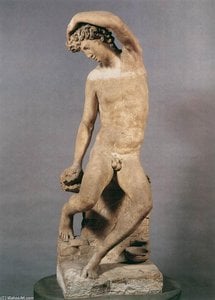
Benvenuto Cellini, 1500 – 1571

Obrazy: 80 najsłynniejszych dzieł artysty Benvenuto Cellini, zestawienie

Najsłynniejszym obrazem Benvenuto Cellini jest Solniczka (1540), znajdujący się w Kunsthistorisches Museum w Wiedeń. Wraz z Jupiter (1545) i Crucifix (detail) (1562) tworzy to zestaw trzech dzieł, które zna każdy. Nasz katalog zawiera 80 dzieł autorstwa Benvenuto Cellini; poniższych 80 to te, na które świat patrzy najczęściej – każde z podaniem roku powstania, muzeum, w którym się znajduje, oraz uzasadnieniem jego znaczenia.

Ranking oparty na naszym wskaźniku popularności, który łączy liczbę wyszukiwań, wizyt oraz zamówień dla każdego dzieła. Aktualizacja: Październik 2026. Każde arcydzieło na tej stronie można zamówić jako ręcznie malowaną reprodukcję olejną o jakości muzealnej lub jako wysokiej jakości wydruk artystyczny, w wybranym przez Ciebie rozmiarze.

Portret Benvenuto Cellini
Benvenuto Cellini · 1500 – 1571
Urodzony · zmarł
1500 – 1571, Florencja
Nurt
Manieryzm
Dzieła w naszym katalogu
80
Najsłynniejsze
Solniczka (1540)
Najwięcej dzieł w
Museo Nazionale del Bargello

10 najsłynniejszych obrazów artysty Benvenuto Cellini

Solniczka (1540) autorstwa Benvenuto Cellini
1

Solniczka

1540 · Złoto · Kunsthistorisches Museum, Wiedeń

Saliera, wykonana ze złota nakładanego, została stworzona przez Benvenuto Celliniego dla Franciszka I Walezego w latach 1450–1453. Od jego potomka, Karola IX, przeszła ona w ręce arcyksięcia Ferdynanda II. Ta niezwykła solniczka stanowi alegorię Ziemi oraz wzajemnego oddziaływania lądu i morza. Jej prawa strona przedstawia mężczyznę z trójzębem i statek symbolizujący wodę, podczas gdy lewa strona ukazuje kobietę reprezentującą Ziemię. Podstawa dzieła ukazuje wiatry, pory dnia oraz ludzkie aktywności.

Jupiter (1545) autorstwa Benvenuto Cellini
2

Jupiter

1545 · Bronze · Museo Nazionale del Bargello, Florencja

To stand before this magnificent depiction of Jupiter is to confront raw, untamed power rendered in the enduring majesty of bronze. This sculpture does not merely represent a god; it embodies the very force of nature—the thunderous authority that commands the skies. The figure dominates the space with an undeniable gravitas, his musculature meticulously articulated as if carved by the passing winds themselves. Observe the dynamic tension captured in his…

Crucifix (detail) (1562) autorstwa Benvenuto Cellini
3

Crucifix (detail)

1562 · Marble · Monasterio de San Lorenzo, El Escorial

Benvenuto Cellini’s 1562 marble sculpture, “Crucifix (detail),” is not merely a depiction of Christ’s suffering; it’s an immersive experience. Within the dimly lit confines of El Escorial, this intimate piece draws you into a world of profound emotion and technical mastery – a testament to Cellini's genius as both goldsmith and sculptor. The sculpture immediately commands attention with its stark realism and the palpable sense of agony radiating from the…

Morion for Francesco I de' Medici (1570) autorstwa Benvenuto Cellini
4

Morion for Francesco I de' Medici

1570 · Metalwork · Staatliche Kunstsammlungen, Drezno

In the grand tapestry of the Italian Renaissance, few objects capture the intersection of martial prestige and artistic virtuosity as profoundly as the Morion for Francesco I de' Medici. Created in 1570 by the legendary polymath Benvenuto Cellini, this is far more than a mere piece of protective headgear; it is a sculptural triumph rendered in metal. As a quintessential example of Mannerism, the Morion rejects the tranquil equilibrium of…

Danae and her Son Perseus (1545) autorstwa Benvenuto Cellini
5

Danae and her Son Perseus

1545 · Bronze · Museo Nazionale del Bargello, Florencja

The bronze sculpture Danae and her Son Perseus by Benvenuto Cellini captures a moment of divine intersection. Created between 1545 and 1553 for Cosimo I de' Medici, the work depicts the mythological event where Zeus visits Danae in the form of golden rain. This Renaissance Mannerist piece resides within the Museo Nazionale del Bargello in Florence, Italy.

Nymph of Fontainebleau (1542) autorstwa Benvenuto Cellini
6

Nymph of Fontainebleau

1542 · Bronze · Luwr, Paryż

To stand before the Nymph of Fontainebleau is to step directly into the languid, sun-dappled world of the Italian Renaissance. This magnificent bronze sculpture by Benvenuto Cellini does more than merely depict a figure; it captures an ephemeral moment—a breath held between slumber and awakening. The central subject, the reclining nymph, embodies a timeless confluence of nature’s grace and mythological mystery. Her pose is one of exquisite repose, her body…

Perseus (1540) autorstwa Benvenuto Cellini
7

Perseus

1540 · Bronze · Museo Nazionale del Bargello, Florencja

In the heart of Florence’s Piazza della Signoria, amidst the architectural grandeur of the Loggia dei Lanzi, stands a masterpiece that captures the very essence of Mannerist tension and heroic triumph. Benvenuto Cellini’s Perseus is not merely a sculpture; it is a dramatic performance frozen in bronze. Created between 1545 and 1554, this monumental work depicts the legendary hero Perseus at the climactic moment of his mythic journey. He stands…

Bust of Cosimo I (detail) (1546) autorstwa Benvenuto Cellini
8

Bust of Cosimo I (detail)

1546 · Bronze · Museo Nazionale del Bargello, Florencja

In the heart of the Italian Renaissance, where the pursuit of beauty met the raw ambition of political power, Benvenuto Cellini forged a masterpiece that transcends mere portraiture. The Bust of Cosimo I is not simply a likeness of the Grand Duke of Tuscany; it is a profound meditation on authority, captured in the enduring medium of bronze. To gaze upon this work is to step into the vibrant, often…

Bust of Bindo Altoviti (1549) autorstwa Benvenuto Cellini
9

Bust of Bindo Altoviti

Benvenuto Cellini's “Bust of Bindo Altoviti,” crafted in 1549, isn’t merely a sculpted likeness; it’s a meticulously constructed window into the heart of Renaissance Florence. This bronze masterpiece, now residing within the Isabella Stewart Gardner Museum in Boston, transcends simple portraiture to become a profound meditation on wealth, power, and the very essence of human representation. The subject, Bindo Altoviti, a prominent Florentine banker and astute political player, is rendered…

Perseus (1540) autorstwa Benvenuto Cellini
10

Perseus

1540 · Bronze · Museo Nazionale del Bargello, Florencja

In the heart of Florence, amidst the architectural grandeur of the Loggia dei Lanzi, stands a masterpiece that captures the very essence of human struggle and divine victory. Benvenuto Cellini’s Perseus is not merely a sculpture; it is a breathtaking moment frozen in bronze, a dramatic climax of Greek mythology brought to life through the virtuosity of the Mannerist style. As the light dances across its aged patina, the figure…

Benvenuto Cellini, obrazy od 11 do 80

Crucifix (1562) autorstwa Benvenuto Cellini
#11

Crucifix

1562 · Monasterio de San Lorenzo

Benvenuto Cellini's 1562 bronze sculpture, “Crucifix,” stands as a profoundly moving testament to the Renaissance spirit—a collision of technical mastery, religious fervor, and deeply personal emotion. More than…

Nymph of Fontainebleau (detail) (1542) autorstwa Benvenuto Cellini
#12

Nymph of Fontainebleau (detail)

1542 · Luwr

To encounter a detail of Benvenuto Cellini’s Nymph of Fontainebleau is to step directly into the languid, sun-dappled world of the High Renaissance. This exquisite bronze sculpture, cast…

Minerva (1545) autorstwa Benvenuto Cellini
#13

Minerva

1545 · Museo Nazionale del Bargello

Benvenuto Cellini's "Minerva," crafted in 1545 during the twilight of the High Renaissance, isn't merely a bronze sculpture; it’s a meticulously constructed embodiment of Roman virtue and strategic…

Mercury (1545) autorstwa Benvenuto Cellini
#14

Mercury

1545 · Museo Nazionale del Bargello

In the quiet presence of this bronze, one senses the shifting tides of the sixteenth century. Completed in 1545, Benvenuto Cellini’s Mercury marks a departure from the balanced…

Nymph of Fontainebleau (detail) (1542) autorstwa Benvenuto Cellini
#15

Nymph of Fontainebleau (detail)

1542 · Luwr

The bronze surface holds a quiet tension, as if the figure might stir at any moment. In this close view, we find ourselves pressed against the smooth, cool…

Perseus (15) (1545) autorstwa Benvenuto Cellini
#16

Perseus (15)

1545 · Loggia dei Lanzi

To stand before Benvenuto Cellini's monumental bronze, Perseus with the Head of Medusa, is to be arrested by a moment of sublime, violent apotheosis. This sculpture does not…

Salt Cellar (1540) autorstwa Benvenuto Cellini
#17

Salt Cellar

1540 · Kunsthistorisches Museum

To behold Benvenuto Cellini’s Saliera is to step into the opulent heart of the Italian Renaissance, where the boundaries between functional object and profound sculpture dissolve entirely. This…

Salt Cellar (detail) (1540) autorstwa Benvenuto Cellini
#18

Salt Cellar (detail)

1540 · Kunsthistorisches Museum

In the hallowed halls of the Kunsthistorisches Museum in Vienna, there exists a treasure that transcends the boundaries of mere functional objecthood to become a profound meditation on…

Ganymede (1548) autorstwa Benvenuto Cellini
#19

Ganymede

1548 · Museo Nazionale del Bargello

To stand before Benvenuto Cellini's bronze depiction of Ganymede is to encounter a moment suspended between divine beauty and youthful vulnerability. This masterful sculpture, executed in the vibrant…

Salt Cellar (detail) (1540) autorstwa Benvenuto Cellini
#20

Salt Cellar (detail)

1540 · Kunsthistorisches Museum

In the grand tapestry of the Italian Renaissance, few objects capture the audacious spirit of Mannerism as vibrantly as Benvenuto Cellini’s Salt Cellar. Created around 1543 for the…

Bust of Cosimo I (detail) (1546) autorstwa Benvenuto Cellini
#21

Bust of Cosimo I (detail)

1546 · Museo Nazionale del Bargello

To gaze upon this detail from Benvenuto Cellini's Bust of Cosimo I is to encounter not merely a portrait, but a monumental declaration of power and Renaissance ambition.…

Juno (1540) autorstwa Benvenuto Cellini
#22

Juno

1540 · Luwr

To stand before Benvenuto Cellini's depiction of Juno is to encounter a moment suspended in the golden haze of the Renaissance. This work, executed around 1540, transcends mere…

Zabierz ją do domu →
Salt Cellar (1540) autorstwa Benvenuto Cellini
#23

Salt Cellar

1540 · Kunsthistorisches Museum

Benvenuto Cellini's Salt Cellar, a shimmering testament to the heights of Renaissance goldsmithing, isn’t merely a container for salt; it’s a miniature cosmos, a meticulously crafted allegory brimming…

Perseus (1545) autorstwa Benvenuto Cellini
#24

Perseus

1545 · Loggia dei Lanzi

In the heart of Florence’s sun-drenched Loggia dei Lanzi, where the shadows of history dance against classical stone, stands one of the most arresting spectacles of the Mannerist…

Medallion with Leda and the Swan (1520) autorstwa Benvenuto Cellini
#25

Medallion with Leda and the Swan

1520 · Museo Nazionale del Bargello

In the delicate, shimmering expanse of Benvenuto Cellini’s Medallion with Leda and the Swan, we find a moment suspended in the amber of the Italian Renaissance. Created around…

Cope pin (front and back) (1520) autorstwa Benvenuto Cellini
#26

Cope pin (front and back)

1520 · British Museum

Benvenuto Cellini's "Cope Pin (Front and Back)," crafted in 1520 for Pope Clement VII, transcends the boundaries of a mere decorative object. It’s a potent emblem of Renaissance…

Perseus (1545) autorstwa Benvenuto Cellini
#27

Perseus

1545 · Loggia dei Lanzi

In the heart of Florence, within the sun-drenched, open-air majesty of the Loggia dei Lanzi, stands a masterpiece that captures the very essence of human struggle and divine…

Salt Cellar (8) (1540) autorstwa Benvenuto Cellini
#28

Salt Cellar (8)

1540 · Kunsthistorisches Museum

Benvenuto Cellini's “Salt Cellar” (Saliera), completed in 1543 for King Francis I of France, isn’t merely a container for seasoning; it’s a shimmering embodiment of the Renaissance spirit—a…

Salt Cellar (detail) (16) (1540) autorstwa Benvenuto Cellini
#29

Salt Cellar (detail) (16)

1540 · Kunsthistorisches Museum

The Kunsthistorisches Museum in Vienna holds within its walls not merely a container for salt, but a miniature drama sculpted in gold and enamel—Benvenuto Cellini’s celebrated “Salt Cellar,”…

Zabierz ją do domu →
Apollo and Hyacinth (detail) (1540) autorstwa Benvenuto Cellini
#30

Apollo and Hyacinth (detail)

1540 · Museo Nazionale del Bargello

Benvenuto Cellini’s “Apollo and Hyacinth,” a meticulously rendered marble sculpture from the 1540s, isn’t merely a depiction of a tragic myth; it’s a profound meditation on loss, divine…

Perseus (detail) (12) (1545) autorstwa Benvenuto Cellini
#31

Perseus (detail) (12)

1545 · Loggia dei Lanzi

Benvenuto Cellini's “Perseus (detail) (12)” isn’t merely a depiction of the legendary hero; it’s a visceral embodiment of Renaissance ambition, technical prowess, and a profound engagement with classical…

Perseus (detail) (1545) autorstwa Benvenuto Cellini
#32

Perseus (detail)

1545 · Loggia dei Lanzi

In the sun-drenched, open-air majesty of Florence’s Loggia dei Lanzi, a breathtaking moment remains frozen in bronze. Benvenuto Cellini’s Perseus with the Head of Medusa is far more…

Perseus (detail) (1545) autorstwa Benvenuto Cellini
#33

Perseus (detail)

1545 · Loggia dei Lanzi

The bronze sculpture of Perseus holding aloft the severed head of Medusa, attributed to Benvenuto Cellini and crafted in 1545, stands as a monumental achievement within the Italian…

Shield (1572) autorstwa Benvenuto Cellini
#34

Shield

1572 · Luwr

Benvenuto Cellini’s “Shield,” completed in 1572, stands as a captivating emblem of the High Renaissance's waning influence and the burgeoning Mannerist style. Currently residing within the Louvre Museum’s…

Perseus (1540) autorstwa Benvenuto Cellini
#35

Perseus

1540 · Museo Nazionale del Bargello

The bronze sculpture titled Perseus was created by the artist Benvenuto Cellini. This work depicts the mythological figure Perseus holding the severed head of the Gorgon Medusa. The…

Seal of Cardinal Ippolito d'Este (1540) autorstwa Benvenuto Cellini
#36

Seal of Cardinal Ippolito d'Este

1540 · Musée des Beaux-Arts de Lyon

Commissioned in 1540 by Cardinal Ippolito d'Este, this relief sculpture embodies the stylistic shifts of the Florentine Renaissance. Moving away from the balanced ideals of the High Renaissance,…

Cope pin (profile) (1520) autorstwa Benvenuto Cellini
#37

Cope pin (profile)

1520 · British Museum

The drawing titled Cope pin (profile) was executed by the goldsmith and sculptor Benvenuto Cellini. Created around 1520, the work represents a detailed design for a liturgical accessory.…

Zabierz ją do domu →
Gunpowder case (1570) autorstwa Benvenuto Cellini
#38

Gunpowder case

1570 · Royal Armouries

In the grand tapestry of the Italian Renaissance, few names resonate with as much dramatic flair and technical virtuosity as Benvenuto Cellini. His Gunpowder Case, crafted around 1570,…

Portrait Bust of Cosimo I de autorstwa Benvenuto Cellini
#39

Portrait Bust of Cosimo I de

Legion of Honor

In the heart of the Italian Renaissance, where the shadows of political intrigue met the brilliance of humanistic discovery, Benvenuto Cellini breathed life into metal. His Portrait Bust…

Shield for Francesco I de' Medici (detail) (11) (1570) autorstwa Benvenuto Cellini
#40

Shield for Francesco I de' Medici (detail) (11)

1570 · Staatliche Kunstsammlungen

To gaze upon the Shield for Francesco I de' Medici is to step directly into the heart of the Italian Renaissance, where metalwork transcends utility to become high…

Shield for Francesco I de' Medici (detail) (1570) autorstwa Benvenuto Cellini
#44

Shield for Francesco I de' Medici (detail)

1570 · Staatliche Kunstsammlungen

To behold the detail of Benvenuto Cellini’s Shield for Francesco I de' Medici is to step directly into the shimmering heart of the late Renaissance. Crafted around 1570,…

Ganymede (8) (1548) autorstwa Benvenuto Cellini
#45

Ganymede (8)

1548 · Museo Nazionale del Bargello

The bronze surface catches the light in a way that mimics the warmth of skin. In this 1548 sculpture, a youth stands caught in a sudden, muscular tension.…

Project for a seal (1563) autorstwa Benvenuto Cellini
#46

Project for a seal

1563 · British Museum

In the heart of the sixteenth century, amidst the vibrant intellectual ferment of Florence, Benvenuto Cellini breathed life into a vision that would serve as a cornerstone for…

Zabierz ją do domu →
Shield for Francesco I de' Medici (1570) autorstwa Benvenuto Cellini
#47

Shield for Francesco I de' Medici

1570 · Staatliche Kunstsammlungen

To behold Benvenuto Cellini’s Shield for Francesco I de' Medici is to step directly into the shimmering heart of the High Renaissance. Crafted around 1570, this extraordinary metalwork…

Bust of Cosimo I (1546) autorstwa Benvenuto Cellini
#48

Bust of Cosimo I

1546 · Museo Nazionale del Bargello

Benvenuto Cellini’s “Bust of Cosimo I” is more than just a sculpted likeness; it's a meticulously crafted embodiment of power, ambition, and the very spirit of the Florentine…

Medal of Alessandro de' Medici (1530) autorstwa Benvenuto Cellini
#49

Medal of Alessandro de' Medici

1530 · Museo Nazionale del Bargello

Benvenuto Cellini’s “Medal of Alessandro de’ Medici,” a small yet profoundly resonant bronze piece from 1530, isn’t merely a commemorative coin; it’s a meticulously crafted microcosm of Renaissance…

Zabierz ją do domu →
The Rescue of Andromeda (detail) (1550) autorstwa Benvenuto Cellini
#50

The Rescue of Andromeda (detail)

1550 · Museo Nazionale del Bargello

Benvenuto Cellini’s “The Rescue of Andromeda” is more than just a bronze sculpture; it's a vibrant tableau of myth, heroism, and the burgeoning spirit of Mannerism that defined…

'Giulio' of Alessandro de' Medici (1530) autorstwa Benvenuto Cellini
#51

'Giulio' of Alessandro de' Medici

1530 · Museo Nazionale del Bargello

A Glimpse Into Renaissance Power: Examining Cellini’s ‘Giulio’ of Alessandro de' Medici Coin The coin before us—a diminutive yet powerfully resonant testament to the Florentine Renaissance—represents more than…

Francis I, King of France (1537) autorstwa Benvenuto Cellini
#53

Francis I, King of France

1537 · Fitzwilliam College

In the delicate interplay of light and shadow upon a polished bronze surface, one encounters more than just a portrait; one meets the very essence of Renaissance sovereignty.…

Medal of Clement VII (obverse) (1534) autorstwa Benvenuto Cellini
#54

Medal of Clement VII (obverse)

1534 · Museo Nazionale del Bargello

In the delicate, shimmering expanse of a mere four centimeters, Benvenuto Cellini managed to capture the weight of an entire era. The Medal of Clement VII is not…

Shield for Francesco I de' Medici (detail) (1570) autorstwa Benvenuto Cellini
#58

Shield for Francesco I de' Medici (detail)

1570 · Staatliche Kunstsammlungen

The Shield for Francesco I de' Medici (detail), created around 1570, stands as a mesmerizing testament to the extraordinary skill of Benvenuto Cellini. This intricately crafted metalwork piece…

Bust of Cosimo I (detail) (1546) autorstwa Benvenuto Cellini
#59

Bust of Cosimo I (detail)

1546 · Museo Nazionale del Bargello

The bronze figure of Cosimo I de' Medici, ruler of Florence and Tuscany, stands as more than just a portrait; it is a meticulously crafted embodiment of Renaissance…

Zabierz ją do domu →
Shield for Francesco I de' Medici (detail) (10) (1570) autorstwa Benvenuto Cellini
#60

Shield for Francesco I de' Medici (detail) (10)

1570 · Staatliche Kunstsammlungen

In the heart of the late Renaissance, where the boundaries between craftsmanship and fine art dissolved into pure brilliance, Benvenuto Cellini forged a legacy that transcends mere metalwork.…

Salt Cellar (detail) (1540) autorstwa Benvenuto Cellini
#61

Salt Cellar (detail)

1540 · Kunsthistorisches Museum

The Salt Cellar of Francis I, crafted by the Florentine master Benvenuto Cellini between 1540 and 1543, is more than just a container for salt and pepper; it's…

Zabierz ją do domu →
Apollo and Hyacinth (1540) autorstwa Benvenuto Cellini
#62

Apollo and Hyacinth

1540 · Museo Nazionale del Bargello

In the hallowed halls of the Galleria Nazionale di Palazzo Barberini in Rome, there exists a profound meditation on loss and divine grace captured in stone. Benvenuto Cellini’s…

Salt Cellar (detail) (1540) autorstwa Benvenuto Cellini
#63

Salt Cellar (detail)

1540 · Kunsthistorisches Museum

Within the hallowed halls of the Kunsthistorisches Museum in Vienna resides a treasure that transcends its humble function as a salt cellar – Benvenuto Cellini’s 1543 masterpiece, “Salt…

Zamów ręcznie malowaną kopię →
Study for a seal (1560) autorstwa Benvenuto Cellini
#64

Study for a seal

1560 · Luwr

The world of 16th-century Florence pulsed with artistic fervor, a crucible where innovation and tradition intertwined to forge masterpieces that continue to captivate us centuries later. Among the…

Zabierz ją do domu →
The Rescue of Andromeda (detail) (1550) autorstwa Benvenuto Cellini
#66

The Rescue of Andromeda (detail)

1550 · Museo Nazionale del Bargello

Benvenuto Cellini's "The Rescue of Andromeda" – specifically this exquisite detail depicting the confrontation between Perseus and Medusa – is more than just a bronze sculpture; it’s a…

Helmet (1570) autorstwa Benvenuto Cellini
#67

Helmet

1570 · Luwr

Benvenuto Cellini’s “Helmet,” created around 1570, stands as a testament to the zenith of Renaissance artistry and the flamboyant spirit of Mannerism. More than just armor—though exquisitely crafted—it…

Zamów reprodukcję →
Perseus (13) (1540) autorstwa Benvenuto Cellini
#68

Perseus (13)

1540 · Museo Nazionale del Bargello

Benvenuto Cellini's bronze sculpture of Perseus with the Head of Medusa, completed around 1545-1554 for Duke Cosimo I de’ Medici in Florence, is far more than a mere…

Zamów reprodukcję →
The Rescue of Andromeda (1550) autorstwa Benvenuto Cellini
#69

The Rescue of Andromeda

1550 · Museo Nazionale del Bargello

Benvenuto Cellini's "The Rescue of Andromeda," completed around 1550, is more than just a bronze sculpture; it’s a vibrant distillation of Renaissance mythology, a testament to the artist’s…

Ganymede (1540) autorstwa Benvenuto Cellini
#71

Ganymede

1540 · Museo Nazionale del Bargello

Benvenuto Cellini’s sculpture of Ganymede stands as a testament to the artistic fervor of the Mannerist period, capturing a moment of profound beauty and spiritual contemplation. Executed in…

Medal of François I (1540) autorstwa Benvenuto Cellini
#72

Medal of François I

1540 · Museo Nazionale del Bargello

Benvenuto Cellini’s *Medal of François I*, created in 1543 for the French King, stands as a pinnacle of Renaissance sculpture and embodies the stylistic fervor of Mannerism. More…

Narcissus (1540) autorstwa Benvenuto Cellini
#73

Narcissus

1540 · Museo Nazionale del Bargello

Narcissus by CELLINI, Benvenuto Benvenuto Cellini’s “Narcissus” stands as a testament to Renaissance artistry—a sculpture embodying both meticulous craftsmanship and profound contemplation. Created in 1540 during Cellini's prolific…

Zabierz ją do domu →
Sakuki Greyhound autorstwa Benvenuto Cellini
#79

Sakuki Greyhound

Museo Nazionale del Bargello

In the quiet halls of the Museo Nazionale del Bargello in Florence, there exists a small yet profound masterpiece that commands attention through its sheer vitality. Benvenuto Cellini’s…

Satyr autorstwa Benvenuto Cellini
#80

Satyr

National Gallery of Art

Benvenuto Cellini’s “Satyr” stands as a captivating testament to the dynamism and sensual allure that defined the Mannerist period in Italian art. Completed around 1545, this bronze sculpture…

Zabierz ją do domu →

Obrazy Benvenuto Cellini według okresów

Tematy, które najczęściej malował Benvenuto Cellini

Cztery tematy najczęściej powracające w tych arcydziełach, wraz z najdoskonalszym przykładem każdego z nich.

Gdzie można zobaczyć obrazy Benvenuto Cellini

8 muzeów, w których znajduje się najwięcej obrazów z tej strony.

Muzeum Miasto Dzieła artysty Benvenuto Cellini Obrazy z tej listy
Museo Nazionale del Bargello, FlorencjaMuseo Nazionale del Bargello Florencja 30 Jupiter, Danae and her Son Perseus, Perseus
Kunsthistorisches Museum, WiedeńKunsthistorisches Museum Wiedeń 10 Solniczka, Salt Cellar, Salt Cellar (detail)
Luwr, ParyżLuwr Paryż 7 Nymph of Fontainebleau, Nymph of Fontainebleau (detail), Nymph of Fontainebleau (detail)
Loggia dei Lanzi, FlorencjaLoggia dei Lanzi Florencja 7 Perseus (15), Perseus, Perseus
Staatliche Kunstsammlungen, DreznoStaatliche Kunstsammlungen Drezno 6 Morion for Francesco I de' Medici, Shield for Francesco I de' Medici (detail) (11), Shield for Francesco I de' Medici (detail)
Museo Glauco Lombardi, ParmaMuseo Glauco Lombardi Parma 5 Gold and amethyst parure donated by Maria Luigia to one of her palace ladies, Detail of the gold and amethyst parure donated by Maria Luigia to one of her palace ladies, Gold and amethyst parure donated by Maria Luigia to one of her palace ladies
British Museum, LondynBritish Museum Londyn 3 Cope pin (front and back), Cope pin (profile), Project for a seal
Monasterio de San Lorenzo, El EscorialMonasterio de San Lorenzo El Escorial 2 Crucifix (detail), Crucifix

Najsłynniejsze obrazy Benvenuto Cellini z każdej dekady

  1. 1520s
    Medallion with Leda and the Swan (1520) autorstwa Benvenuto Cellini
    Miejsce 25 / 80

    Medallion with Leda and the Swan

    Wiek 20 – 29 · Museo Nazionale del Bargello

    In the delicate, shimmering expanse of Benvenuto Cellini’s Medallion with Leda and the Swan, we find a moment suspended in the amber of the Italian Renaissance. Created around…

  2. 1530s
  3. 1540s
    Solniczka (1540) autorstwa Benvenuto Cellini
    Miejsce 1 / 80

    Solniczka

    Wiek 40 – 49 · Kunsthistorisches Museum

    Saliera, wykonana ze złota nakładanego, została stworzona przez Benvenuto Celliniego dla Franciszka I Walezego w latach 1450–1453. Od jego potomka, Karola IX, przeszła ona w ręce arcyksięcia Ferdynanda…

  4. 1550s
    The Rescue of Andromeda (detail) (1550) autorstwa Benvenuto Cellini
    Nr 50 z 80

    The Rescue of Andromeda (detail)

    Wiek 50 – 59 · Museo Nazionale del Bargello

    Benvenuto Cellini’s “The Rescue of Andromeda” is more than just a bronze sculpture; it's a vibrant tableau of myth, heroism, and the burgeoning spirit of Mannerism that defined…

  5. 1560s
    Crucifix (detail) (1562) autorstwa Benvenuto Cellini
    3 z 80

    Crucifix (detail)

    Wiek 60 – 69 · Monasterio de San Lorenzo

    Benvenuto Cellini’s 1562 marble sculpture, “Crucifix (detail),” is not merely a depiction of Christ’s suffering; it’s an immersive experience. Within the dimly lit confines of El Escorial, this…

  6. 1570s
    Morion for Francesco I de' Medici (1570) autorstwa Benvenuto Cellini
    Nr 4 z 80

    Morion for Francesco I de' Medici

    Wiek 70 – 71 · Staatliche Kunstsammlungen

    In the grand tapestry of the Italian Renaissance, few objects capture the intersection of martial prestige and artistic virtuosity as profoundly as the Morion for Francesco I de'…

Pytania o obrazy Benvenuto Cellini

Jakie jest najsłynniejsze dzieło Benvenuto Cellini?Pokaż odpowiedź

Solniczka (1540), Kunsthistorisches Museum, Wiedeń. Następnie pojawiają się Jupiter (1545) oraz Crucifix (detail) (1562).

Ile lat miał Benvenuto Cellini, gdy namalowano Solniczka?Pokaż odpowiedź

40 lat: Solniczka pochodzi z 1540, a Benvenuto Cellini urodził(a) się w 1500.

Jakie są 10 najlepszych obrazów autorstwa Benvenuto Cellini?Pokaż odpowiedź

Solniczka, Jupiter, Crucifix (detail), Morion for Francesco I de' Medici, Danae and her Son Perseus, Nymph of Fontainebleau, Perseus, Bust of Cosimo I (detail), Bust of Bindo Altoviti i Perseus. Powyższy ranking zawiera rok oraz muzeum dla każdego z nich.

Ile obrazów stworzył/a Benvenuto Cellini?Pokaż odpowiedź

Nasz katalog obejmuje 80 dzieł autorstwa Benvenuto Cellini, datowanych od 1520 do 1570.

Gdzie znajdują się najsłynniejsze obrazy Benvenuto Cellini?Pokaż odpowiedź

Większość z nich znajduje się w Museo Nazionale del Bargello (Florencja), Kunsthistorisches Museum (Wiedeń) i Luwr (Paryż). Powyższa tabela zawiera listę muzeów po kolei.

Kiedy Benvenuto Cellini namalował swoje najsłynniejsze dzieła?Pokaż odpowiedź

W okresie 1540s: 42 z 80 dzieł na tej stronie pochodzi z tego czasu, w tym Solniczka.

Jakie są najwcześniejsze i najpóźniejsze słynne obrazy Benvenuto Cellini?Pokaż odpowiedź

Najwcześniejszy na tej stronie to Medallion with Leda and the Swan (1520), najpóźniejszy Morion for Francesco I de' Medici (1570).

Co najczęściej malował Benvenuto Cellini?Pokaż odpowiedź

Renaissance (37), Mythology (34) i Sculpture (23), spośród 80 dzieł na tej stronie.

Jakiej techniki najczęściej używał/a Benvenuto Cellini?Pokaż odpowiedź

Bronze: 30 z 80 dzieł na tej stronie.

Do jakiego nurtu artystycznego należy Benvenuto Cellini?Pokaż odpowiedź

Manieryzm, co pokazują obrazy na tej stronie.

Które obrazy Benvenuto Cellini można zobaczyć w Museo Nazionale del Bargello?Pokaż odpowiedź

Jupiter, Danae and her Son Perseus i Perseus to jedne z 30 dzieł na tej stronie znajdujących się w zbiorach Museo Nazionale del Bargello, Florencja.

Czy mogę kupić reprodukcję obrazu Benvenuto Cellini?Pokaż odpowiedź

Tak. Każdy obraz na tej stronie można zamówić jako ręcznie malowaną reprodukcję olejną o jakości muzealnej lub jako wysokiej jakości wydruk artystyczny w wybranym przez Ciebie rozmiarze, bezpośrednio ze strony danego dzieła.

O Benvenuto Cellini

Benvenuto Cellini: Złotnik, Rzeźbiarz i Niezwykły Opowiadacz

Benvenuto Cellini, postać wybitna w renesansowym pejzażu włoskim, to artysta, którego życie było równie barwne i burzliwe jak jego dzieła. Złotnik, rzeźbiarz, pisarz, medalier – trudno go jednoznacznie sklasyfikować. Cellini był uosobieniem renesansowego ideału człowieka uniwersalnego, łączącego w sobie talent artystyczny z zamiłowaniem do przygód i niezwykłą umiejętnością opowiadania historii. Jego autobiografia, będąca świadectwem epoki, na równi z jego arcydziełami złotnictwa i rzeźby, cementuje jego miejsce w panteonie włoskiej kultury.

Początki i Formowanie Talentów

Urodzony we Florencji w 1500 roku, Benvenuto Cellini dorastał w rodzinie o muzycznych tradycjach – jego ojciec był muzykiem i budowniczym instrumentów. Początkowo to właśnie ścieżka muzyczna wydawała się być przeznaczeniem młodego Benventa. Jednakże już jako piętnastolatek, z determinacją skierował swoje zainteresowania ku złotnictwu, przekonując niechętnego ojca do oddania go w ręce Antonio di Sandro, znanego również jako Marcone. To właśnie pod jego kierunkiem Cellini rozpoczął formalną edukację artystyczną. Młodzieńcze lata nie były jednak pozbawione incydentów – już w wieku szesnastu lat wciągnięto go w bójkę, co skutkowało wygnaniem z Florencji i pracą w Sienie u złotnika Fracastoro. Te pierwsze doświadczenia kształtowały jego charakter i umiejętności, wprowadzając go w świat warsztatu artystycznego.

Arcydzieła Złotnictwa i Rzeźby: Świadectwo Geniuszu

Cellini zasłynął przede wszystkim jako mistrz złotnictwa. Jego najbardziej znanym dziełem jest bez wątpienia Solniczka Króla Franciszka I, monumentalne arcydzieło wykonane ze srebra i emali, obecnie znajdujące się w Kunsthistorisches Museum w Wiedniu. To nie tylko naczynie, ale prawdziwy teatr w miniaturze – dynamiczne figury, misternie wykute detale, bogactwo symboliki sprawiają, że solniczka ta jest świadectwem niezwykłego kunsztu i wyobraźni artysty. Równie imponujące są jego medale, na których z pietyzmem odzwierciedlał portrety ważnych postaci epoki, łącząc w nich elementy klasycznej tradycji z nowatorskim podejściem do kompozycji. W rzeźbie Cellini pozostawił po sobie równie znaczące ślady – jego brązowy Perseusz z głową Meduzy, dumnie stojący w Loggi dei Lanzi we Florencji, to manifestacja siły i triumfu nad złem, ukazująca mistrzostwo artysty w oddawaniu ruchu i emocji w metalu. Złoty Medal Leda i Łabędź, stworzony dla Gonfaloniere Gabriello Cesarino, dowodzi jego umiejętności łączenia mitologii klasycznej z wyrafinowanym rzemiosłem.

Życie Pełne Przygód i Autobiograficzne Wyznanie

Życie Celliniego było równie fascynujące jak jego dzieła. Służył jako żołnierz, brał udział w oblężeniach, a nawet twierdził, że odegrał kluczową rolę w obronie Rzymu przed wojskami cesarskimi. Był również utalentowanym muzykiem, grającym na cornetcie i flecie na dworze papieskim. Jednak to jego autobiografia, "Życie Benvenuto Celliniego", stanowi prawdziwe arcydzieło literackie. To szczery, choć często autopromocyjny, opis jego życia, pełen anegdot o patronach, rywalach i osobistych przygodach. Autobiografia ta to bezcenna relacja z renesansowego świata, oferująca unikalną perspektywę na epokę.

Dziedzictwo i Znaczenie Historyczne

Benvenuto Cellini zmarł we Florencji w 1571 roku, pozostawiając po sobie bogate dziedzictwo jako jeden z najwybitniejszych artystów manieryzmu. Jego techniczne umiejętności, innowacyjne podejście do sztuki i porywająca autobiografia nadal inspirują artystów i miłośników sztuki na całym świecie. Cellini uosabia renesansowy ideał człowieka wszechstronnego – ambitnego, utalentowanego w wielu dziedzinach i nieustraszonego w wyrażaniu swojej indywidualności. Jego dzieła, cechujące się pięknem, kunsztem i dramatyczną siłą, na stałe wpisały się do historii sztuki Zachodu.

Wszystkie 80 dzieła artysty Benvenuto Cellini →