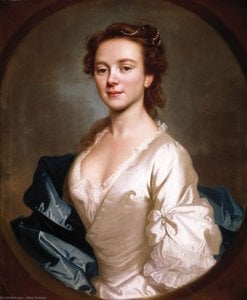
Allan Ramsay, 1713 – 1784

100 najsłynniejszych obrazów autorstwa Allan Ramsay

Obrazem, który przyniósł sławę Allan Ramsay, jest Queen Charlotte (1744-1818) (1762); znajduje się on w Pałac Buckingham, Londyn. King George III (1761) oraz George III (1738–1820) (1764) podążają za nimi w sercach kolekcjonerów i odwiedzających muzea. Z 223 dzieł Allan Ramsay w naszym katalogu, tych 100 jest najbardziej podziwianych – każde z nich zostało przedstawione wraz z datą powstania, muzeum oraz cechami wyróżniającymi.

Ranking oparty na naszym wskaźniku popularności, który łączy liczbę wyszukiwań, wizyt oraz zamówień dla każdego dzieła. Aktualizacja: Październik 2026. Każde arcydzieło na tej stronie można zamówić jako ręcznie malowaną reprodukcję olejną o jakości muzealnej lub jako wysokiej jakości wydruk artystyczny, w wybranym przez Ciebie rozmiarze.

Portret Allan Ramsay
Allan Ramsay · 1713 – 1784
Urodzony · zmarł
1713 – 1784, Edynburg
Nurt
Rococo
Dzieła w naszym katalogu
223
Najsłynniejsze
Queen Charlotte (1744-1818) (1762)
Najwięcej dzieł w
Scottish National Portrait Gallery

Allan Ramsay: dziesięć arcydzieł

Queen Charlotte (1744-1818) (1762) autorstwa Allan Ramsay
1

Queen Charlotte (1744-1818)

1762 · Oil On Canvas · Pałac Buckingham, Londyn

To stand before this portrait is to encounter the quiet authority of Queen Charlotte. Painted in 1762, the work captures the Queen in a moment of formal repose, her presence defined by a sense of calm and sovereign grace. The composition is vertical and balanced, placing her as the central figure within a grand, neoclassical interior. A fluted column rises to the right, providing a strong verticality that anchors the…

George III (1738–1820) (1764) autorstwa Allan Ramsay
3

George III (1738–1820)

1764 · Oil On Canvas · Guildhall Art Gallery, Londyn

In the grand tapestry of eighteenth-century portraiture, few works command the room with as much authoritative grace as Allan Ramsay’s 1764 masterpiece, George III. This breathtaking portrait serves as more than a mere likeness; it is a profound window into the heart of the British monarchy during an era of immense transition. As the viewer gazes upon the King, they are immediately struck by the sheer scale and presence of…

Emily (1731–1814), Marchioness of Kildare (1766) autorstwa Allan Ramsay
4

Emily (1731–1814), Marchioness of Kildare

1766 · Oil On Canvas · Walker Art Gallery, Liverpool

This oil on canvas portrait, created between 1764 and 1766, depicts Emily FitzGerald, Duchess of Leinster, also known as Emily, Marchioness of Kildare. The subject is presented in a contemplative pose, appearing book-learned as she reads the ancient historian Procopius. The composition centers on the seated woman, whose posture and the open book on the table before her suggest a moment of quiet study. The scene is characterized by soft,…

Portrait of a Gentleman (1745) autorstwa Allan Ramsay
5

Portrait of a Gentleman

1745 · Oil On Canvas · Minneapolis Institute of Art, Minneapolis

The portrait presents a man in a three-quarter length pose, positioned centrally against a dark, atmospheric background. He is oriented slightly toward his left, facing the viewer with a direct gaze. The subject wears a structured, military-style dark coat decorated with gold embroidery, paired with a white waistcoat and a crisp white cravat. Below the waist, red breeches are visible. A powdered wig frames a face characterized by soft, blended…

Henry Bellenden (1749) autorstwa Allan Ramsay
7

Henry Bellenden

1749 · Oil On Canvas · Yale Center for British Art, New Haven

In this formal 18th-century oil portrait, Allan Ramsay presents Henry Bellenden with a quiet sense of dignity. Painted about 1749, the work captures the subject in a three-quarter length view, seated in a manner that suggests both relaxation and a certain commanding presence. The portrait focuses on the individual, using the sitter's posture and attire to communicate a sense of intellectual refinement and social standing.

Richard Grenville, 2nd Earl Temple (1762) autorstwa Allan Ramsay
8

Richard Grenville, 2nd Earl Temple

1762 · Oil On Canvas · National Gallery of Victoria, Melbourne

Richard Grenville, 2nd Earl Temple, is presented in a formal, full-length state portrait that emphasizes his noble lineage and authority. He stands in a three-quarter length pose, slightly off-center to create a sense of dynamic stability. The subject is draped in ceremonial regalia, including a heavy mantle and an ornamental sword, which signal his high social status. A crimson sash and waistcoat provide a sharp contrast against the dark, heavy…

Alexander Boswell, Lord Auchinleck (1754) autorstwa Allan Ramsay
9

Alexander Boswell, Lord Auchinleck

1754 · Oil On Canvas · Yale Center for British Art, New Haven

This oil on canvas portrait, titled Alexander Boswell, Lord Auchinleck, presents a formal study of the Scottish judge created by the artist Allan Ramsay. Painted between 1754 and 1755, the work captures the subject in a moment of quiet authority. Ramsay, a prominent figure in eighteenth-century British portraiture, brings a refined sensibility to this depiction of the man who would become a significant legal figure in Scotland.

Więcej arcydzieł artysty Allan Ramsay, od 11 do 100

Jane Nisbet, Lady Dirleton (1748) autorstwa Allan Ramsay
#11

Jane Nisbet, Lady Dirleton

1748 · The National Trust For Scotland

To stand before this portrait is to step directly into the refined drawing rooms of the mid-eighteenth century. Jane Nisbet, Lady Dirleton, painted in 1748 by Allan Ramsay,…

Zabierz ją do domu →
Mrs Elizabeth Symonds (d.1776 ) (1740) autorstwa Allan Ramsay
#12

Mrs Elizabeth Symonds (d.1776 )

1740 · Walker Art Gallery

The portrait depicts Mrs Elizabeth Symonds positioned slightly off-center to the left within an interior setting. She is rendered with a smooth, porcelain-like quality to her skin, contrasted…

Zamów reprodukcję →
Mary Adam (1754) autorstwa Allan Ramsay
#13

Mary Adam

1754 · Yale Center for British Art

This oil on canvas portrait presents Mary Adam, a figure of quiet dignity captured by the Scottish painter Allan Ramsay. Dated 1754, the work offers a direct encounter…

Zabierz ją do domu →
Arabella Pershall, Lady Glenorchy (1740) autorstwa Allan Ramsay
#14

Arabella Pershall, Lady Glenorchy

1740 · Yale Center for British Art

is a portrait executed by the Scottish artist Allan Ramsay in 1740. The subject, also identified as Arabella Countess Breadalbane and Holland Campbell (Pershall), is presented in a…

Zamów reprodukcję →
The Honourable William Finch (1744) autorstwa Allan Ramsay
#55

The Honourable William Finch

1744 · New Walk Museum - Art Gallery

To stand before this portrait of The Honourable William Finch is to step directly into the refined drawing rooms of 18th-century England. Painted in 1744, this work by…

Zamów reprodukcję →
Captain Thomas Wallace (1750) autorstwa Allan Ramsay
#56

Captain Thomas Wallace

1750 · The National Trust For Scotland

To stand before this portrait is to step directly into the vibrant, powdered world of the mid-eighteenth century. Captain Thomas Wallace is more than just a likeness; it…

Zamów reprodukcję →
Flora Macdonald (1749) autorstwa Allan Ramsay
#62

Flora Macdonald

1749 · Ashmolean Museum of Art and Archaeology

Allan Ramsay’s “Flora Macdonald,” painted in 1749, is more than just a likeness; it's a potent distillation of Scottish history, embodying the spirit of rebellion and the quiet…

Zamów reprodukcję →
Jean, Lady Banff (1747) autorstwa Allan Ramsay
#63

Jean, Lady Banff

1747 · The National Trust For Scotland

To gaze upon Allan Ramsay's portrait of Jean, Lady Banff, is to step directly into the refined drawing rooms of 18th-century Scotland. Painted in 1747, this oil on…

Zamów ręcznie malowaną kopię →
DAVID WEMYSS, LORD ELCHO autorstwa Allan Ramsay
#64

DAVID WEMYSS, LORD ELCHO

Luwr

Allan Ramsay's “David Wemyss, Lord Elcho” is more than just a painted likeness; it’s a carefully constructed tableau of 18th-century Scottish aristocracy, imbued with the formality and restrained…

Zabierz ją do domu →

Obrazy Allan Ramsay według okresów

Tematy, które najczęściej malował Allan Ramsay

Cztery tematy najczęściej powracające w tych arcydziełach, wraz z najdoskonalszym przykładem każdego z nich.

Gdzie można zobaczyć obrazy Allan Ramsay

8 muzeów, w których znajduje się najwięcej obrazów z tej strony.

Muzeum Miasto Dzieła artysty Allan Ramsay Obrazy z tej listy
Scottish National Portrait Gallery, EdynburgScottish National Portrait Gallery Edynburg 16 Lady Frances Wemyss, Lady Steuart Denham, 1722 - 1789, Robert Craigie (1685–1766), Lord Craigie, Lord Advocate, Archibald Campbell (1682–1761), 3rd Duke of Argyll, Statesman
Royal Collection, LondynRoyal Collection Londyn 8 Królowa Czartuska z dwoma dziećmi, Queen Charlotte (1744-1818), with her Two Eldest Sons, Augusta, Princess of Wales (1719-72)
Scottish National Gallery, EdynburgScottish National Gallery Edynburg 14 Elizabeth Cunyngham, Mrs Daniel Cunyngham, Anne Cockburn (d.1772), Lady Inglis, Mary Degg, Lady Robert Manners (1737 - 1829)
Yale Center for British Art, New HavenYale Center for British Art New Haven 5 Henry Bellenden, Alexander Boswell, Lord Auchinleck, Mary Adam
The National Trust For Scotland, EdynburgThe National Trust For Scotland Edynburg 9 Janet, Daughter of the Honourable Sir David Dalrymple, Bt, Lady Christian Dalrymple, Sir James Dalrymple, Bt, MP, Auditor of the Exchequer
The Hunterian Museum and Art Gallery, GlasgowThe Hunterian Museum and Art Gallery Glasgow 4 Francis Hutcheson (1694-1746), Francis Hutcheson (1694-1746), Lady Anne Campbell (1720–1785), Countess of Strafford
The Holburne Museum, BathThe Holburne Museum Bath 3 John Sargent the Elder (1690–1762), John Sargent the Younger (1714–1791), Rosamund Sargent, née Chambers (1722–1792)
National Portrait Gallery, LondynNational Portrait Gallery Londyn 5 Allan Ramsay, Richard Mead

Allan Ramsay, dekada po dekadzie: najważniejsze dzieło każdej z nich

  1. 1730s
    Allan Ramsay (1739) autorstwa Allan Ramsay
    Miejsce 26 / 100

    Allan Ramsay

    Wiek 17 – 26 · National Portrait Gallery
  2. 1740s
    Portrait of a Gentleman (1745) autorstwa Allan Ramsay
    Miejsce 5 / 100

    Portrait of a Gentleman

    Wiek 27 – 36 · Minneapolis Institute of Art

    The portrait presents a man in a three-quarter length pose, positioned centrally against a dark, atmospheric background. He is oriented slightly toward his left, facing the viewer with…

  3. 1750s
    Mrs. Lindesay of Eaglescarnie (1750) autorstwa Allan Ramsay
    Nr 6 z 100

    Mrs. Lindesay of Eaglescarnie

    Wiek 37 – 46 · Narodowa Galeria Kanady

    The oil on canvas work titled Mrs. Lindesay of Eaglescarnie was executed by the artist Allan Ramsay in 1750. This portrait depicts a subject also identified as Madame…

  4. 1760s
    Queen Charlotte (1744-1818) (1762) autorstwa Allan Ramsay
    Miejsce 1 / 100

    Queen Charlotte (1744-1818)

    Wiek 47 – 56 · Pałac Buckingham

    To stand before this portrait is to encounter the quiet authority of Queen Charlotte. Painted in 1762, the work captures the Queen in a moment of formal repose,…

  5. 1770s
  6. 1780s

Arcydzieła Allan Ramsay: pytania i odpowiedzi

Z jakiego obrazu najbardziej znany jest Allan Ramsay?Pokaż odpowiedź

Queen Charlotte (1744-1818) (1762), Pałac Buckingham, Londyn. Następnie pojawiają się King George III (1761) oraz George III (1738–1820) (1764).

Ile lat miał(a) Allan Ramsay, malując Queen Charlotte (1744-1818)?Pokaż odpowiedź

49 lat: Queen Charlotte (1744-1818) pochodzi z 1762, a Allan Ramsay urodził(a) się w 1713.

Jakie są dziesięć najwspanialszych obrazów Allan Ramsay?Pokaż odpowiedź

Queen Charlotte (1744-1818), King George III, George III (1738–1820), Emily (1731–1814), Marchioness of Kildare, Portrait of a Gentleman, Mrs. Lindesay of Eaglescarnie, Henry Bellenden, Richard Grenville, 2nd Earl Temple, Alexander Boswell, Lord Auchinleck i Portrait Of Sir William Pulteney, Earl Of Bath. Powyższy ranking zawiera rok oraz muzeum dla każdego z nich.

Ile dzieł namalował/a Allan Ramsay?Pokaż odpowiedź

Nasz katalog obejmuje 223 dzieł autorstwa Allan Ramsay, datowanych od 1732 do 1784.

W których muzeach można zobaczyć arcydzieła Allan Ramsay?Pokaż odpowiedź

Większość z nich znajduje się w Scottish National Portrait Gallery (Edynburg), Royal Collection (Londyn) i Scottish National Gallery (Edynburg). Powyższa tabela zawiera listę muzeów po kolei.

Kiedy Allan Ramsay namalował swoje arcydzieła?Pokaż odpowiedź

W okresie 1740s: 55 z 100 dzieł na tej stronie pochodzi z tego czasu, w tym Portrait of a Gentleman.

Jakie są pierwsze i ostatnie słynne obrazy artysty Allan Ramsay?Pokaż odpowiedź

Najwcześniejszy na tej stronie to Alexander Home of Jardinfield (1732), najpóźniejszy Valentine Morris (1727-1789), Governor of Saint Vincent (1784).

Jakie tematy były ulubione dla Allan Ramsay?Pokaż odpowiedź

18th century (23), Portrait (16) i Woman (12), spośród 100 dzieł na tej stronie.

Której techniki preferował Allan Ramsay?Pokaż odpowiedź

Oil On Canvas: 31 z 100 dzieł na tej stronie.

Do jakiego nurtu artystycznego należy Allan Ramsay?Pokaż odpowiedź

Rococo, co pokazują obrazy na tej stronie.

Które arcydzieła Allan Ramsay znajdują się w Scottish National Portrait Gallery?Pokaż odpowiedź

Lady Frances Wemyss, Lady Steuart Denham, 1722 - 1789, Robert Craigie (1685–1766), Lord Craigie, Lord Advocate i Archibald Campbell (1682–1761), 3rd Duke of Argyll, Statesman to jedne z 8 dzieł na tej stronie znajdujących się w zbiorach Scottish National Portrait Gallery, Edynburg.

Czy mogę stać się właścicielem reprodukcji arcydzieła, którego autorem jest Allan Ramsay?Pokaż odpowiedź

Tak. Każdy obraz na tej stronie można zamówić jako ręcznie malowaną reprodukcję olejną o jakości muzealnej lub jako wysokiej jakości wydruk artystyczny w wybranym przez Ciebie rozmiarze, bezpośrednio ze strony danego dzieła.

Życie artysty Allan Ramsay

Allan Ramsay: Elegancja i Sztuka Epoki

Urodzony w Edynburgu 13 października 1713 roku, Allan Ramsay wyłonił się jako jeden z najwybitniejszych szkockich portrecistów, którego prace uchwyciły elegancję i wytworność jego epoki. Jego artystyczna podróż rozpoczęła się w wieku dwudziestu lat, kiedy to udał się do Londynu na studia pod kierunkiem szwedzkiego malarza Hansa Hysinga, a następnie kontynuował naukę w Akademii St. Martin's Lane. To solidne podstawowe szkolenie zapewniło mu gruntowną wiedzę z zakresu techniki i kompozycji.

Prawdziwy przełom w artystycznym rozwoju Ramsaya nastąpił podczas podróży do Rzymu i Neapolu, gdzie spędził trzy lata (1736-1738) pracując pod okiem Francesco Solimeny oraz Imperiali’ego (Francesco Fernandiego). Ci włoscy mistrzowie wywarli ogromny wpływ na jego styl, pogłębiając zrozumienie klasycznych zasad i doskonaląc umiejętność oddawania podobieństwa i charakteru. Ramsay wchłonął dominującą estetykę rokoka, rozwijając jednocześnie uznanie dla ideałów neoklasycystycznych.

Po powrocie do Wielkiej Brytanii w 1738 roku Ramsay szybko zbudował udaną karierę jako portrecista. Jego zdolność do przedstawiania postaci z precyzją i gracją wkrótce przyniosła mu wybitne grono klientów. Do jego najbardziej znanych dzieł należą:

  • Królowa Charlotte (1744-1818) z dwoma najstarszymi synami (Royal Collection, Londyn): Dostojny portret ukazujący królewską matczyność.
  • Mary Degg, Lady Robert Manners (Scottish National Gallery, Edynburg): Elegancki portret demonstrujący umiejętność Ramsaya w oddawaniu arystokratycznego piękna.
  • Głowa Duncana Forbesa z Culloden: To wczesne dzieło zwróciło na niego uwagę księcia Argylla i zostało później umieszczone na banknotach Royal Bank of Scotland.

Kluczowym momentem w karierze Ramsaya był rok 1761, kiedy to został mianowany Głównym Malarzem Dworu Króla Jerzego III. To prestiżowe stanowisko umocniło jego pozycję wśród artystycznej elity i zapewniło stały dopływ zleceń od rodziny królewskiej i wysokiej arystokracji. Stał się *portreczystą epoki georgiańskiej*. Jego prace cechowała niezwykła dbałość o detale, subtelne operowanie światłem i cieniem oraz umiejętność uchwycenia osobowości portretowanych osób.

Późniejsze lata życia Ramsaya przyniosły zwrot w kierunku zainteresowań literackich, odzwierciedlając jego szerokie intelektualne horyzonty. Jednak osobiste tragedie – przypadkowe zwichnięcie prawego ramienia i śmierć drugiej żony w 1782 roku – wpłynęły na jego zdrowie i produktywność. Zmarł w 1784 roku.

Pomimo tych wyzwań, Ramsay pozostawił po sobie trwałe dziedzictwo jako jeden z najbardziej cenionych szkockich portrecistów. Jak zauważył Samuel Johnson, „Kocham Ramsaya. Nie znajdziesz człowieka w którego rozmowie jest więcej nauki, informacji i elegancji niż w rozmowie Ramsaya”. Jego dzieła nadal budzą podziw ze względu na umiejętności techniczne, wyrafinowaną estetykę i wnikliwe portrety społeczeństwa XVIII wieku.

Znaczenie Historyczne

Wkład Allana Ramsaya wykracza poza jego artystyczny talent. Odegrał on kluczową rolę w kształtowaniu kultury wizualnej Szkocji w okresie znaczących zmian społecznych i politycznych. Jego portrety dostarczają cennych informacji na temat życia, mody i wartości szkockiej szlachty i ziemiaństwa. Jego prace można znaleźć w takich miejscach jak Ayr Town Hall oraz Scottish National Portrait Gallery.

Wszystkie 223 dzieła artysty Allan Ramsay →