Tiberio di Tito: The Subtle Master of Florentine Portraiture
Born in Florence in 1573, Tiberio di Tito emerged as a significant figure within the vibrant artistic landscape of the Italian Renaissance. Though his life was tragically cut short at the age of fifty-four, his legacy endures through a remarkable body of work—primarily exquisite portraiture—that offers intimate glimpses into the lives and aspirations of Florence’s elite during the early 17th century. His career unfolded within the shadow of his father, Santi di Tito, a late Mannerist painter whose influence undoubtedly shaped Tiberio's artistic sensibilities, particularly in terms of tonal depth and meticulous detail.
Tiberio’s training began under his father, absorbing not only technical skills but also a refined approach to portraiture. However, he quickly distinguished himself through a remarkable ability to capture the essence of his subjects – their character, social standing, and even subtle emotions – with an understated elegance rarely seen in his contemporaries. Unlike the grand, theatrical portraits favored by some, Tiberio’s work is characterized by a quiet intimacy, achieved through careful observation and a masterful control of light and shadow. He wasn't interested in flamboyant displays; instead, he sought to reveal the inner life of those he depicted.
The Medici Patronage and Florentine Society
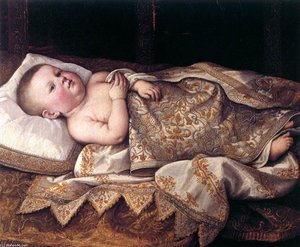
Tiberio’s career was inextricably linked with the powerful Medici family, who served as his most important patrons. He became a favored portraitist at their court, producing numerous works for Cardinal Leopoldo de' Medici and other prominent members of the family. These commissions provided him with access to a world of luxury, intrigue, and artistic innovation. His portraits of Prince Leopoldo de’ Medici in a Cradle, for example, showcases his ability to render delicate fabrics and textures with astonishing realism – a testament to his technical skill and keen eye for detail.
Beyond the Medici, Tiberio also painted for other notable figures within Florentine society. His work reflects the social dynamics of the time, offering valuable insights into the fashion, customs, and values of the upper classes. The portrait of Maria Maddalena of Austria is a prime example, demonstrating his skill in capturing aristocratic beauty and conveying an air of dignified composure. These portraits weren’t merely likenesses; they were carefully constructed representations designed to project status and influence.
Trompe-l'oeil and the Illusion of Space
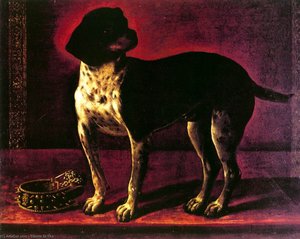
While primarily known for his portraiture, Tiberio di Tito also explored the innovative technique of *trompe-l'oeil*, or “fooling the eye.” This illusionistic painting style, which aimed to create the impression that a painted scene was actually three-dimensional, was gaining popularity during the Renaissance. Tiberio’s use of *trompe-l'oeil* is evident in works like "Portrait of a Dog," where he seamlessly integrated the animal into the surrounding architectural setting, blurring the boundaries between reality and representation. This technique demonstrates his artistic ambition and willingness to experiment with new approaches to visual space.
The Archivio di Stato in Florence holds numerous documents related to Tiberio’s life and work, including records of the city's recovery from the devastating Arno flood – a period during which he likely worked. Similarly, Santa Maria di Campagna in Piacenza houses frescoes by Pordenone, offering a valuable context for understanding the artistic trends of the era.
Legacy and Influence
Despite his relatively short career, Tiberio di Tito left an indelible mark on the history of Italian portraiture. His work is characterized by its subtlety, elegance, and psychological depth—qualities that distinguish him from many of his contemporaries. His meticulous attention to detail, combined with a profound understanding of human character, has ensured his place as one of Florence’s most accomplished portraitists. The Web Gallery of Art provides a comprehensive biography, detailing his lineage as the son of Santi di Tito and highlighting his significant patronage by the Medici family. His influence can be seen in subsequent generations of Italian painters who continued to explore the possibilities of capturing the nuances of human expression through portraiture.
His work continues to fascinate art historians and collectors alike, offering a rare glimpse into the world of Renaissance Florence and the lives of its influential figures. Tiberio di Tito’s legacy is not one of grand gestures or dramatic displays; rather, it is one of quiet mastery—a testament to the power of observation, skill, and artistic sensitivity.