The Pioneering Spirit of Shono Shounsai: Elevating Bamboo Basketry to Fine Art
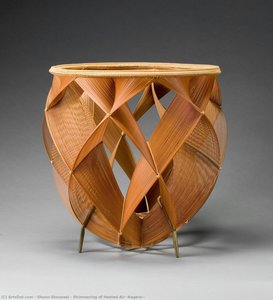
Shono Shounsai (1904-1974) stands as a pivotal figure in the history of Japanese craft, a master artisan who transcended traditional bamboo weaving to establish it as a recognized and respected fine art form. Born in Japan, his life’s work was dedicated to the exploration and refinement of *kokedama*, or floral baskets crafted from woven bamboo. While basketry had long been a functional element of Japanese daily life, Shounsai elevated it beyond utility, imbuing each piece with a profound sense of aesthetic beauty, philosophical depth, and technical mastery. He wasn’t merely creating containers for flowers; he was sculpting living forms, capturing the ephemeral grace of nature within enduring structures.
Early Life and Artistic Development
Details surrounding Shounsai's early life remain somewhat elusive, a characteristic often found in the biographies of dedicated craftspeople whose focus lay primarily on their work rather than self-promotion. However, it is known that he possessed an innate sensitivity to natural materials from a young age. He began his journey with bamboo not as a formal student but through intuitive experimentation, learning to understand its inherent properties – its strength, flexibility, and the subtle variations in tone and texture found within different species. This self-directed study formed the foundation of his unique approach. He didn't initially seek to revolutionize basketry; rather, he sought to unlock its hidden potential, pushing the boundaries of what was considered possible with this ancient medium. His early works, while demonstrating a clear technical skill, were marked by a growing desire to move beyond conventional forms and embrace a more expressive aesthetic.
The Essence of Wabi-Sabi: A Philosophical Foundation
Shounsai’s artistic philosophy was deeply rooted in the Japanese concept of *wabi-sabi* – an appreciation for imperfection, impermanence, and simplicity. This ethos permeated every aspect of his work. Unlike many traditional crafts that strive for flawless execution, Shounsai deliberately incorporated irregularities into his baskets: uneven weaves, naturally occurring blemishes in the bamboo, and asymmetrical forms. These weren’t flaws to be corrected but rather integral elements that spoke to the organic nature of the material and the passage of time. His baskets were not meant to be pristine objects; they were intended to reflect the beauty found in transience and the inherent character of the natural world. This embrace of imperfection resonated deeply with a growing appreciation for traditional Japanese aesthetics, both within Japan and internationally.
Recognition and Legacy: A Living National Treasure
Shounsai’s dedication and innovative spirit did not go unnoticed. He was eventually recognized as a
Living National Treasure in Japan – a prestigious honor bestowed upon artisans who have achieved the highest level of mastery in their respective fields and are deemed essential to preserving traditional Japanese arts. This recognition brought his work to wider attention, leading to exhibitions in numerous museums and galleries, including the Museum of Folk Art in Los Angeles and Tai Modern in Santa Fe. Beyond his own creations, Shounsai was a dedicated teacher, inspiring generations of students to explore the possibilities of bamboo weaving. He fostered an environment that encouraged experimentation and individual expression, emphasizing the importance of understanding the material’s inherent qualities rather than simply replicating established techniques. His influence continues to be felt today through the work of countless artists who carry on his legacy.
Major Achievements & Historical Significance
Shono Shounsai's most significant achievement lies in his transformation of bamboo basketry from a functional craft into a respected fine art form. He demonstrated that baskets could be more than just containers; they could be powerful expressions of artistic vision, philosophical thought, and cultural identity. His work challenged conventional notions of beauty, embracing imperfection and celebrating the natural world.
- Pioneering *Kokedama* Art: He is credited with significantly advancing the art of floral bamboo baskets (*kokedama*) beyond its traditional uses.
- Embodiment of Wabi-Sabi: His work became synonymous with the aesthetic principles of *wabi-sabi*, influencing a broader appreciation for imperfection in Japanese art and design.
- Elevating Craft to Fine Art: He successfully bridged the gap between traditional craft and fine art, gaining recognition for bamboo weaving as a legitimate artistic medium.
- Inspiring Future Generations: As an educator, he nurtured countless students, ensuring the continuation of his techniques and philosophical approach.
Shounsai’s legacy extends beyond the aesthetic realm. He reminds us to appreciate the beauty found in simplicity, impermanence, and the inherent character of natural materials – a message that resonates powerfully in an increasingly fast-paced and artificial world.
His work continues to inspire artists and collectors alike, serving as a testament to the enduring power of craftsmanship and the profound connection between art and nature.