Sesson Yūbai: The Poet of Quietude
Sesson Yūbai (雪村 友梅; 1290 – 14th day of the 1st month, 1347) stands as one of Japan’s most revered Zen Buddhist poets and monks—a figure inextricably linked to the profound aesthetic principles that define the Five Mountains School of Zen. Born in Tokyo during a period of significant cultural exchange between China and Japan, Yūbai's life was marked by rigorous monastic training under the guidance of Issan Ichinei, establishing him firmly within the Linji Ch’an tradition. This formative experience would profoundly shape his artistic vision and intellectual pursuits, propelling him to become a pivotal voice in Japanese literature and Zen art.- Early Life & Training: Yūbai's initial studies commenced under Issan Ichinei, a Chinese emigrant monk who championed the Linji sect’s radical approach to enlightenment—a method prioritizing direct experience over intellectual contemplation. Recognizing Yūbai’s exceptional aptitude, Issan entrusted him with overseeing the establishment of a temple in Kyoto, marking the beginning of his influential monastic career.
- Journey to China: Driven by an unwavering commitment to Zen practice and scholarship, Yūbai embarked on a transformative journey to China around 1307. During this protracted period—spanning over two decades—he immersed himself in intensive study with numerous eminent masters, absorbing the nuances of Chinese Buddhist philosophy and calligraphy techniques. Notably, he endured imprisonment during the persecution of Buddhists under Kublai Khan’s rule, an ordeal that instilled within him a deep appreciation for resilience and simplicity.
The Art of Minimalist Calligraphy: Reflecting Zen Essence
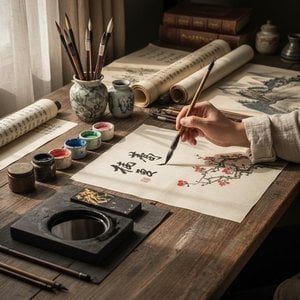
Yūbai's poetic output is inextricably intertwined with his mastery of calligraphy—a practice considered paramount in Zen Buddhism. His work embodies the school’s core tenets: stillness, clarity, and an uncompromising devotion to capturing the essence of reality through sparse brushstrokes. The celebrated “Abiding Nowhere, The Awakened Mind Arises” (阿無所住處,悟心生), housed at the Tokugawa Art Museum, exemplifies this distinctive style. Characterized by expansive spaces between columns of text—allowing for deliberate pauses and fostering contemplation—the painting’s composition mirrors Yūbai's poetic sensibility. Each stroke is imbued with intention, reflecting Zen’s emphasis on mindful action and intuitive understanding.- Bingatshū: Yūbai’s magnum opus, Bingatshū (鏡沙樹), comprises 242 poems—a testament to his unwavering dedication to Zen practice and artistic expression. These verses eschew ornate embellishments, prioritizing directness and emotional resonance. They grapple with themes of impermanence, solitude, and the pursuit of enlightenment—mirroring the core concerns of Zen philosophy.
- Influence on Zen Art: Yūbai’s aesthetic principles profoundly impacted subsequent generations of Zen artists. His insistence on simplicity and contemplation served as a guiding force in shaping the visual language of Zen monasteries and temples across Japan, fostering an enduring tradition of minimalist calligraphy and landscape painting that continues to inspire artistic creativity today.
Temple Foundations & Legacy: Shaping Buddhist Culture
Beyond his poetic achievements, Sesson Yūbai left an indelible mark on Japanese Buddhism through the establishment of several provincial temple-monasteries—most notably Hōun-ji and Hōrin-ji in Harima Prefecture. These temples were recognized as “jissatsu” by Muromachi shogunate, signifying their prestige and encouraging patronage for Zen monastic institutions. Yūbai’s disciples, including Akamatsu Norimura and Akamatsu Norisuke, diligently upheld his legacy—propagating Zen philosophy and artistic traditions throughout Japan. His influence extended beyond the visual arts, shaping the intellectual landscape of his time and cementing his place as a cornerstone of Japanese cultural heritage.Concluding Reflections
Sesson Yūbai’s life embodies the spirit of Zen Buddhism—a pursuit of enlightenment through mindful contemplation and unwavering devotion to ethical conduct. His poetry transcends mere literary artistry, offering profound insights into the human condition and illuminating the path toward inner peace. As a master calligrapher and temple founder, Yūbai solidified his position as one of Japan’s most influential figures—a testament to the enduring power of Zen aesthetics and philosophy to inspire artistic creativity and spiritual contemplation for centuries to come.Pytania i odpowiedzi
W jakich nurtach tworzył Sesson Yūbai?
Strona Wszystkie nurty artystyczne grupuje dzieła Sesson Yūbai według nurtów artystycznych.
Gdzie można znaleźć dzieła Sesson Yūbai pogrupowane według tematów?
Dzieła artysty Sesson Yūbai można przeglądać według tematów na stronie Atlas tematów.
Jakie nastroje wyrażają dzieła Sesson Yūbai?
Prace Sesson Yūbai można przeglądać według nastroju na stronie Sztuka według nastroju, która grupuje dzieła artysty według ich przypisanego nastroju.