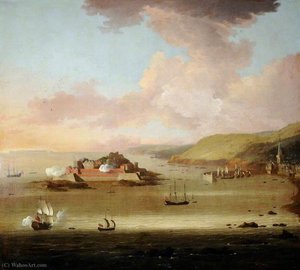
Peter Monamy, 1681 – 1749

Peter Monamy: 71 najsłynniejszych obrazów

The Opening of the First Eddystone Lighthouse in 1698 (1703) to najsłynniejszy obraz autorstwa Peter Monamy, znajdujący się w Yale Center for British Art w New Haven. Shipping in a Calm (1712) i Royal Yacht Becalmed at Anchor (1720) to dwa kolejne dzieła, które świat zna najlepiej. Z 72 dzieł Peter Monamy w naszym katalogu, oto 71 najczęściej wybieranych przez kolekcjonerów i zwiedzających muzea, wraz z rokiem powstania, informacją o muzeum oraz historią każdego z nich.

Ranking oparty na naszym wskaźniku popularności, który łączy liczbę wyszukiwań, wizyt oraz zamówień dla każdego dzieła. Aktualizacja: Październik 2026. Każde arcydzieło na tej stronie można zamówić jako ręcznie malowaną reprodukcję olejną o jakości muzealnej lub jako wysokiej jakości wydruk artystyczny, w wybranym przez Ciebie rozmiarze.

Portret Peter Monamy
Peter Monamy · 1681 – 1749
Urodzony · zmarł
1681 – 1749, Londyn
Nurt
Neoclassicism
Dzieła w naszym katalogu
72
Najsłynniejsze
The Opening of the First Eddystone Lighthouse in 1698 (1703)
Najwięcej dzieł w
National Maritime Museum

Top 10: najsłynniejsze obrazy artysty Peter Monamy

Pozostała część rankingu Peter Monamy, od 11 do 71

Obrazy Peter Monamy według okresów

Tematy, które najczęściej malował Peter Monamy

Cztery tematy najczęściej powracające w tych arcydziełach, wraz z najdoskonalszym przykładem każdego z nich.

Gdzie można zobaczyć obrazy Peter Monamy

8 muzeów, w których znajduje się najwięcej obrazów z tej strony.

Muzea Miasto Dzieła artysty Peter Monamy Obrazy z tej listy
National Maritime Museum, LondynNational Maritime Museum Londyn 19 Three English Flagships Becalmed, The Capture of Louisburg, 28 June 1745, The Burning of HMS Royal James at the Battle of Solebay, 28 May 1672
Yale Center for British Art, New HavenYale Center for British Art New Haven 6 The Opening of the First Eddystone Lighthouse in 1698, Shipping in a Calm, Royal Yacht Becalmed at Anchor
Felbrigg Hall, NorwichFelbrigg Hall Norwich 1 Four British Warships and a Fishing-smack in a Strong Wind
Ardress HouseArdress House 1 Stormy Seascape
Royal Collection, LondynRoyal Collection Londyn 1 A Calm with a Royal Yacht Firing a Salute
Antony HouseAntony House 1 A Naval Engagement between an English Ship and Barbary Ships
Muzeum Narodowe w Warszawie, WarszawaMuzeum Narodowe w Warszawie Warszawa 1 Ships on the sea
Metropolitan Museum of Art, Nowy JorkMetropolitan Museum of Art Nowy Jork 1 Harbor Scene: An English Ship with Sails Loosened Firing a Gun

Peter Monamy na przestrzeni dekad: jedno arcydzieło na każde dziesięciolecie

  1. 1700s
  2. 1710s
  3. 1720s
  4. 1730s

Obrazy artysty Peter Monamy: najczęściej zadawane pytania

Który obraz Peter Monamy jest najbardziej znany?Pokaż odpowiedź

The Opening of the First Eddystone Lighthouse in 1698 (1703), Yale Center for British Art, New Haven. Następnie pojawiają się Shipping in a Calm (1712) oraz Royal Yacht Becalmed at Anchor (1720).

W jakim wieku Peter Monamy namalował/a The Opening of the First Eddystone Lighthouse in 1698?Pokaż odpowiedź

22 lat: The Opening of the First Eddystone Lighthouse in 1698 pochodzi z 1703, a Peter Monamy urodził(a) się w 1681.

Które są 10 najsłynniejszych obrazów, których autorem jest Peter Monamy?Pokaż odpowiedź

The Opening of the First Eddystone Lighthouse in 1698, Shipping in a Calm, Royal Yacht Becalmed at Anchor, An Evening Calm, Four British Warships and a Fishing-smack in a Strong Wind, Stormy Seascape, Three English Flagships Becalmed, A Calm with a Royal Yacht Firing a Salute, An English Royal Yacht Standing Offshore in a Calm i British Men-of-War and a Sloop. Powyższy ranking zawiera rok oraz muzeum dla każdego z nich.

Ile obrazów autorstwa Peter Monamy znajduje się w kolekcji?Pokaż odpowiedź

Nasz katalog obejmuje 72 dzieł autorstwa Peter Monamy, datowanych od 1703 do 1730.

Gdzie mogę zobaczyć najsłynniejsze obrazy, których autorem jest Peter Monamy?Pokaż odpowiedź

Większość z nich znajduje się w National Maritime Museum (Londyn), Yale Center for British Art (New Haven) i Felbrigg Hall (Norwich). Powyższa tabela zawiera listę muzeów po kolei.

W jakim okresie Peter Monamy namalował swoje najsłynniejsze dzieła?Pokaż odpowiedź

W okresie 1720s: 7 z 71 dzieł na tej stronie pochodzi z tego czasu, w tym Royal Yacht Becalmed at Anchor.

Jakie jest najwcześniejsze i najpóźniejsze słynne dzieło, którego autorem jest Peter Monamy?Pokaż odpowiedź

Najwcześniejszy na tej stronie to The Opening of the First Eddystone Lighthouse in 1698 (1703), najpóźniejszy An English Royal Yacht Standing Offshore in a Calm (1730).

Jakie tematy malował Peter Monamy?Pokaż odpowiedź

Wars (15), Men (13) i 18th century (9), spośród 71 dzieł na tej stronie.

Do jakiego nurtu należy twórczość Peter Monamy?Pokaż odpowiedź

Neoclassicism, co pokazują obrazy na tej stronie.

Jakie obrazy Peter Monamy znajdują się w zbiorach National Maritime Museum?Pokaż odpowiedź

Three English Flagships Becalmed, The Capture of Louisburg, 28 June 1745 i The Burning of HMS Royal James at the Battle of Solebay, 28 May 1672 to jedne z 19 dzieł na tej stronie znajdujących się w zbiorach National Maritime Museum, Londyn.

Gdzie mogę kupić reprodukcję Peter Monamy?Pokaż odpowiedź

Tak. Każdy obraz na tej stronie można zamówić jako ręcznie malowaną reprodukcję olejną o jakości muzealnej lub jako wysokiej jakości wydruk artystyczny w wybranym przez Ciebie rozmiarze, bezpośrednio ze strony danego dzieła.

Peter Monamy: biografia

Peter Monamy (1681–1749): A Life Immersed in the Maritime World

Peter Monamy, born in London in 1681, occupies a pivotal position in the development of English marine painting. He wasn’t merely a recorder of ships and seascapes; he was a chronicler of an era—an age defined by Britain's burgeoning naval power and its expanding global reach. His life, deeply intertwined with the maritime world through familial connections to Guernsey in the Channel Islands, instilled within him a lifelong fascination with all things nautical. This wasn’t simply aesthetic appreciation; it was an intimate understanding born from heritage and observation. Monamy didn’t just paint ships, he understood them—their construction, their function, and the lives of those who sailed upon them.

Early Life and Family

Peter Monamy's origins were rooted in Guernsey, where his father, Pierre Monamy, was a prominent merchant trader with strong ties to the Channel Islands’ history. His family lineage traced back to André Monamy, 1612–1680, who had served as Governor of Guernsey during the tumultuous years of the Commonwealth Parliamentarian ascendancy—a testament to his father's unwavering commitment to republican ideals. Dorothy Gilbert, Peter Monamy’s mother, descended from a distinguished London family, adding another layer of social significance to his upbringing. At fifteen years old, he embarked on an apprenticeship with William Clark, a master painter-stainer renowned for decorating interiors and crafting ornamental paintings—a formative experience that exposed him to diverse artistic techniques and broadened his horizons. Notably, Clark shared this workshop with James Thornhill, who would later achieve renown as a historical painter, highlighting the exceptional quality of Clark’s tutelage and fostering Monamy's artistic development. This early training instilled in him meticulous attention to detail and nurtured his ability to create visually compelling compositions—skills that would serve him faithfully throughout his career. His family’s mercantile activities provided him with invaluable insight into the economic realities of London during the late 17th century, shaping his worldview and informing his artistic sensibilities.

Decorative Arts and Artistic Influences

Before dedicating himself entirely to marine painting, Monamy honed his craft in the decorative arts—a tradition upheld by his father and reinforced by his apprenticeship with Clark. He mastered techniques of overdoor paintings, overmantels, and large-scale house murals—skills that demanded precision, patience, and a profound understanding of color and texture. Significantly, he collaborated closely with James Thornhill, whose artistic vision complemented Monamy’s own, fostering a dynamic exchange of ideas and elevating the standards of London’s decorative painting scene. The influence of earlier Dutch masters, particularly Willem van de Velde the Younger—renowned for his breathtakingly realistic depictions of naval vessels—is palpable in Monamy's work. He didn’t merely imitate these artists; he synthesized their stylistic innovations with his own keen observation and artistic intuition—resulting in a distinctive style that captured both grandeur and immediacy. Van de Velde’s masterful use of light and shadow, combined with his meticulous attention to detail, undoubtedly served as inspiration for Monamy's approach to portraying the sea and its inhabitants.

Maritime Artistry: Capturing Movement and Drama

Monamy’s artistic passion centered on marine painting—a genre that flourished in Britain during the reign of George II—and he achieved considerable acclaim for his contributions to this field. He possessed an unparalleled ability to depict ships with breathtaking accuracy, capturing their rigging, sails, and hull construction with meticulous precision. However, Monamy's paintings transcended mere technical virtuosity; they conveyed a palpable sense of movement and atmosphere—a hallmark of Baroque realism. He frequently depicted naval battles and stormy seascapes—scenes brimming with dynamism and emotion—demonstrating his mastery of artistic expression. His canvases pulsated with life, reflecting the fervor of Britain’s maritime ambitions and capturing the grandeur of its naval victories. Works such as *The Royal Yacht Peregrine* exemplify Monamy's skill in portraying large warships with remarkable realism, while *Capture of Porto Bello by Admiral Edward Vernon* showcases his ability to document significant historical events with both artistic flair and factual accuracy—a testament to his dedication to capturing the spirit of his time.

Legacy and Recognition

Peter Monamy’s legacy extends beyond his individual paintings—he established a distinct British tradition within marine art, bridging the gap between Dutch influences and an authentically English style. His meticulous attention to detail and his masterful rendering of light and shadow cemented his reputation as one of Britain's foremost painters of the eighteenth century. He was commissioned by prominent patrons—including members of the Royal Family and wealthy aristocrats—to decorate grand residences and create monumental canvases that celebrated British naval prowess. Monamy’s paintings continue to inspire admiration for their artistic beauty and historical significance, serving as invaluable records of a transformative era in British history. His contribution to the development of marine painting remains undeniable—a testament to his talent, dedication, and unwavering commitment to capturing the essence of the sea and its role in shaping Britain's identity. He died peacefully in London in 1749, leaving behind a body of work that secures his place among the greatest artists of his generation.