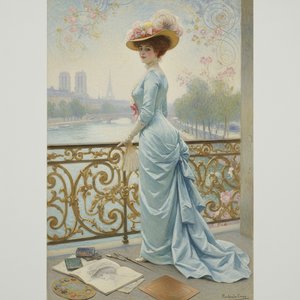
Paul César Helleu: Portret Belle Époque
- Urodzony: Vannes, Francja (1859)
- Zmarł: 1927
Wczesne lata i artystyczna edukacja
Paul César Helleu przyszedł na świat w 1859 roku w Vannes, w Bretanii. Los rzucił mu wyzwanie już w młodości, gdy śmierć ojca, urzędnika celnego, przerwała beztroskie dzieciństwo. Mimo początkowych obaw matki, młody artysta z odwagą ruszył do Paryża, by realizować swoje ambicje. Po nauce w Lycée Chaptal, w niezwykle młodym wieku zaledwie szesnastu lat, dostał się do prestiżowej École des Beaux-Arts, gdzie pod okiem mistrza Jean-Léona Gérôme szlifował swój warsztat.
Przełomowym momentem dla jego wrażliwości była styczność z ruchem impresjonistycznym podczas II Wystawy Impresjonistów w 1876 roku. Twórczość takich artystów jak John Singer Sargent, James McNeill Whistler czy Claude Monet głęboko go poruszyła. Fascynowały go ich nowatorskie techniki oraz skupienie na świetle i scenach plenerowych, co stanowiło odważny kontrast wobec tradycyjnych, zamkniętych w pracowni metod malarskich.
Droga artysty: Inspiracje i technika
Początki kariery Helleu były czasem wytrwałości; aby zapewnić sobie byt, pracował w warsztacie ceramicznym Théodore’a Decka, własnoręcznie malując dekoracyjne talerze. To doświadczenie niezwykle wyostrzyło jego zmysł techniczny. Kluczowym zwrotem w jego życiu stało się spotkanie z Giovanni Boldinim, portrecistą słynącym z brawurowego stylu, który stał się dla niego mentorem i ukształtował artystyczny kierunek Helleu.
W tym czasie nawiązała się również głęboka przyjaźń z Johnem Singerem Sargentem, która trwała przez całe ich życie. Wsparcie i zachęty Sargenta były fundamentem wczesnej twórczości Helleu. Artysta ten stał się prawdziwym wirtuozem techniki suchej igły, którą wprowadził do jego warsztatu James Jacques Tissot. W swoich pracach potrafił połączyć dynamizm i wyrafinowanie charakterystyczne dla pasteli z precyzją graficznego rysunku.
Najważniejsze dzieła i uznanie
Helleu zapisał się w historii sztuki przede wszystkim jako mistrz portretowania eleganckich kobiet paryskiej socjety epoki Belle Époque. Na płótnach i grafikach uwiecznił postacie tak wybitne jak Księżna Marlborough, Marchesa Casati, Belle da Costa Greene, Louise Chéruit czy Helena Rubinstein. Jego niezwykła zdolność do uchwycenia piękna i wdzięku dam z subtelną elegancją przyniosła mu światową sławę.- Portrety: Dzieła Helleu są cenione za delikatną linię, subtelną paletę barw oraz unikalną umiejętność oddania nie tylko fizycznego podobieństwa, ale i głębi osobowości modelki.
- Technika suchej igły: Jego grafiki wykonane suchą igłą cieszyły się ogromną popularnością, pozwalając na szerokie rozpowszechnianie jego sztuki wśród przyjaciół i rodziny; w trakcie swojej kariery stworzył ich ponad 2000.
- Mural w Grand Central Terminal: Jednym z jego najbardziej spektakularnych osiągnięć było zlecenie stworzenia muralu przedstawiającego konstelacje na suficie Grand Central Terminal w Nowym Jorku, co pozwoliło mu zaprezentować swoją wizję artystyczną w monumentalnej skali.
Dziedzictwo i znaczenie historyczne
Twórczość Paula Cæsara Helleua jest ucieleśnieniem ducha Belle Époque – epoki pełnej optymizmu, przepychu i artystycznych innowacji. Jego portrety stanowią bezcenne okno do świata paryskiej arystkracji, ukazując modę i obyczaje tamtych lat.
- Wpływ na sztukę: Nowatorskie wykorzystanie techniki suchej igły stało się inspiracją dla kolejnych pokoleń grafików.
- Reprezentacja epoki: Uznaje się go za jednego z najważniejszych artystów, którzy potrafili uchwycić istotę i estetyczne ideały Belle Époque.
- Dziedzictwo rodzinne: Artysta pozostawił po sobie trwały ślad w świecie designu; był ojcem Jeana Helleua i dziadkiem Jacquesa Helleua, obaj pełniących wpływowe funkcje dyrektorów artystycznych w domu mody Parfums Chanel.
Dzieła Helleua można podziwiać w najważniejszych muzeach świata, w tym w paryskim Musée d'Orsay i Luwrze, londyńskiej Tate oraz w Metropolitan Museum of Art w Nowym Jorku.
Pytania i odpowiedzi
Gdzie można znaleźć dzieła Paul César Helleu pogrupowane według techniki?
Aby znaleźć wszystkie dzieła artysty Paul César Helleu wykonane w danej technice, odwiedź stronę Wszystkie techniki poświęconą temu artyście.
W jakich nurtach tworzył Paul César Helleu?
Dzieła artysty Paul César Helleu można przeglądać według nurtów na stronie Wszystkie nurty poświęconej temu artyście.
Czy istnieje oś czasu prac Paul César Helleu?
Dzieła Paul César Helleu można obejrzeć w porządku chronologicznym na stronie Oś czasu dzieł artysty.
Czy istnieje chronologiczny opis twórczości Paul César Helleu?
Kariera Paul César Helleu rozwija się etap po etapie na stronie Kronika: jako pozioma oś czasu dzieł, pogrupowanych w rozdziały odpowiadające poszczególnym okresom twórczości.
Jak mogę znaleźć dzieła artysty Paul César Helleu w konkretnej palecie barw?
Prace artysty Paul César Helleu można przeglądać według palety kolorystycznej na stronie Według palet kolorystycznych artysty.
Skąd pochodzi Paul César Helleu?
Paul César Helleu urodził się w Francja.
Czy mogę przeglądać dzieła Paul César Helleu według spektrum kolorów?
Prace Paul César Helleu można przeglądać według kolorów na stronie Indeks barwny artysty.
Gdzie mogę zobaczyć dzieła Paul César Helleu pogrupowane według nastroju?
Prace Paul César Helleu można przeglądać według nastroju na stronie Klimat wnętrza artystki/artysty, która grupuje dzieła według ich przypisanego nastroju.