Early Life and Documentary Roots
Paul Blakemore, born in Coventry, United Kingdom, in 1936, embarked on a photographic journey that would span diverse fields—from the gritty realism of documentary work to the ethereal beauty of landscape and still life. His formative years were steeped in the post-war atmosphere of Britain, an environment that undoubtedly influenced his early inclination towards capturing the social fabric of everyday life. While initially drawn to the immediacy of documenting the world around him, Blakemore’s path wasn't a linear progression; it was a gradual unfolding of artistic vision, marked by experimentation and a deepening engagement with philosophical concepts.
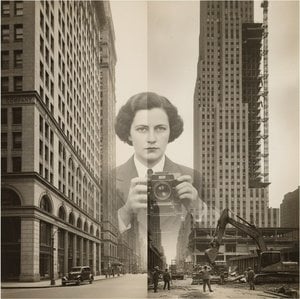
His initial work focused on Coventry itself, a city rebuilding after extensive bombing during World War II. This period instilled in him a keen eye for detail and an understanding of how photography could be used to reflect both the hardship and resilience of communities. It was a time of learning the fundamentals—mastering light, composition, and the narrative power of the image. However, even within these early documentary projects, hints of his future aesthetic sensibilities began to emerge – a subtle layering of elements, an interest in texture, and a growing desire to move beyond simple representation.
A Shift Towards Introspection and Landscape
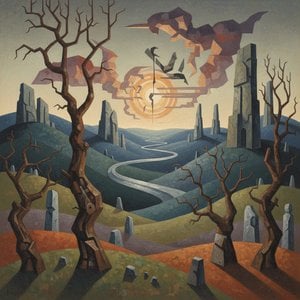
The 1970s witnessed a significant turning point in Blakemore’s artistic trajectory. He began to distance himself from the directness of documentary photography, seeking instead a more introspective approach. This shift wasn't abrupt but rather a gradual evolution fueled by his studies at Wolverhampton and a growing fascination with Eastern philosophy and tantric practice. The landscapes he started creating were not merely depictions of places; they were explorations of inner states, imbued with a sense of spirituality and transcendence.
This period saw the development of his signature style—often characterized by long exposures, soft focus, and a deliberate manipulation of light and shadow. He wasn’t interested in capturing reality as it was but rather in revealing its hidden dimensions, its underlying energies. His work began to explore themes of time, memory, and the interconnectedness of all things. This move resonated with a broader trend within British photography at the time—a desire to use the medium not just as a tool for recording but as a means of personal expression and philosophical inquiry.
Recognition and Artistic Achievements
Blakemore’s dedication to his craft didn't go unnoticed. Throughout his career, he received several accolades, including Arts Council awards and a British Council travelling exhibition. A particularly significant achievement was the Fox Talbot Award for Photography in 1992—a testament to his innovative approach and mastery of photographic techniques. In 1998, he was named an honorary member of the Royal Photographic Society, solidifying his position as a leading figure within the UK photography community.
His work has been exhibited globally, captivating audiences with its evocative power and unique vision. He became known for his meticulous printing process, often working in the darkroom for extended periods to achieve the desired effect. This dedication to craftsmanship—the physical act of creating a print—was integral to his artistic philosophy. It wasn’t simply about capturing an image but about transforming it into something tangible, something that could resonate with viewers on a deeper level.
Legacy and Historical Significance
Paul Blakemore's contribution to British photography lies in his ability to seamlessly blend documentary roots with introspective exploration. He demonstrated how the medium could be used not just to record the world but to reveal its hidden depths, its spiritual dimensions. His influence can be seen in the work of numerous contemporary photographers who seek to move beyond simple representation and explore themes of memory, identity, and the interconnectedness of all things.
His landscapes, in particular, stand as a testament to his unique vision—evocative images that invite viewers to contemplate their own relationship with nature and the inner landscape. He wasn’t merely photographing places; he was creating spaces for contemplation, inviting us to slow down, observe, and connect with something larger than ourselves. Blakemore's work continues to inspire and challenge, reminding us of the power of photography to transcend the boundaries of reality and reveal the beauty that lies hidden within.