Patrick Allan Fraser: A Visionary Painter and Architectural Influencer
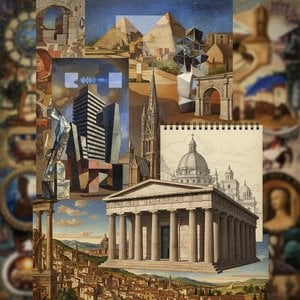
Patrick Allan Fraser (1813 – 1890) stands as a prominent figure in Scottish art history, celebrated for his evocative landscapes and pioneering role in establishing Scotland’s first art college. Born in Arbroath to Robert Allan, a weaving merchant, Fraser initially pursued legal studies but was redirected towards artistic pursuits by his grandfather's house-painting business and encouragement at the Trustees’ Academy. This formative experience cemented his passion for visual arts and led him to forge an enduring partnership with Robert Scott Lauder, embarking on a transformative journey to Rome in 1835 where he absorbed the grandeur of classical art and architecture.
- Early Influences: Fraser's artistic sensibilities were profoundly shaped by Romanticism, particularly the dramatic landscapes of Caspar David Friedrich, which instilled in him a fascination with capturing sublime beauty and conveying emotional depth.
- Parisian Period (1839-1842): Settling briefly in Paris allowed Fraser to immerse himself in the vibrant artistic milieu of the era, honing his skills and experimenting with Impressionistic techniques – though he ultimately returned to Scotland’s serene countryside.
Architectural Contributions & Hospitalfield House
Fraser's artistic vision extended beyond painting; he became a respected architect, dedicating himself to revitalizing historic buildings and designing innovative spaces that prioritized functionality alongside aesthetic appeal. His most ambitious project was the reconstruction of Blackcraig Castle Estate in Strathardle, where he skillfully blended traditional craftsmanship with modern design principles. Notably, Fraser oversaw the transformation of an eighteenth-century barn into Hospitalfield House – a breathtaking Arts and Crafts masterpiece—a testament to his commitment to fostering artistic creativity and preserving Scotland’s architectural heritage. The house itself embodies a harmonious blend of local materials and meticulous detailing, reflecting Fraser's belief in celebrating regional identity while embracing progressive design ideas.
- Hospitalfield House: Designed with the intention of creating an environment conducive to artistic development, Hospitalfield House stands as a landmark of Scottish Arts and Crafts architecture.
- Architectural Critique: Fraser’s writings and lectures showcased his discerning eye for architectural excellence, advocating for thoughtful design that considers both beauty and practicality.
Illustrative Legacy & Walter Scott's ‘The Antiquary’
Fraser gained considerable renown as an illustrator, notably capturing the spirit of Walter Scott’s “The Antiquary” with a series of meticulously rendered watercolors. This project exemplifies his mastery of tonal subtlety and compositional balance—skills that would serve him well throughout his artistic career. The resulting illustrations are considered to be among the finest examples of Victorian watercolor art, demonstrating Fraser's ability to convey narrative emotion through nuanced visual storytelling.
Later Life & Artistic Legacy
Following Elizabeth Allan Fraser’s death in 1873, Fraser continued his architectural pursuits and established the Patrick Allan-Fraser Trust to establish Hospitalfield House as an art college “for the assistance and encouragement of young men not having means of their own who shall be desirous of following up one or more of the professions of painting, sculpture, carving in wood, architecture and engraving.” He also designed a mausoleum for his wife—the Fraser Mortuary Chapel—a poignant reflection of his personal life and artistic sensibilities. Elected President of the British Academy Rome in 1873, Fraser remained active in scholarly pursuits until his passing in 1890, leaving behind an enduring legacy as both a painter and architect who championed artistic excellence and contributed significantly to Scotland’s cultural landscape. His work continues to inspire admiration for its beauty, technical skill, and unwavering dedication to preserving artistic tradition.