A Legacy of Grandeur: The Life and Art of Noël Hallé
In the luminous landscape of 18th-century French painting, few names evoke the intersection of classical reverence and royal splendor quite like Noël Hallé. Born in Paris in 1711 into a family steeped in the traditions of the brush, Hallé was destined for a life defined by the pursuit of aesthetic perfection. As the son of the painter Claude-Guy Hallé, his early years were an immersion in the nuances of color and composition, providing him with a foundational mastery that would later allow him to navigate the complex demands of the French court. His journey was not merely one of inherited skill, but of profound intellectual expansion, driven by a desire to capture the monumental weight of history through the delicate lens of the Baroque style.
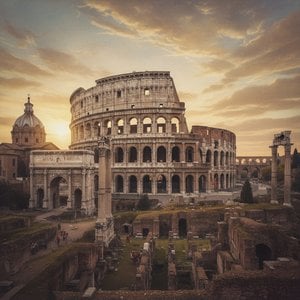
The defining chapter of Hallé’s artistic development began with his triumph in 1736, when he secured the prestigious Prix de Rome. This achievement served as his gateway to the eternal city, where from 1737 until 1744, he resided within the hallowed halls of the Académie Royale Française. It was in Rome that Hallé’s artistic soul truly encountered its greatest inspirations. The sheer scale of Roman architecture and the dramatic tension found in classical sculpture left an indelible mark upon his psyche. Under the guidance of masters like Jean-François de Troy, he learned to synthesize the rigorous discipline of classical technique with a burgeoning sense of theatricality. His works from this period reflect a deep fascination with mythological narratives and historical epochs, rendered with a meticulous attention to detail that breathes life into ancient stone and legend.
Mastery of Technique and Royal Patronage
Upon his return to France, Hallé’s reputation preceded him, leading to an illustrious career characterized by high-stakes commissions and royal recognition. During the reign of Louis XV, he became a sought-after talent for the most prestigious institutions in Europe. His ability to weave complex historical narratives into visually arresting compositions made him an ideal choice for the Gobelins Manufactory and the opulent halls of Versailles. Hallé possessed a rare gift for portraying the grandeur of aristocratic life, capturing the quiet dignity of the elite amidst settings of unparalleled luxury. Whether decorating the Grand Trianon or the Petit Trianon, his brushwork served to reinforce the prestige of the French monarchy, blending the monumental with the intimate.
The technical brilliance of Hallé’s oeuvre lies in his sophisticated use of light and color. He did not merely paint scenes; he constructed atmospheres. His palettes were often vibrant yet controlled, capable of conveying both the intellectual rigor required by academic standards and the emotional intensity necessary to engage the viewer's heart. In his historical paintings, one can observe a seamless integration of:
- Classical Precision: A dedication to anatomical accuracy and architectural integrity derived from his Roman studies.
- Baroque Drama: The use of chiaroscuro and dynamic movement to elevate historical events into epic spectacles.
- Narrative Depth: An ability to imbue even the smallest figure with a sense of purpose and emotional resonance.
Historical Significance and Enduring Impression
As the 18th century progressed, Hallé’s work stood as a testament to the enduring power of classical ideals in an era of shifting tastes. While the art world began to move toward new sensibilities, his commitment to the grandeur of the past provided a sense of continuity and cultural stability for the French state. His contributions to the decorative arts and historical painting helped define the visual identity of the Louis XV era, leaving behind a legacy that celebrates the marriage of scholarly knowledge and artistic intuition.
Today, the works of Noël Hallé remain vital windows into a lost world of elegance and epic storytelling. He remains a pivotal figure for scholars and art enthusiasts alike, representing a moment in history when the brush was used to bridge the gap between the ancient glories of Rome and the contemporary splendor of Paris. His life, spanning from his birth in 1711 to his passing in 1781, serves as a complete arc of an artist who mastered the art of making history live again on canvas.