Nicolas Baudesson: A Master of French Floral Still Life
Narodzony w Troyes, we Francji, w 1611 roku, Nicolas Baudesson stał się znaczącą postacią w rozwijającym się świecie malarstwa francuskiego XVII wieku. Jego życie zawodowe skupiało się na fascynującym gatunku malarstwa – przedstawianiu ekskluzywnych bukietów i kwiatów – co umocniło jego reputację jako „najlepszego malarza kwiatowego swojego czasu” (Benezit: “Le meilleur peintre de fleurs de l'époque”). Jego historia to ewolucja artystyczna, ukształtowana przez szkolenie pod okiem wujek Jacques Linard i inspirowana zarówno precyzją detali charakterystyczną dla mistrzów flamandzkich, jak i dramatycznym wdziękiem malarstwa barokowego włoskiego.
Wczesny rozwój artystyczny Baudessona był ściśle związany z obecnością jego rodziny w dobrze znanym paryskim środowisku artystycznym. Jacques Linard, ceniony sam malarz, zapewnił Baudessonowi podstawowe wykształcenie w zakresie techniki i kompozycji. Jednak kluczowym momentem okazało się przeniesienie Baudessona do Rzymu w latach 30-tych XVII wieku. Ten okres pobytu pozwolił mu zanurzyć się w nurtach artystycznych krążących po świecie włoskim – sferze znanej z bogatych kolorów, dynamicznego oświetlenia i teatralnych aranżacji. Absorbował wpływy zarówno precyzyjnych studiów botanicznych, podtrzymywnych przez flamandzkich mistrzów, jak De Heem, jak i luksusowego, dekoracyjnego stylu bukietów bankowych wywodzących się z Włoch, reprezentowanego przez Jean-Baptiste Monnoyer.
The Art of the Bouquet: Technique and Style
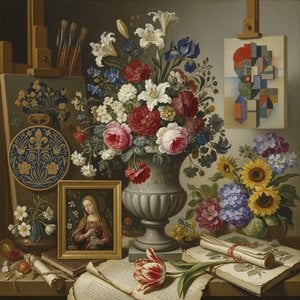
Obrazy Baudessona charakteryzują się niezwykłą równowagą między obserwacją a interpretacją artystyczną. W odróżnieniu od niektórych współczesnych mu malarzy, którzy stawiali na dokładne odwzorowanie natury, Baudesson sprawnie łączył realizm flamandzki z teatralnym wdziękiem włoskim. Jego kompozycje często przedstawiały proste stoliki lub tkaniny jako tło dla bukietów kwiatowych, unikając skomplikowanych rekwizytów, które często znajdowały się w pracach Monnoyer’a. Ten oszczędny sposób pozwalał delikatnej urodzie i skomplikowanym detalom samych kwiatów stać się głównym punktem zainteresowania.
Kluczowym elementem stylu Baudessona była mistrzowska umiejętność wykorzystania kolorów. Preferował bogate, nasycone barwy – głębokie czerwienie, żywe błękity i luminescencyjne żółcie, które oddawały esencję każdego kwiatu. Jego pędzle były luźne i ekspresyjne, wyrażając ruch i życie w aranżacji. Artysta zwracał uwagę na szczegóły nie tylko poprzez ich reprezentację, ale także dążył do wywołania zapachu i faktury kwiatów za pomocą swojej techniki. Zwracano uwagę na to, aby oddać ulotność piękna kwiatu.
Influences and Training
Baudesson’s artistic journey was deeply rooted in his family's legacy within the Parisian art scene. His uncle, Jacques Linard, a respected painter himself, provided him with a foundational education in technique and composition. However, Baudesson’s relocation to Rome during the 1630s proved pivotal, exposing him to the vibrant artistic currents of the Italian Renaissance. He immersed himself in the works of Flemish masters like De Heem, studying their meticulous botanical studies and masterful use of light and shadow. Simultaneously, he was influenced by the opulent banquet still lifes prevalent in Italy, particularly those of Jean-Baptiste Monnoyer, known for their dramatic compositions and theatrical flair.
The influence of Jacques Linard is evident in Baudesson’s early works, characterized by a balanced composition and attention to detail. However, his time in Rome broadened his artistic horizons, introducing him to the vibrant colors and dynamic lighting favored by Italian painters. He learned to capture the fleeting beauty of flowers with a sense of drama and theatricality, incorporating elements of both Flemish realism and Italian Baroque style.
Notable Works and Legacy
Despite never signing his paintings, several works attributed to Baudesson have survived, offering valuable insights into his artistic practice. The “Bouquet of Flowers” held in the Musée des Beaux-Arts in Troyes is a particularly compelling example, showcasing his ability to capture the fleeting beauty of a floral arrangement with remarkable precision and sensitivity. Other notable pieces include arrangements within the Palace of Versailles, reflecting his recognition by the French court.
Baudesson’s influence extended beyond his own lifetime. His work was engraved by Mariette in the 18th century, ensuring its continued visibility and appreciation for future generations. Furthermore, he left a lasting legacy through his son, Jean François Baudesson, who followed in his father's footsteps as a painter of flowers and fruit, continuing the family’s artistic tradition.
Historical Context and Significance
Baudesson’s rise to prominence coincided with a period of significant change within the art world. The transition from Mannerism to Baroque painting was underway, and artists were increasingly experimenting with new techniques and approaches. Baudesson's work exemplifies this shift, blending elements of both earlier styles while forging his own distinctive voice. His focus on floral still life reflects a broader cultural trend – the growing appreciation for nature and its beauty during the 17th century.
His place as “the best flower painter of his time” is a testament to his skill, dedication, and artistic vision. Nicolas Baudesson’s paintings continue to captivate viewers with their exquisite detail, vibrant colors, and evocative portrayal of nature's fleeting beauty, solidifying his position as a key figure in the history of French art.
Pytania i odpowiedzi
Czy mogę odwiedzić wirtualne muzeum dzieł Nikolaus Baudesson?
Możliwa jest wirtualna wizyta: strona Muzeum 3D artysty Nikolaus Baudesson prezentuje dzieła twórcy w galerii trójwymiarowej.
Ile dzieł Nikolaus Baudesson można przejrzeć w katalogu?
Możesz przeglądać 2 dzieł sztuki dzieł autorstwa Nikolaus Baudesson na stronie Wszystkie dzieła sztuki.
Gdzie mogę zobaczyć dzieła Nikolaus Baudesson w porządku chronologicznym?
Dzieła Nikolaus Baudesson można obejrzeć w porządku chronologicznym na stronie Oś czasu dzieł artysty.