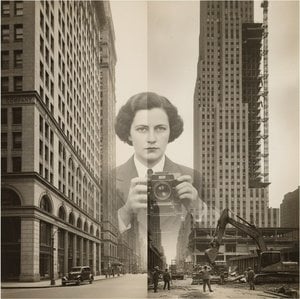
A Contemplation of Yearning: The Photographic World of Nguan Han Lui
Nguan Han Lui, known simply as Nguan, is a Singaporean photographer whose work resonates with a quiet power, an ability to distill the complex emotions of urban life into strikingly beautiful and often melancholic images. Born in Singapore in 1975, Nguan’s artistic journey began not as a deliberate pursuit of photography, but rather as a means of understanding his own relationship with the rapidly changing landscape of his homeland and the wider world. He is an artist who doesn't simply *capture* scenes; he excavates feelings – the loneliness within crowds, the fleeting beauty of the mundane, and the subtle anxieties of globalization.
Early Life and Artistic Development
Nguan’s formative years in Singapore were marked by a sense of displacement, a feeling that would later become a central theme in his work. He pursued formal education at Northwestern University, but it was through self-directed exploration with the camera that he truly found his voice. Unlike photographers drawn to grand narratives or dramatic events, Nguan turned inward, focusing on the everyday rhythms and overlooked corners of Singaporean life. This early period saw him develop a distinctive aesthetic – characterized by soft lighting, muted colors, and a deliberate framing that often isolates figures within expansive urban spaces. He wasn’t interested in presenting Singapore as a postcard-perfect tourist destination; instead, he sought to reveal its hidden vulnerabilities and the quiet struggles of its inhabitants.
The Breakthrough: ‘Shibuya’ and Global Recognition
Nguan's breakthrough came with the publication of his first book, ‘Shibuya’ (2010). This project, a series of photographs taken in Tokyo’s iconic Shibuya district, immediately garnered critical acclaim. It wasn’t a celebration of the bustling energy of Shibuya, but rather an exploration of its isolating effects – the sense of anonymity and alienation experienced within a sea of faces. The book was named one of the best of the year by PDN Annual, catapulting Nguan onto the international photography scene. ‘Shibuya’ demonstrated his unique ability to transform seemingly ordinary scenes into powerful statements about contemporary life, resonating with audiences worldwide who recognized their own experiences reflected in his images.
‘How Singapore Became a Garden City’: Reclaiming a National Narrative
Following the success of ‘Shibuya’, Nguan returned his focus to Singapore, culminating in the publication of ‘How Singapore Became a Garden City’ (2017). This project is perhaps his most ambitious and conceptually complex work to date. It's not simply a documentation of Singapore’s famed horticultural achievements; it’s a critical examination of the nation’s relentless pursuit of order, control, and artificial perfection. Through carefully composed images, Nguan subtly questions the cost of this transformation – the loss of natural landscapes, the suppression of spontaneity, and the emotional distance created by meticulously planned environments. The book is a poignant meditation on identity, memory, and the complexities of nation-building.
Exhibitions, Influences, and Lasting Significance
Nguan’s work has been widely exhibited in galleries and museums around the globe, including prestigious institutions such as the National Museum of Singapore, the Singapore Art Museum, and the Museum of Contemporary Photography in Chicago. His photographs have also appeared in prominent publications like CNN, The New Yorker, and The Guardian. While he doesn’t explicitly cite specific photographic influences, his work shares affinities with the New Topographics movement – a style that emphasizes objective documentation of landscapes – and the quiet realism of artists like Robert Frank. However, Nguan's work transcends simple categorization; it possesses a unique emotional depth and poetic sensibility that sets him apart.
- His photographs are not merely images but invitations to contemplate the human condition in an increasingly globalized world.
- Nguan’s ability to find beauty in the mundane, coupled with his subtle critique of societal norms, has established him as a significant voice in contemporary photography.
- He challenges viewers to look beyond surface appearances and question the narratives that shape our understanding of place and identity.
Nguan Han Lui’s legacy lies not just in his stunning photographs but also in his ability to evoke a sense of empathy and introspection. He is an artist who reminds us that even within the most seemingly ordinary environments, there exists a wealth of hidden emotions waiting to be discovered.