Michele Pace del Campidoglio: A Baroque Master of Floral Still Life
Michele Pace del Campidoglio (1610–probably 1670) stands as a prominent figure in the artistic landscape of Rome during the Baroque era, celebrated primarily for his breathtakingly detailed and opulent flower and fruit compositions. Though biographical details remain somewhat sparse compared to contemporaries like Caravaggio or Rembrandt, his legacy endures through surviving paintings that exemplify the grandeur and emotional intensity characteristic of the period. Born in Rome, Pace del Campidoglio’s artistic journey unfolded amidst a vibrant cultural milieu fueled by papal patronage and burgeoning humanist ideals.
Early Life & Training: Precise information regarding Pace del Campidoglio's formative years is elusive. However, it is believed he received his initial training under Federico Zuccarelli, a celebrated Roman painter known for his masterful depictions of botanical subjects—a stylistic influence that would profoundly shape Pace’s artistic vision.
Roman Workshop & Patronage: Following Zuccarelli's tutelage, Pace del Campidoglio established himself in Rome’s artistic community and gained recognition through commissions from influential patrons, including Cardinal Scipione Borghese. This association provided him with invaluable opportunities to hone his skills and explore ambitious projects.
Style & Technique: The Language of Flowers
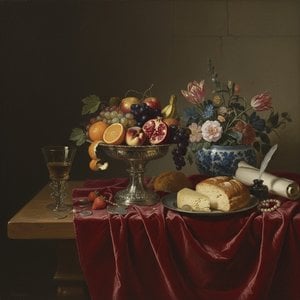
Pace del Campidoglio’s distinctive style is instantly recognizable by its meticulous attention to botanical accuracy combined with a dramatic use of chiaroscuro—the interplay of light and shadow—to heighten emotional impact. He meticulously rendered individual petals, stems, and leaves with astonishing realism, capturing the subtle nuances of color and texture that conveyed both beauty and fragility. This dedication to observation was not merely stylistic; it reflected a broader humanist preoccupation with understanding the natural world. His canvases pulsate with life, inviting viewers into immersive experiences of verdant gardens and overflowing fruit baskets. The artist skillfully employed atmospheric perspective—a technique pioneered by artists like Zuccarelli—to create depth and illusionistic space, further enhancing the visual drama of his works.
Floral Composition: Pace del Campidoglio’s flower paintings are particularly noteworthy for their masterful arrangements. He eschewed simple bouquets in favor of complex compositions that incorporated multiple species of flowers, creating visually arresting displays that conveyed symbolic meanings—often referencing themes of resurrection and divine grace.
Fruit Still Life: Similarly, his fruit still lifes showcased an impressive understanding of anatomical detail and textural variation. The artist skillfully depicted the glistening surfaces of peaches, plums, and grapes, capturing their lusciousness with remarkable precision.
Influences & Artistic Legacy
Pace del Campidoglio’s artistic sensibilities were undoubtedly shaped by the prevailing stylistic currents of his time—particularly those championed by Federico Zuccarelli and Abraham Brueghel. However, he also absorbed influences from artists working in Naples, where Baroque painting flourished under papal patronage. The influence of Giuseppe Cortona and Johann Matthias Moller is evident in Pace del Campidoglio’s use of dramatic lighting and idealized figures.
Notable Works & Recognition
Among Pace del Campidoglio's surviving paintings are “Still Life with Grapes” and “Still Life of Fruit with an Urn in a Garden,” masterpieces that exemplify his stylistic prowess and technical mastery. These works continue to captivate audiences today, demonstrating the enduring power of Baroque art to evoke emotion and inspire contemplation. His contribution to the artistic heritage of Rome remains significant, securing his place as one of the foremost practitioners of floral still life during the Baroque period.
Zespół Redakcyjny WahooArt.com
Quiz wiedzy o sztuce
Do każdego pytania dotyczy tylko jedna poprawna odpowiedź.
Pytanie 1:
Where was Michele Pace del Campidoglio born?
Pytanie 2:
What artistic style is commonly associated with Michele Pace del Campidoglio's paintings?
Pytanie 3:
Michele Pace del Campidoglio is renowned for his depictions of:
Pytanie 4:
Which museum houses a significant collection of Michele Pace del Campidoglio's artworks?
Pytanie 5:
Who influenced Michele Pace del Campidoglio’s artistic vision?
Embark on a sophisticated journey through the history of still life art. From Dutch Golden Age masterpieces to Baroque opulence, explore the profound symbolism and timeless beauty of the world's most exquisite table compositions.
Embark on a sophisticated journey through Italian Baroque art. Discover the dramatic interplay of light and emotion in Caravaggio’s masterpieces and explore how to bring this timeless grandeur into your collection with expert art insights.