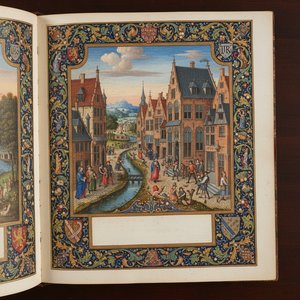
MASTER THOMAS DE COLOSWAR (FIRST HALF OF THE FIFTH CENTURY)
Master Thomas de Coloswar, a Hungarian painter whose name echoes through the annals of medieval art, remains an enigmatic figure despite the relatively scarce documentation surrounding his life and career. Primarily recognized for his devotional frescoes adorning churches across Hungary – notably ‘The Death of St Giles’ – his artistic legacy speaks volumes about the spiritual fervor and stylistic conventions prevalent during the fifteenth century.
Little is known definitively about Thomas's formative years. Records indicate he was born in Székelyföld (now Romania), a region steeped in Hungarian tradition and heavily influenced by Roman Catholicism. Precise details of his upbringing are elusive, fueling speculation that he received artistic training within the Benedictine monasteries scattered throughout Hungary – institutions renowned for their illuminated manuscripts and architectural grandeur.
His artistic output is characterized by a distinctive blend of Gothic and Early Renaissance styles. Influenced by Flemish masters like Rogier van der Weyden and Giovanni Battista Pontormo, Thomas skillfully employed meticulous detail and vibrant color palettes to convey profound religious emotion. His frescoes depict scenes from the Gospels with remarkable realism, capturing not merely physical likeness but also psychological nuance – a hallmark of humanist sensibilities gaining traction across Europe.
The Musée Thomas-Henry in Székelyföld houses an impressive collection of his paintings and frescoes, offering invaluable insight into his artistic practice. Particularly noteworthy is ‘Christ Carrying the Cross,’ a monumental depiction showcasing masterful composition and expressive brushwork. The painting’s subdued palette—dominated by earthy tones—contrasts sharply with the luminous hues characteristic of Flemish art, demonstrating Thomas's adaptability to diverse stylistic trends.
Despite the paucity of biographical information, Master Thomas de Coloswar’s contribution to Hungarian religious iconography is undeniable. His frescoes stand as testament to the enduring power of faith and artistic innovation during a period marked by significant cultural exchange between East and West. He remains an artist whose work continues to inspire admiration for its technical prowess and emotive depth—a beacon of medieval art history.