The Formative Echoes of Łódź
Born amidst the industrial pulse of Łódź, Poland, Leon Hirszenberg’s early years were steeped in a cultural tapestry woven from both Jewish tradition and the burgeoning energy of a modernizing city. His artistic journey was profoundly shaped by the presence of his brother, Samuel Hirszenberg, whose mastery of social realism and Impressionistic light provided a guiding star for Leon’s own creative explorations. Seeking to refine this innate talent, he traversed the prestigious academic corridors of the Academy of Fine Arts in Krakow and Munich, absorbing the rigorous traditions of European art while simultaneously preparing to embrace the more fluid, emotive movements of his era.
A Symphony of Blue and Green
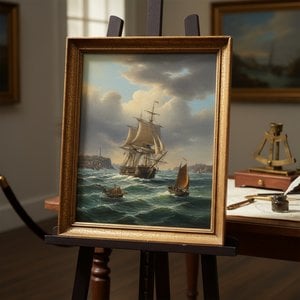
As his style matured, Hirszenberg moved away from the heavy narratives of his contemporaries toward a more intimate, atmospheric engagement with the natural world. He found profound inspiration in the rugged coastlines of Brittany, where the salt-sprayed landscapes and the rhythmic toil of local communities offered a canvas for his expressive brushwork. His palette, often dominated by deep blues and verdant greens, captured the ephemeral quality of light as it danced across the Atlantic waves. In his celebrated masterpiece, Fishermen (1904), one can witness this technical brilliance; the painting serves as a luminous testament to the dignity of rural life, rendering the arduous task of hauling nets at dawn with a shimmering, almost tactile vitality that breathes life into every stroke.
The Enduring Resonance of an Artist
Beyond the mere depiction of scenery, Hirszenberg’s work carries the weight of a complex historical narrative, embodying the themes of resilience and identity that defined the early 20th century. His ability to blend the meticulous detail of academic training with the spontaneous emotion of Impressionism allowed him to create works that are both grounded in reality and elevated by spirit. Today, his legacy remains an essential thread in the fabric of Polish Impressionism and Jewish art history, reminding us of a period where the beauty of the landscape and the dignity of the human condition were captured through a lens of profound, unyielding authenticity.
Pytania i odpowiedzi
Czy mogę przeglądać dzieła Leon Hirszenberg według tematyki?
Dzieła artysty Leon Hirszenberg można przeglądać według tematów na stronie Atlas tematów.
Gdzie mogę zobaczyć dzieła Leon Hirszenberg w wirtualnej galerii 3D?
Wirtualna Galeria 3D artysty Leon Hirszenberg to strona prezentująca jego dzieła w wirtualnej galerii trójwymiarowej.
Czy mogę przeglądać dzieła Leon Hirszenberg według nastroju?
Strona Sztuka według nastroju artysty prezentuje dzieła Leon Hirszenberg pogrupowane według ich nastroju.