DARMOWA KONSULTACJA ARTYSTYCZNA

x

Krótka biografia

  • Copyright status: Public domain
  • Lifespan: 69 years
  • Top-ranked work: ST PACHOMIUS THE GREAT
  • Born: 1781, Bulgaria
  • Museums on APS:
    • National Gallery of Bulgaria
    • National Gallery of Bulgaria
    • National Gallery of Bulgaria
    • National Gallery of Bulgaria
    • National Gallery of Bulgaria
  • Rozwiń…
  • Art period: 19th Century
  • Works on APS: 1
  • Top 3 works: ST PACHOMIUS THE GREAT
  • Nationality: Bulgaria
  • Died: 1850

Quiz o sztuce

Na każde pytanie istnieje tylko jedna poprawna odpowiedź.

Pytanie 1:
What artistic technique did Krastiu Zahariev primarily utilize in his paintings?
Pytanie 2:
Who taught Krastiu Zahariev the art of iconography?
Pytanie 3:
Where is St Pachomius The Great currently housed?
Pytanie 4:
What was Krastiu Zahariev known for within the Zahariev family?

Krastiu Zahariev: A Master of Bulgarian Iconography

Krastiu Zahariev (1781 – 1850) stands as a pivotal figure in the annals of Bulgarian art history, embodying the spirit and artistic traditions of his era. Born into a family steeped in artistic excellence—specifically the renowned Zahariev clan—he inherited a legacy of iconographic skill that would define his life’s work and solidify his place among Bulgaria's most celebrated painters. His father, Zahariy the Elder, himself an accomplished iconographer, instilled within Krastiu a profound understanding of this venerable art form, shaping him into a craftsman dedicated to preserving Bulgarian cultural heritage.

Early Life and Artistic Training

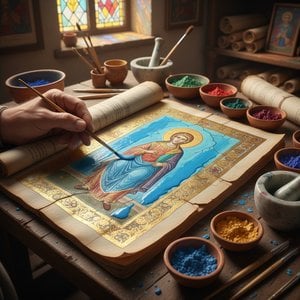
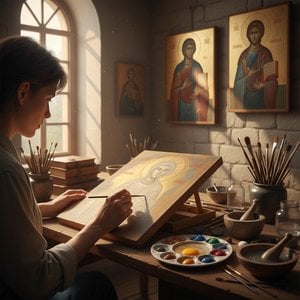
Krastiu’s formative years were spent under his father's tutelage, where he honed his technique in the meticulous craft of icon painting. This tradition demanded mastery of tempera—a pigment mixture consisting of egg yolk and pigment—applied onto wooden panels. The resulting surface achieved remarkable luminosity and durability, characteristics that would become hallmarks of Krastiu’s distinctive style. More than just replicating religious imagery, this training fostered a deep appreciation for symbolism and narrative within Orthodox Christianity – a cornerstone of Bulgarian identity during the 18th and 19th centuries.

Contributions to the National Revival

Krastiu Zahariev's artistic endeavors coincided with Bulgaria’s fervent embrace of the National Revival—a period marked by renewed interest in Bulgarian language, literature, and cultural traditions. He became a champion of this movement, producing paintings that powerfully conveyed its values of piety, patriotism, and national pride. His canvases frequently utilized tempera as their primary medium, mirroring the stylistic preferences of his family and reflecting the broader artistic currents circulating throughout Bulgaria at the time.

Notable Works: St Pachomius The Great

Among Krastiu’s most enduring achievements is “St Pachomius the Great,” a monumental icon housed within Sofia National Gallery. This masterpiece exemplifies Krastiu's technical prowess and his ability to imbue religious imagery with profound emotional resonance. The painting skillfully employs tempera pigments, capturing the saint’s serene countenance and conveying a sense of spiritual contemplation. Its enduring presence in Bulgaria’s national art collection underscores Krastiu Zahariev’s contribution to preserving Bulgarian artistic heritage for generations to come.

Legacy and Historical Significance

Krastiu Zahariev's influence extends beyond his individual creations; he represents the culmination of centuries-old iconographic traditions within Bulgaria. His work serves as a testament to the enduring power of art to communicate faith, inspire national identity, and transmit cultural values across time. Further exploration into Krastiu’s life and oeuvre can be found at WahooArt: https://WahooArt.com/@/krastiu-zahariev and the Sofia National Gallery: https://SofiaNationalGallery.bg/.