A Voice from the Plains: Exploring the Legacy of kills two (Sicangu Lakota)
kills two (sicangu lakota), a Sioux artist whose work embodies the spirit of his people and captures pivotal moments in Plains Indian history, remains an enigmatic figure within Native American art. While biographical details are scarce—primarily gleaned from museum records—his distinctive ledger-style paintings offer invaluable insight into the daily life, traditions, and worldview of the Sicangu Lakota tribe during the late 19th and early 20th centuries.
- Early Life & Training: Information regarding kills two’s formative years is limited. He was born in South Dakota, within the Sicangu Nation, a region deeply rooted in oral tradition and ancestral connection to the land. Precise details about his formal artistic training are unavailable, suggesting that his skill developed organically through observation of and participation in Lakota cultural practices.
- The Ledger Style: kills two’s artistic signature is undeniably his mastery of the ledger style—a technique pioneered by Plains Indian artists to document their experiences during periods of contact with European settlers. This method involved meticulously transferring images onto sheets of tanned buffalo hide using ink made from soot and gum arabic, creating detailed narratives that blended realism with symbolic representation.
- Subject Matter & Symbolism: His paintings frequently depict scenes of hunting expeditions, ceremonies honoring ancestors, and depictions of everyday life—activities crucial to the survival and identity of the Lakota people. Recurring motifs include buffalo skulls, eagle feathers, and geometric patterns that hold deep spiritual significance within Lakota cosmology. These symbols communicate stories about resilience, respect for nature, and adherence to ancestral beliefs.
Notable Works & Artistic Development
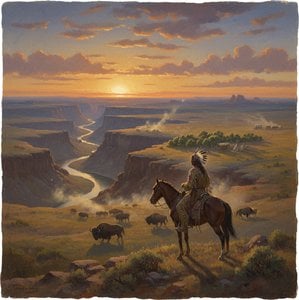
Despite the paucity of documentation, kills two produced a substantial body of work—primarily ledger paintings—that are housed in museums across the United States. Among his most celebrated pieces is “Buffalo Hunt,” which portrays a dramatic depiction of Lakota warriors pursuing buffalo with spears and bows. The composition’s careful arrangement and expressive use of shading exemplify the artist's technical prowess and contribute to the painting's powerful narrative impact. Further research into surviving examples continues to illuminate kills two’s artistic evolution.
Influence & Context: Preservation Efforts
kills two’s work stands as a testament to the enduring legacy of Lakota artistry during a transformative era marked by westward expansion and governmental policies aimed at assimilating Native American cultures. His ledger paintings serve as invaluable historical records, offering perspectives on Plains Indian life that complement written accounts from European observers. The Indian Arts and Crafts Board actively supports efforts to preserve these artworks and promote understanding of Lakota artistic traditions.
- IACB Support: Recognizing the importance of safeguarding cultural heritage, the IACB collaborates with museums and scholars to ensure that kills two’s paintings—and countless others—remain accessible for future generations. Initiatives include conservation projects aimed at stabilizing fragile hides and facilitating scholarly research into their iconography and artistic techniques.
- Contemporary Significance: Today, kills two's legacy extends beyond the confines of museum collections. His art inspires artists and scholars alike to explore themes of cultural identity, storytelling, and the relationship between humans and the natural world—topics that resonate powerfully across cultures and time periods.
Concluding Remarks: A Continuing Dialogue
kills two (sicangu lakota)’s contribution to Native American art is characterized by a profound respect for Lakota traditions and an unwavering commitment to documenting the history of his people. Though shrouded in mystery, his ledger paintings continue to speak volumes about resilience, spirituality, and the enduring power of visual storytelling—a dialogue that persists across generations and underscores the importance of preserving cultural heritage.