


José dos Reis Carvalho: A Life in Brazilian Art
José dos Reis Carvalho was a significant figure in 19th-century Brazilian art, serving as a painter, illustrator, professor, and photographer. His life spanned a period of considerable change for Brazil, and his work reflects both the artistic trends of his time and the unique cultural landscape of his homeland.
Early Life and Education
Born around 1800 in Ceará, Brazil, Carvalho’s early life remains somewhat obscure. However, he is known to have been among the first class admitted to the Imperial Academy of Fine Arts in Rio de Janeiro in 1826. This marked a pivotal moment in his artistic development.
Influenced by the renowned French painter Jean-Baptiste Debret, Carvalho received rigorous training in classical techniques and historical painting. Debret, who had served as court painter to Dom João VI during the Portuguese royal family’s exile in Brazil, played a crucial role in establishing artistic education within the country.
Career and Artistic Development
Carvalho quickly established himself as a skilled artist and educator. In 1828, he became a professor of drawing at the Military School, and by 1831, he was appointed to the faculty of the Imperial Academy of Fine Arts – a testament to his growing reputation.
His artistic style initially focused on historical painting, reflecting the academic traditions he learned from Debret. However, Carvalho also demonstrated versatility in other genres, including illustration and portraiture. He participated in early exhibitions organized by the Academy in 1829 and 1830, showcasing his emerging talent.
Major Achievements and Contributions
- Collaboration on Historical Painting: In the 1840s, Carvalho assisted Manuel de Araújo Porto-Alegre in creating a large-scale painting commemorating Brazil’s independence. This project highlights his involvement in documenting significant national events.
- Aquarelles of Rio de Janeiro Customs: During the 1850s, Carvalho embarked on a series of aquarelles (watercolor paintings) that captured scenes of daily life and customs in Rio de Janeiro. These works provide valuable insights into Brazilian society during this period.
- Scientific Exploration Commission: Between 1859 and 1861, Carvalho participated as an artist member of the section of botany and zoology within a scientific exploration commission to Ceará. This demonstrates his ability to combine artistic skill with scientific observation.
- Photography & Photo-Painting: From 1867 to 1870, he engaged in commercial photography and photo-painting, showcasing his adaptability to new technologies.
Later Life and Legacy
Carvalho continued to exhibit his work throughout his career, participating in numerous fine arts exhibitions including those held in 1843, 1844, 1848, 1849, 1865, and 1872. He was “jubilated” (retired with honors) in 1865 and later became an honorary professor of the Academy in 1879.
He passed away around 1893 in Rio de Janeiro, leaving behind a legacy as a dedicated artist, educator, and documentarian of Brazilian life. While not as widely celebrated as some of his contemporaries, José dos Reis Carvalho played an important role in the development of Brazilian art during the 19th century.
Historical Significance
Carvalho’s work is significant for its representation of Brazilian society and culture during a period of transition. His paintings and illustrations offer valuable historical documentation, while his involvement in artistic education helped to shape future generations of Brazilian artists. He embodies the blend of European academic training with uniquely Brazilian subject matter that characterized much of 19th-century art in Brazil.


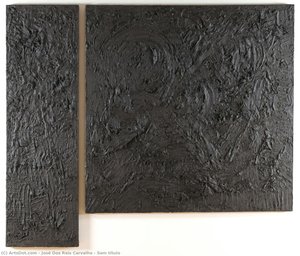


![[serra Da Barriga] — José Dos Reis Carvalho](/media/artworks/images/thumbnails/8b/55/8b55a04f7d694019a738a8f7c6c7c284.jpg)
![[fences] — José Dos Reis Carvalho](/media/artworks/images/thumbnails/9a/e7/9ae734c591d14290ba890b2fd0174882.jpg)





