A Life Dedicated to Scriptural Insight: The Story of John Nelson Darby
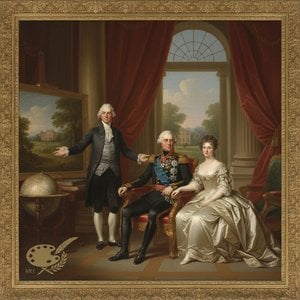
John Nelson Darby, born in Westminster, London, in 1800, remains a figure of considerable influence within evangelical Christianity, despite not being recognized as an artist in the traditional sense. His name surfaces in art platforms like WahooArt due to depictions of biblical scenes resonant with his theological explorations—a testament to the enduring impact of his ideas. Darby’s life was one of intellectual rigor and fervent spiritual conviction, a journey that led him from academic excellence at Westminster School and Trinity College Dublin – where he distinguished himself as Classical Gold Medallist in 1819 – to becoming a pivotal architect of modern dispensationalism and the founder of the Exclusive Brethren. Initially considering a career at the bar, Darby felt an undeniable calling towards religious service, embracing ordination within the Church of Ireland. However, his early ministry in Calary, Ireland, amongst the peasantry, soon revealed a growing spiritual discontent with established ecclesiastical structures.
From Anglican Clergyman to Founder of a New Movement
This dissatisfaction wasn’t merely a rejection of institutional rigidity; it stemmed from a developing theological perspective that emphasized the believer's direct relationship with God and the paramount importance of literal, grammatical-historical interpretation of Scripture. By 1828, Darby, alongside a small circle of like-minded individuals, began meeting for fellowship and “breaking bread” in Dublin – simple gatherings that marked the genesis of what would become known as the Plymouth Brethren. This wasn’t simply a desire for reform within the Church of Ireland; it was a conviction that existing structures were fundamentally unscriptural. He resigned his Anglican position to fully dedicate himself to this burgeoning movement, advocating for separation from traditions he believed obscured the purity of biblical truth. The seeds of a new theological framework were being sown, one that would profoundly shape evangelical thought for generations to come.
Theological Innovations and Lasting Influence
Darby’s theological contributions are centered around the concept of “dispensations”—distinct periods in God's dealings with humanity, each governed by specific principles. This framework provided a systematic way to understand biblical history and prophecy. He is perhaps most famously associated with popularizing the doctrine of the pre-tribulation rapture—the belief that Christians will be removed from Earth before a period of tribulation. While not originating with Darby, he articulated and disseminated this idea with such clarity and conviction that it gained significant traction within Brethren circles and subsequently spread widely through American evangelicalism. His dispensational framework profoundly influenced biblical scholarship, particularly through the Scofield Reference Bible in the early 20th century, which systematized and disseminated his views to a broader audience. Beyond systematic theology, Darby was also a prolific translator, producing versions of the Bible into German, French, Dutch, and English, all based on meticulous study of the original Hebrew and Greek texts. These translations weren’t merely linguistic exercises; they were attempts to unlock deeper layers of meaning within Scripture, informed by his unique interpretive lens.
Divisions, Legacy, and a Controversial Figure
Darby's later life was marked by extensive travel throughout Europe, establishing Brethren assemblies in Switzerland, France, Germany, and beyond. His ministry wasn’t without opposition, but he garnered a dedicated following through his passionate preaching and unwavering commitment to his theological principles. However, the Plymouth Brethren movement wasn’t immune to internal strife. Disagreements over doctrinal issues and leadership styles led to divisions during Darby's lifetime, most notably the split in 1845 that resulted in the formation of the “Exclusive” Brethren. He continued his ministry tirelessly until his death on April 29, 1882, at Sundridge House, Kent, England. John Nelson Darby’s legacy is complex and often controversial. His theological contributions continue to shape evangelical thought and practice, particularly in areas of biblical prophecy, eschatology, and dispensationalism. He remains a figure debated and scrutinized, yet undeniably influential in Christian history—a testament to the enduring power of his ideas and the profound impact of a life dedicated to scriptural insight. His association with artworks on platforms like WahooArt serves as a subtle reminder that even those who don’t wield a brush can leave an indelible mark on the world of art through the inspiration of their beliefs.