Jean-Baptiste Debret: Neoklasycystyczny malarz i pionier brazylijskiej edukacji artystycznej
- Urodzony: Paryż, Francja (18 kwietnia 1768)
- Zmarł: Paryż, Francja (1848)
Młodość i artystyczne korzenie
Jean-Baptiste Debret był francuskim malarzem i rysownikiem, którego twórczość na zawsze zapisała się w historii dzięki mistrzowskiemu opanowaniu stylu neoklasycystycznego. Urodzony w 1076 roku w Paryżu, przeszedł rygorystyczną ścieżkę edukacyjną w prestiżowej francuskiej Akademii Sztuk Pięknych. Kluczową postacią w jego rozwoju był Jacques-Louis David – wybitny przedstawiciel neoklasycyzmu, który był nie tylko mistrzem, ale i krewnym Debreta. Pod czujnym okiem Davida, artysta szlifował swój warsztat, chłonąc zasady epoki, która celebrowała klasyczną surowość, idealizację form ludzkich oraz głębię emocjonalną ukrytą pod maską porządku i racjonalizmu.
Złote lata kariery: Sukcesy w salonach i brazylijska odyseja
Debret zadebiutował na prestiżowym Salonie Sztuk Pięknych w 1798 roku, zdobywając drugą nagrodła, co natychmiast przykuło uwagę krytyków. Jego wczesne dzieła, przesiąknięte estetyką neoklasycystyczną, często przedstawiały sceny historyczne, które idealnie współgrały z ówczesnym klimatem moralnym Europy. Jednak prawdziwy przełom nastąpił w marcu 1816 roku, kiedy to artysta dołączył do francuskiej misji artystycznej w Brazylii. Ta podróż okazała się doświadczeniem transformującym, zmieniającym go nie tylko jako twórcę, ale i człowieka.
Udział Debreta w tej misji był wyrazem ambicji Francji w zakresie szerzenia kultury i edukacji artystycznej poza granicami kraju. W grudniu 1822 roku artysta założył swoje atelier w Imperialnej Akademii Sztuk Pięknych w Rio de Janeiro, szybko zyskując miano cenionego pedagoga. To właśnie on stał na czele organizacji pierwszej w historii Brazylii wystawy sztuki, prezentując nie tylko własne dokonania, ale i talenty swoich uczniów, co stało się kamieniem milowym dla rodzącej się brazylijskiej sceny artystycznej.
Styl artystyczny i niezapomniane dzieła
Twórczość Debreta charakteryzuje się niezwykłą dbałością o detal oraz ścisłym trzymaniem się kanonów neoklasycyzmu. Jego płótna i rysunki często stawały się kroniką wydarzeń historycznych, portretami wybitnych postaci oraz żywymi obrazami brazylijskiej codzienności. W jego pracach można odnaleźć głęboki wpływ tradycji klasycznej, objawiający się w klarowności kompozycji i dążeniu do idealizacji formy. Z czasem jednak, pod wpływem brazylijskiego słońca, jego tematyka ewoluowała w stronę fascynacji lokalnym krajobrazem, kulturą ludów tubylczych oraz złożoności życiem kolonialnym.
Wśród najbardziej znaczących dzieł Jean-Baptiste Debret, które można odnaleźć w zbiorach WahooArt, znajdują się:
- Uroczysta ceremonia D. Pedro I, Cesarza Brazylii w Rio de Janeiro, 1 grudnia 1822 – niezwykle szczegółowa litografia, która uchwyciła moment przełomowy dla historii narodu brazylijskiego.
- Napoleon przemawiający do wojsk bawarskich i württembergich pod Abensbergiem, 20 kwietnia 1809 – potężna wizualnie scena ukazująca charyzmę wielkiego wodza.
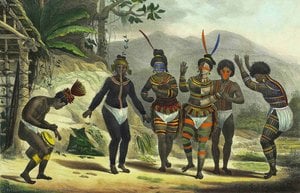
- Indianie przeprawiający się przez strumień – poruszający przykład jego precyzyjnych studiów nad życiem rdzennej ludności.
- Populacja tubylcza Cantagalo, ok. 1826 – akwarela będąca pięknym świadectwem brazylijskiego krajobrazu i kultury.
Dziedzictwo i ostatnie lata życia
Powrót do Francji w 1831 roku przyniósł artyście najwyższe zaszczyty, w tym wybór do Akademii Sztuk Pięknych. Debret zapisał się w pamięci potomnych przede wszystkim jako autor monumentalnej, trzytomowej serii rycin pt. Voyage pittoresque et historique au Brésil, wydanej w 1834 roku. Dzieło to stało się bezcennym wizualnym zapisem Brazylii, kształtując wyobraźnię Europejczyków na całe pokolenia. Choć jego wkład w edukację artystyczną Brazylii położył fundamenty pod rozwój tamtejszych talentów, los artysty był tragiczny – mimo światowej sławy, Debret zmarł w 1848 roku w Paryżu, pozostając w ubóstwie.
Jego publikacje do dziś stanowią niewyczerpane źródło wiedzy dla historyków i pasjonatów sztuki, a jego dziedzictwo trwa w murach brazylijskich instytucji artystycznych. Aby dowiedzieć się więcej o twórczości Jean-Baptiste Debreta, zapraszamy do odwiedzenia strony WahooArt lub lektury opracowań dotyczących Museu Nacional de Belas Artes.
Pytania i odpowiedzi
Które dzieła Jean-Baptiste Debret są najczęściej oglądane?
Statystyki dotyczące dzieł artysty Jean-Baptiste Debret można znaleźć na jego stronie Statystyki odwiedzin.
Skąd pochodzi Jean-Baptiste Debret?
Jean-Baptiste Debret urodził się w Francja.
Gdzie można zobaczyć wszystkie dzieła Jean-Baptiste Debret?
Wszystkie dzieła Jean-Baptiste Debret dostępne w niniejsza strona można przeglądać na stronie Wszystkie dzieła artysty.