The Sculptural Legacy of Jacopo della Pila
Jacopo della Pila, a name perhaps less immediately recognizable than some of his Renaissance contemporaries, nevertheless occupies a crucial position in the transition from Gothic to early Renaissance sculpture in Italy. Born and active primarily in Florence during the 14th and 15th centuries – precise dates remain elusive, typical for artists of this period – Jacopo’s work embodies a fascinating blend of lingering medieval traditions and the burgeoning humanist ideals that would define the artistic landscape of the coming era. He wasn't merely a sculptor; he was a storyteller in stone, deeply connected to the political and religious currents of his time, and a master craftsman whose technical skill allowed him to translate complex narratives into powerfully emotive forms.
Early Life and Formation
Details regarding Jacopo’s early life are scarce. What we know is largely gleaned from documented commissions and stylistic analysis of his surviving works. He likely received training within the established Florentine workshops, absorbing the prevailing Gothic aesthetic characterized by elongated figures, delicate drapery, and a focus on spiritual expression. However, even in his earliest pieces, hints of a developing naturalism begin to emerge – a subtle shift away from the purely symbolic representation favored by earlier sculptors. Florence itself was undergoing profound changes during Jacopo’s formative years. The rise of powerful families like the Medici, coupled with a renewed interest in classical antiquity, created an environment ripe for artistic innovation. This intellectual and political ferment undoubtedly influenced Jacopo's evolving style. He appears to have been associated with the Arte dei Maestri di Pietra e Legname, the guild of stone and wood masters, further solidifying his position within the Florentine art world.
The Tomb of Tommaso Brancacci: A Defining Masterpiece
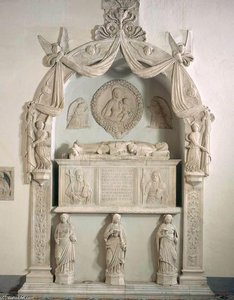
Jacopo della Pila is most celebrated for his work on the tomb of Tommaso Brancacci in the Church of Santa Croce, Florence. Commissioned in 1428, this monument represents a pivotal moment in his career and a landmark achievement in Renaissance sculpture. The tomb eschews the elaborate ornamentation typical of earlier funerary monuments, opting instead for a restrained elegance that emphasizes the human figure.
The recumbent effigy of Brancacci is remarkably lifelike, conveying not just physical presence but also a sense of inner peace and dignity. Surrounding the effigy are sculpted reliefs depicting scenes from the life of Christ, executed with a newfound attention to anatomical accuracy and emotional depth. The drapery, while still possessing some Gothic qualities, flows more naturally over the figures, creating a greater sense of volume and realism.
This tomb is not simply a memorial; it’s a theological statement, reflecting Brancacci's piety and status within Florentine society. It also demonstrates Jacopo’s ability to synthesize diverse artistic influences – Gothic elegance, classical proportion, and the emerging Renaissance emphasis on humanism.
Influences and Artistic Development
Jacopo’s work reveals a complex interplay of influences. The lingering presence of Gothic sculpture is evident in his early pieces, particularly in the delicate rendering of drapery and the elongated proportions of his figures. However, he also demonstrates a clear awareness of classical art, as evidenced by the increasing naturalism and anatomical accuracy of his later works.
- Donatello’s pioneering sculptures
- The rediscovery of Roman sarcophagi
- Filippo Brunelleschi's architectural innovations
all played a role in shaping his artistic development. He wasn’t simply imitating these influences; he was absorbing them and integrating them into his own unique style, creating a synthesis that bridged the gap between the medieval past and the Renaissance future. His ability to adapt and innovate allowed him to remain relevant throughout a period of rapid artistic change.
Historical Significance and Lasting Impact
Jacopo della Pila’s significance lies not in radical departures from tradition but in his subtle yet profound contributions to the evolution of Renaissance sculpture. He helped pave the way for artists like Donatello and Michelangelo by demonstrating the power of naturalism, emotional depth, and anatomical accuracy. His work on the Tomb of Tommaso Brancacci served as a model for subsequent funerary monuments, influencing generations of sculptors. While his oeuvre is relatively small compared to some of his contemporaries, the quality and impact of his surviving works are undeniable.
He represents a crucial link in the chain of artistic development, embodying the transition from Gothic spirituality to Renaissance humanism. His legacy continues to resonate today, reminding us of the enduring power of sculpture to capture the complexities of the human experience and reflect the cultural values of its time.